How Long Should a HIIT Workout Be? Science-Backed Answer
You finished a HIIT session in 12 minutes and wonder if that was enough. Or maybe you pushed through 45 minutes and felt completely wrecked for two days. So how long should a HIIT workout be to actually get results without burning out?
The answer depends on your fitness level, workout type, and intensity. But research points to a clear range that works for most people. Here is what the science says and how to dial in the right session length for you.
The Short Answer: 15 to 30 Minutes
Most studies on HIIT effectiveness use protocols lasting 15 to 30 minutes of total work time. That range consistently produces the best results for fat loss, cardiovascular fitness, and metabolic health.
A 2017 meta-analysis in the British Journal of Sports Medicine found that HIIT sessions averaging 23 minutes produced 28.5% greater reductions in body fat compared to steady-state cardio. The participants were not training for hours. They were training hard for a short, focused window.
Here is how the math breaks down for a typical 20-minute HIIT session:
- 3-minute warm-up at moderate intensity
- 14 minutes of intervals alternating between 30-second sprints and 30-second rest
- 3-minute cool-down to bring your heart rate down
That is 14 sets of work in under 20 minutes. Enough to spike your heart rate into the 80-95% max zone multiple times and trigger the afterburn effect that keeps your metabolism elevated for hours.
If you can comfortably go beyond 30 minutes, you are probably not pushing hard enough during your work intervals. True high-intensity effort is not sustainable for long durations.
Why Longer Isn't Always Better with HIIT
Pushing a HIIT session past 30 minutes creates three problems that work against your goals.
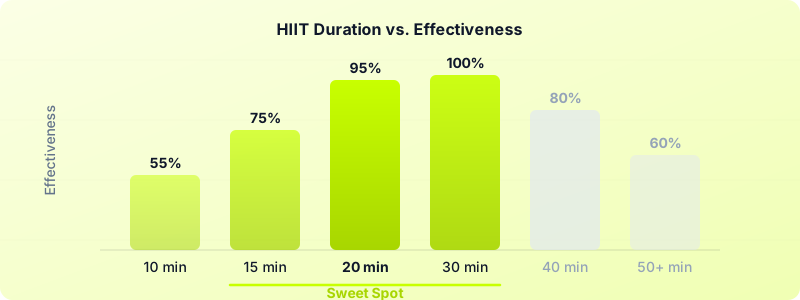
Cortisol spikes. Extended high-intensity exercise floods your body with cortisol, the stress hormone. Short bursts followed by recovery keep cortisol in check. Sessions longer than 40 minutes can push cortisol high enough to promote muscle breakdown and fat storage — the opposite of what you want.
Diminishing intensity. Your body has a limited supply of phosphocreatine and anaerobic energy. After 20-25 minutes of repeated all-out efforts, your power output drops significantly. You end up doing moderate-intensity cardio disguised as HIIT.
Recovery debt. A 20-minute HIIT session three times per week is sustainable. A 45-minute HIIT session three times per week puts most people into overtraining territory within a few weeks. Joint pain, poor sleep, and stalled progress follow.
The goal is to leave each session feeling challenged but recoverable. If you need more than 48 hours to feel ready for your next workout, your sessions are too long or too frequent.
How Your Fitness Level Affects HIIT Duration
Your optimal HIIT workout length shifts as your body adapts. A complete beginner needs less volume to trigger results. An experienced athlete needs more stimulus to keep progressing.
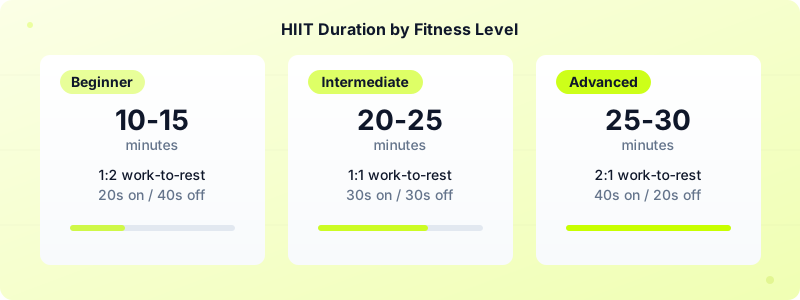
Beginners (0-3 months of training): Start with 10 to 15 minutes of total work time. Use longer rest intervals — a 1:2 or 1:3 work-to-rest ratio. For example, 20 seconds of effort followed by 40-60 seconds of recovery. If you are just starting out, check out our beginner HIIT guide for a full first-session plan.
Intermediate (3-12 months): Aim for 20 to 25 minutes with a 1:1 work-to-rest ratio. You can handle 30 seconds on, 30 seconds off for 12-15 rounds. Your cardiovascular system recovers faster between intervals now.
Advanced (12+ months): Push to 25 to 30 minutes with a 2:1 work-to-rest ratio. You might do 40 seconds of work with 20 seconds of rest. At this level, the total volume matters more than individual interval length.
No matter your level, cap your weekly HIIT volume at 75-90 minutes. That means three 25-minute sessions or four 20-minute sessions. Fill the rest of your training week with strength work, mobility, or low-intensity cardio.
How Long Should a HIIT Workout Be by Type
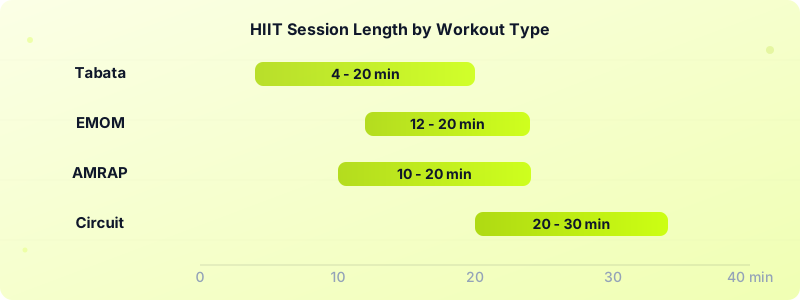
Different HIIT formats have built-in durations based on their structure. Here is a breakdown of the most popular styles and their optimal session lengths.
Tabata (4 minutes per block) The original Tabata protocol is 20 seconds work, 10 seconds rest, repeated 8 times. One block takes exactly 4 minutes. Most people do 2-4 blocks with 60 seconds rest between them for a total of 12-20 minutes.
EMOM — Every Minute On the Minute (12-20 minutes) You perform a set number of reps at the start of each minute and rest for whatever time remains. A 15-minute EMOM with 3 exercises gives you 5 rounds of each movement. Learn more in our guide to EMOM workouts if you have not tried this format.
AMRAP — As Many Rounds As Possible (10-20 minutes) Set a clock and cycle through a list of exercises continuously. Common AMRAP windows are 10, 15, or 20 minutes. The fixed time frame makes it easy to track progress — more rounds completed means better fitness.
Circuit Training (20-30 minutes) Move through 6-10 stations with minimal rest between exercises. A typical circuit takes 3-5 minutes per round, and 4-6 rounds fills a 20-30 minute session. This style works well for mixing strength and cardio.
How to Time Your HIIT Workout with an Interval Timer
Knowing the right HIIT session time is only half the equation. You need a reliable way to track your intervals so you can focus on effort instead of watching the clock.
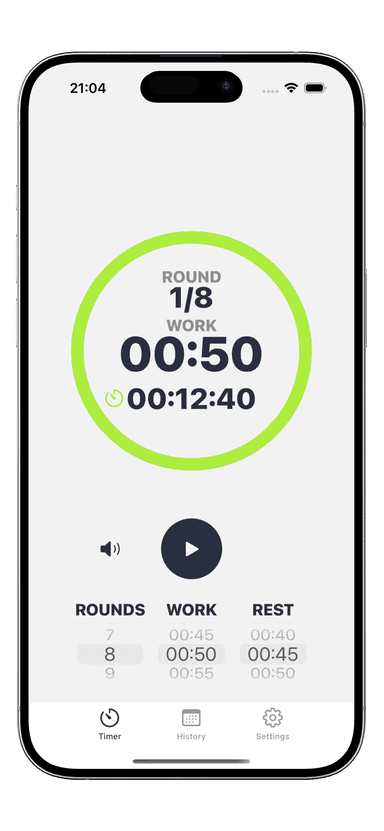
An interval timer app handles the structure for you. Set your work period, rest period, number of rounds, and warm-up time. The app counts down each phase, alerts you when to switch, and tracks your total session length automatically.
With the Interval Timer app, you can build custom timers for any HIIT format. Set a 20-minute Tabata-style session with 20/10 intervals, or program a 25-minute circuit with varying work-to-rest ratios for each station. Save your favorite setups and launch them with one tap.
Here is a sample 20-minute HIIT timer setup:
- Warm-up: 3 minutes
- Work interval: 30 seconds
- Rest interval: 30 seconds
- Rounds: 14
- Cool-down: 3 minutes
- Total session time: 20 minutes
You can also use the app's built-in Tabata and EMOM presets to skip the setup entirely. Choose your format, set the duration, and press start.
Find Your HIIT Sweet Spot
The best HIIT workout length is the one you can sustain with real intensity. For most people, that falls between 15 and 30 minutes. Start shorter if you are new to HIIT, and gradually increase duration as your fitness improves.
Track your sessions, pay attention to how you recover, and adjust. If you are still sore 72 hours later, cut 5 minutes off your next workout. If you feel like you could keep going, push your work intervals harder rather than adding more time.
Download Interval Timer and set up your first perfectly timed HIIT session in under a minute.