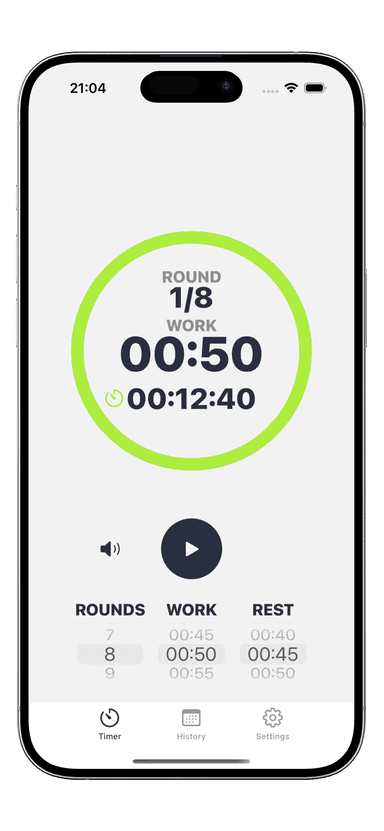
15-Minute Home Workout With No Equipment
You do not need a gym, dumbbells, or an hour of free time to get a real workout. A 15 minute home workout with no equipment can build strength, burn calories, and improve your fitness — if you structure it right. Research shows that short, focused bodyweight sessions deliver measurable health benefits including better cardiovascular function, improved metabolism, and increased muscle endurance.
The key is intensity and exercise selection. Fifteen minutes of purposeful movement beats an hour of half-effort every time. Here is how to make every second count.
Why 15 Minutes Is Enough for a Real Workout
Most people overestimate how long a workout needs to be. Studies consistently show that 15 to 20 minutes of high-effort exercise produces comparable cardiovascular and metabolic benefits to longer moderate-intensity sessions.
The reason is simple: when time is short, effort goes up. You eliminate rest between scrolling your phone, waiting for machines, and wandering the gym floor. Instead, you move with purpose from one exercise to the next.
Bodyweight exercises are ideal for short sessions because they require zero setup time. No loading barbells, no adjusting cables — you just start. And because most bodyweight movements are compound exercises that work multiple muscle groups at once, you can hit your entire body in a fraction of the time a traditional gym session takes.
If you are already doing bodyweight interval training at home, adding a dedicated 15-minute routine on busy days keeps your consistency high without demanding a full session.
The 15-Minute Full Body Workout (No Equipment)
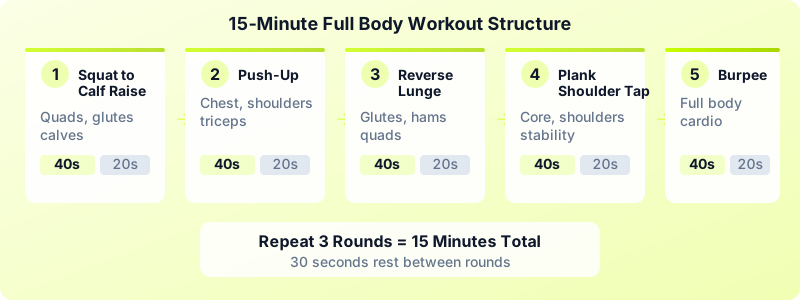
This routine hits every major muscle group using only your body. Perform each exercise for 40 seconds, rest for 20 seconds, then move to the next. Complete 3 rounds total.
Round Structure (5 minutes per round, 3 rounds):
-
Squat to Calf Raise — 40 seconds work, 20 seconds rest
- Targets: quads, glutes, calves
- Drop into a full squat, then rise up onto your toes at the top
-
Push-Up — 40 seconds work, 20 seconds rest
- Targets: chest, shoulders, triceps
- Keep your core tight and lower until your chest nearly touches the floor
-
Reverse Lunge (alternating) — 40 seconds work, 20 seconds rest
- Targets: glutes, hamstrings, quads
- Step back, drop the knee, and drive through the front heel
-
Plank to Shoulder Tap — 40 seconds work, 20 seconds rest
- Targets: core, shoulders, stability
- Hold a high plank and alternate tapping each shoulder without rocking your hips
-
Burpee — 40 seconds work, 20 seconds rest
- Targets: full body, cardiovascular system
- Chest to the floor, explosive jump at the top
Rest 30 seconds between rounds. Total time: 15 minutes including rest.
This workout burns approximately 150 to 250 calories depending on your body weight and effort level. You should feel your heart rate spike during burpees and recover slightly during planks and lunges.
The exercise order matters. By alternating between lower body, upper body, and core movements, you give each muscle group brief recovery while keeping your heart rate elevated throughout the session. This approach maximizes both calorie burn and muscular endurance in the shortest possible time.
How to Make Bodyweight Exercises Harder Over Time
The biggest mistake with home workouts is doing the same routine at the same intensity forever. Your body adapts. To keep progressing, you need to apply progressive overload — even without weights.
Add reps. Switch from 40 seconds work to 45 or 50 seconds while keeping the same 20-second rest. More time under tension means more stimulus.
Slow down the eccentric. Take 3 seconds to lower yourself during push-ups or squats. This increases muscle tension without adding weight.
Upgrade the exercise. Replace standard push-ups with diamond push-ups or archer push-ups. Replace squats with pistol squat progressions or jump squats. Replace lunges with jumping lunges.
Reduce rest time. Cut rest periods from 20 seconds to 15, or to 10 seconds. This keeps your heart rate higher and increases the metabolic demand.
Add an extra round. When 3 rounds feels easy, add a 4th. You are now at 20 minutes with the same exercises — a natural progression that requires zero equipment.
Most beginners notice strength improvements within 2 to 4 weeks of consistent training. Track your reps and times so you can see the progress.
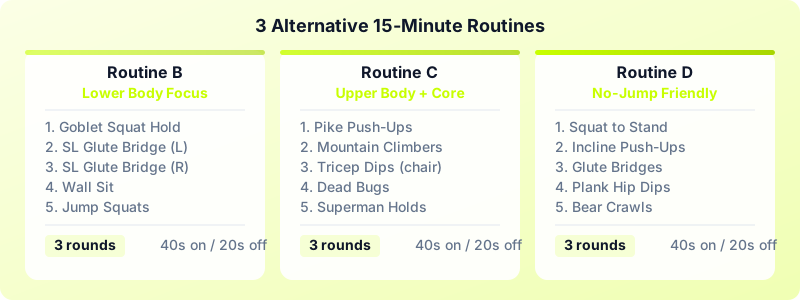
3 Alternative 15-Minute Routines to Try
Variety prevents boredom and challenges your muscles in different ways. Here are three more routines to rotate throughout the week.
Routine B — Lower Body Focus
- Goblet Squat Hold (bodyweight) — 40s on, 20s off
- Single-Leg Glute Bridge (left) — 40s on, 20s off
- Single-Leg Glute Bridge (right) — 40s on, 20s off
- Wall Sit — 40s on, 20s off
- Jump Squats — 40s on, 20s off Repeat for 3 rounds.
Routine C — Upper Body and Core
- Pike Push-Ups — 40s on, 20s off
- Mountain Climbers — 40s on, 20s off
- Tricep Dips (using a chair) — 40s on, 20s off
- Dead Bugs — 40s on, 20s off
- Superman Holds — 40s on, 20s off Repeat for 3 rounds.
Routine D — No-Jump Apartment-Friendly
- Squat to Stand — 40s on, 20s off
- Incline Push-Ups — 40s on, 20s off
- Glute Bridges — 40s on, 20s off
- Plank Hip Dips — 40s on, 20s off
- Bear Crawls — 40s on, 20s off Repeat for 3 rounds.
Rotate between these routines throughout the week. Training 3 to 4 days per week with one routine per session gives your muscles time to recover while keeping the habit consistent.
How to Time Your 15-Minute Home Workout
Precise timing makes the difference between a casual stretch and a real training session. When you eyeball your rest periods, they tend to drift longer. A timer keeps you honest and moving.
Set up your Interval Timer with 40-second work intervals and 20-second rest intervals for 5 exercises, repeated for 3 rounds. The audio alerts tell you exactly when to push and when to breathe. You never have to look at a clock, count in your head, or guess.
For a beginner HIIT workout, start with 30 seconds of work and 30 seconds of rest until your conditioning improves. Then gradually shift toward the 40/20 structure.
Fifteen minutes is not a compromise — it is a strategy. Short workouts remove the biggest barrier to consistency: time. When the workout fits your schedule every day, results follow.
Download Interval Timer and start your 15-minute home workout today with perfectly timed intervals.