AMRAP vs EMOM: Which Workout Is Better?

If you have spent any time in a CrossFit box or following workout-of-the-day programming, you have seen both AMRAP and EMOM formats show up constantly. But when it comes to amrap vs emom which is better for your specific goals? The honest answer: it depends on what you want to achieve.
Both formats use a clock to drive intensity, and both deliver results. The difference lies in how they structure your work, rest, and pacing. This guide breaks down each format, compares them side by side, and helps you decide when to program each one.
What Is AMRAP and How Does It Work?
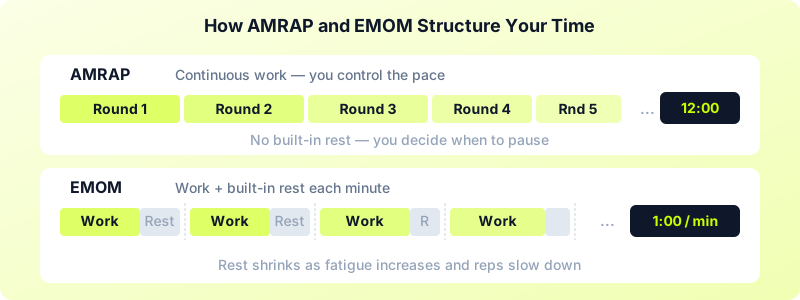
AMRAP stands for As Many Rounds (or Reps) As Possible. You pick a set of exercises, start the clock, and push through as many rounds as you can before time runs out. There are no built-in rest periods — you rest only when you need to.
A typical AMRAP workout looks like this:
12-Minute AMRAP:
- 10 air squats
- 8 push-ups
- 6 dumbbell snatches
You cycle through those three exercises continuously for 12 minutes, tracking your total rounds and reps. Your score is your output — the more rounds you complete, the fitter you are getting.
AMRAP workouts build cardiovascular endurance, mental toughness, and pacing skills. Research shows that AMRAP produces the highest sustained heart rate among common CrossFit formats, making it especially effective for conditioning. For a deeper dive with sample workouts, check out our guide on AMRAP workout examples.
What Is EMOM and How Does It Work?
EMOM stands for Every Minute On the Minute. At the start of each minute, you perform a prescribed number of reps. Whatever time remains in that minute is your rest. When the next minute starts, you go again.
A typical EMOM workout looks like this:
10-Minute EMOM:
- Minute 1: 5 barbell cleans
- Minute 2: 10 box jumps
- Alternate for 10 minutes
If your 5 cleans take 25 seconds, you rest 35 seconds before the next minute begins. If they take 50 seconds, you only get 10 seconds of rest. The clock controls your pace automatically.
EMOM workouts excel at building consistency, pacing discipline, and technical skill under fatigue. The built-in rest periods let you maintain better form than continuous formats. EMOMs also work well for strength building — the rest windows let you go heavier than you could in an AMRAP. Learn more about how the format works in our EMOM workout explained guide.
AMRAP vs EMOM: Key Differences Compared
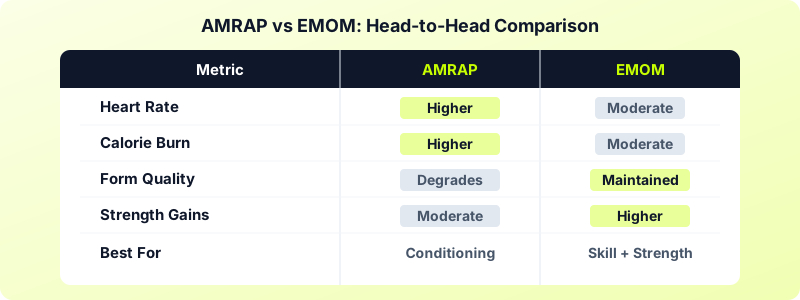
Both formats use time as the primary driver, but they create very different training stimuli. Here is how EMOM vs AMRAP crossfit workouts stack up across the metrics that matter:
Pacing: AMRAP is self-paced. You decide when to push and when to slow down. EMOM is clock-paced. The minute marker forces you to start whether you feel ready or not.
Rest: AMRAP has zero programmed rest — you rest only when you choose to. EMOM has built-in rest that shrinks as fatigue increases and your reps take longer.
Heart rate: Studies show AMRAP produces higher average heart rates because there are no guaranteed recovery windows. EMOM keeps heart rate more moderate due to the structured rest between efforts.
Movement quality: EMOM encourages better form because you start each set fresh (or at least fresher). In AMRAP, form tends to break down as fatigue accumulates without breaks.
Scoring: AMRAP gives you a clear score — total rounds and reps. EMOM measures consistency — did you complete the prescribed reps every single minute?
Scalability: Both are highly scalable. In AMRAP, you adjust the movements or reduce reps. In EMOM, you adjust the reps per minute or substitute exercises.
The difference between AMRAP and EMOM comes down to this: AMRAP tests your engine and pushes your limits. EMOM tests your discipline and builds your skills.
When to Choose AMRAP Over EMOM (and Vice Versa)
Neither format wins in every scenario. Here is when each one shines for AMRAP or EMOM for beginners and experienced athletes alike:
Choose AMRAP when you want to:
- Maximize calorie burn in a fixed time window
- Test your cardiovascular ceiling
- Build mental toughness and push through discomfort
- Get a benchmark score you can repeat and beat later
- Train with bodyweight-only or light loads
Choose EMOM when you want to:
- Practice heavy lifts with quality rest between sets
- Build pacing discipline and consistency
- Work on technical movements (Olympic lifts, gymnastics skills)
- Control your training volume precisely
- Gradually increase difficulty by adding reps per minute
For beginners: Start with EMOM. The built-in rest gives you time to recover, reset your form, and avoid the common trap of going too hard too fast. Once you develop pacing instincts, add AMRAP sessions to test your fitness.
For fat loss: AMRAP tends to burn more calories per session due to the higher sustained heart rate. But EMOM with heavier loads builds more muscle, which raises your resting metabolic rate long-term. The best approach uses both.
For strength: EMOM wins clearly. The rest between sets lets you handle heavier loads and maintain quality reps — exactly what strength development requires.
How to Set Up Your Timer for AMRAP and EMOM
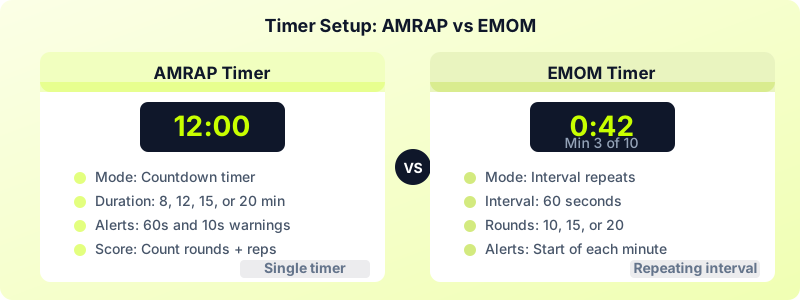
Both formats need a reliable timer, and each requires a different setup. Here is how to set up your interval timer for each:
AMRAP Timer Setup:
- Set a single countdown timer for your total duration (8, 12, 15, or 20 minutes)
- Enable audio or vibration alerts for the final 60 seconds and 10-second countdown
- Track your rounds manually or use a round counter
EMOM Timer Setup:
- Set work interval to 60 seconds
- Set rounds to your total minutes (10, 15, or 20)
- Enable start-of-round alerts so you know exactly when each minute begins
- Optional: set a 10-second warning before each new minute
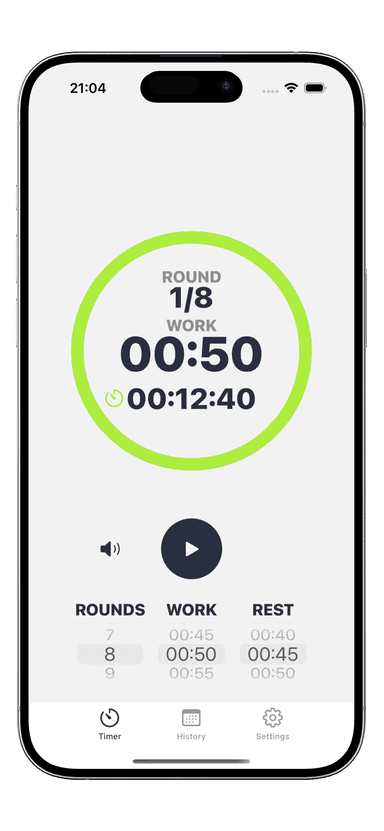
With Interval Timer, you can save both setups as custom presets and switch between them instantly. The Apple Watch app is particularly useful for EMOM workouts — a vibration on your wrist at the start of each minute keeps you on pace without watching a screen.
The best weekly programming uses both formats. Try two EMOM sessions focused on strength and skill, plus one or two AMRAP sessions for conditioning. That combination builds a well-rounded athlete who is strong, skilled, and relentless.
When it comes to amrap vs emom which is better, the real answer is both — programmed strategically for your goals. Use EMOM to build skills and strength. Use AMRAP to test your engine and measure progress. Together, they cover every dimension of fitness.
Download Interval Timer and set up your first AMRAP and EMOM workouts today.