How to Do a Proper Burpee for HIIT Workouts
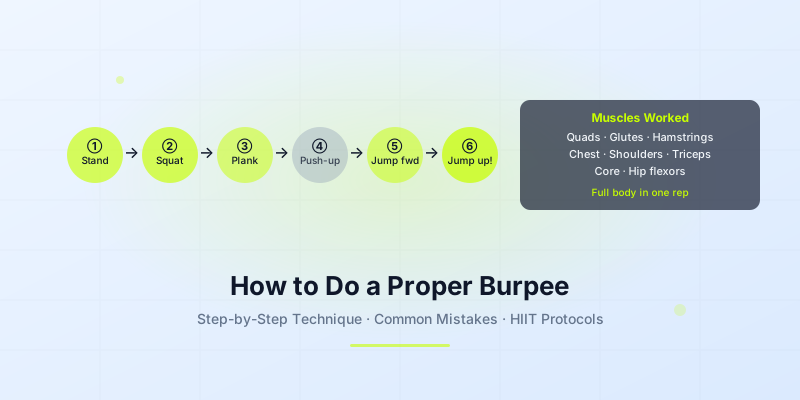
The burpee is the most efficient full-body exercise in HIIT training. In a single movement, it combines a squat, a plank, a push-up, and a jump — hitting legs, core, chest, shoulders, and cardiovascular system simultaneously. Done correctly, it's demanding and effective. Done poorly, it leads to wrist strain, lower back pain, and sloppy reps that undermine the workout.
Here's the exact technique, the most common mistakes, and how to program burpees into timed HIIT intervals.
The 6-Step Burpee Technique
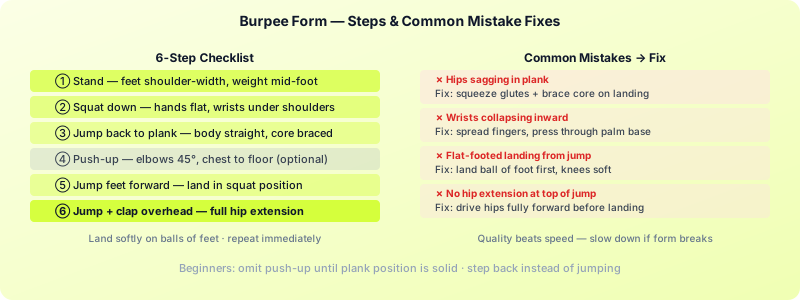
Step 1: Standing position Start with feet shoulder-width apart, arms at sides. Tall posture, weight balanced through mid-foot.
Step 2: Squat down Bend at hips and knees simultaneously. Place both hands flat on the floor just outside your feet. Hands should be shoulder-width apart, fingers spread for stability. Wrists stacked directly below shoulders.
Step 3: Jump or step feet back to plank From the squat position, jump both feet back together to a high plank. Land with feet hip-width apart. Body forms a straight line from head to heel — no hips sagging down or piking up. Brace your core.
Step 4: Push-up (optional but recommended) Lower chest to the floor with elbows tracking at roughly 45 degrees from your body. Press back up to full arm extension. This is the standard burpee. Beginners can omit this step until form is solid.
Step 5: Jump or step feet forward From the plank, jump both feet back up toward your hands, landing in the squat position with feet outside the hands.
Step 6: Jump and clap overhead Drive through your heels, extend your hips fully, and jump vertically. At the top of the jump, arms reach overhead and hands clap together. Land softly with knees slightly bent to absorb impact.
Repeat immediately from Step 1.
Common Mistakes and How to Fix Them
Hips sagging in the plank position The most common error. When hips drop, the lower back takes the strain. Fix: squeeze your glutes and brace your core as soon as your feet land in the plank. Imagine a straight rod from your heels to the crown of your head.
Wrists collapsing inward Leads to wrist pain over repeated reps. Fix: spread fingers wide, press through the base of your palm, and keep wrists stacked directly under shoulders — not in front of them.
Landing flat-footed from the jump Creates knee and ankle impact. Fix: land with the ball of the foot first, then roll back to heel. Keep knees soft (slightly bent) on contact.
Half-extension on the jump Jumping without full hip extension reduces the cardiovascular demand and shortens the movement's effectiveness. Fix: consciously drive hips forward at the top — as if you're trying to touch the ceiling.
Racing through reps with broken form Speed is pointless if form breaks after rep 5. Fix: start at a sustainable pace where you can maintain quality for the entire work interval. Quality over quantity every time.
Burpee Modifications for Different Fitness Levels
Beginner — Step-back burpee: Replace the jump back with stepping one foot back at a time, then stepping forward. Eliminates the explosive element while maintaining the full-body pattern. Build to 3 sets of 8 reps before adding the jump.
Intermediate — Standard burpee with push-up: The full version described above. Work up to 10-12 clean reps before increasing interval duration.
Advanced — Burpee with tuck jump: Replace the standard overhead jump with a tuck jump (knees pull toward chest at the peak). Dramatically increases hip flexor and core demand.
Low-impact — Burpee walk-out: No jumping at any point. Step back, lower to the floor with a push-up, step forward, then stand up (no jump at the end). Appropriate for joint issues or beginners with limited coordination.
Burpee HIIT Interval Protocols
Burpees fit naturally into timed interval training because the movement is self-pacing — you can go harder or easier within the same interval by adjusting your rep speed. Use an interval timer so you focus on effort, not clock-watching.
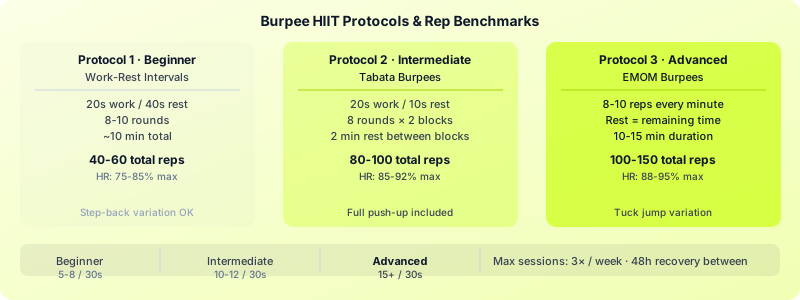
Protocol 1: Work-Rest Burpees (Beginner-Intermediate)
- Work: 20 seconds of burpees
- Rest: 40 seconds
- Rounds: 8-10
- Total time: ~10 minutes
Protocol 2: Tabata Burpees (Intermediate-Advanced)
- Work: 20 seconds
- Rest: 10 seconds
- Rounds: 8 (= 4 minutes)
- Rest 2 minutes, then repeat for a second block
Protocol 3: EMOM Burpees (Advanced)
- Every minute on the minute: complete 8-10 burpees
- Remaining time in the minute = rest
- Duration: 10-15 minutes
- As fitness improves, increase reps per minute
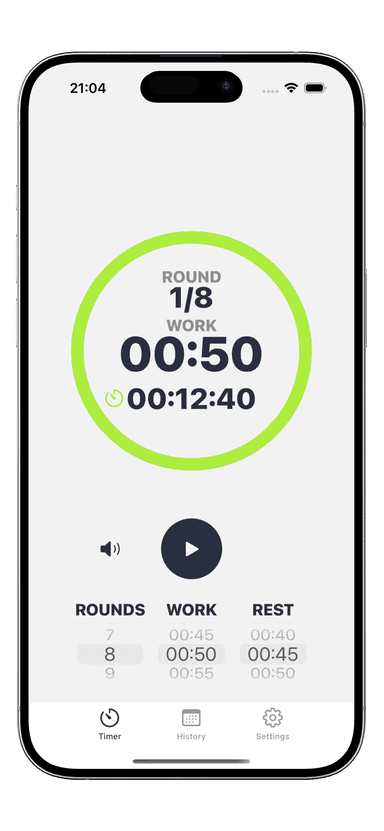
For any of these formats, set up the timer before you start. The Interval Timer app lets you configure exact work/rest cycles — you'll hear the beep to start and stop each interval without breaking focus.
Programming Burpees Into a HIIT Session
Burpees work as either the primary movement in a session or as one station in a circuit. Their full-body demand means they tax both upper and lower body — which affects how they're sequenced.
As the primary movement: Use Protocol 1 or 2 above. Keep total burpee reps per session under 80-100 for beginners and under 150 for intermediate trainees. More isn't better when form degrades.
In a circuit: Place burpees at the start of a circuit when you're freshest — not at the end when fatigue has already compromised technique. Pairing burpees with dumbbell HIIT exercises works well because the burpee taxes the cardiovascular system while the dumbbell work targets specific muscle groups.
Recovery between burpee sessions: Because burpees are high-impact and involve the entire body, treat them like any other HIIT session — 48 hours minimum between sessions. Three sessions per week is the appropriate maximum.
How Many Burpees Should You Do?
A common question — and the answer depends entirely on your current fitness level and the rest of your training week.
As a rough benchmark:
- Beginner: 5-8 clean reps in 30 seconds is a good starting point
- Intermediate: 10-12 reps in 30 seconds with push-up
- Advanced: 15+ reps in 30 seconds with full jump
Don't chase high rep counts at the expense of form. A session of 50 perfect burpees beats 100 sloppy ones for both effectiveness and injury prevention.
After 4-6 weeks of consistent burpee training, most people notice improved cardiovascular endurance that transfers directly to running and other conditioning work — the full-body recruitment pattern makes burpees one of the most efficient conditioning tools available.
Download Interval Timer to run structured burpee intervals — set your work/rest cycle once and let the audio guide each rep set without interrupting your flow.