Dumbbell HIIT Workout at Home for Beginners
A dumbbell HIIT workout at home gives you the best of both worlds: the calorie-burning power of high-intensity interval training combined with the muscle-building stimulus of resistance training. Bodyweight HIIT is great, but adding even light dumbbells increases the metabolic demand of every exercise and helps you build lean muscle at the same time.
The result? You burn more calories during the session, build more muscle than cardio alone, and create a stronger after-burn effect that keeps your metabolism elevated for hours post-workout. All from your living room with two dumbbells.
Why Add Dumbbells to Your HIIT Workout?
Bodyweight HIIT plateaus faster than weighted HIIT. Once your body adapts to the movement patterns, the cardiovascular stimulus drops off unless you add more complexity or load. Dumbbells solve this by adding progressive resistance — you can increase the weight as you get stronger while keeping the same interval structure.
Dumbbells also allow you to target specific muscle groups more effectively than bodyweight alone. A dumbbell squat builds your quads and glutes more than a bodyweight squat. A dumbbell row works your back in a way that no bodyweight HIIT exercise can replicate.
For a complete beginner HIIT workout, starting with bodyweight is smart. But once you have 2-3 weeks of bodyweight HIIT under your belt, adding light dumbbells takes your results to the next level.
What Weight Dumbbells Should Beginners Use?
Choose weights that feel challenging on the last 5 seconds of your work interval — not so heavy that your form breaks down, not so light that you could go forever.
General starting guidelines:
- Women: 4-8 kg (8-18 lbs) for lower body exercises, 2-5 kg (5-12 lbs) for upper body
- Men: 8-12 kg (18-26 lbs) for lower body, 5-10 kg (12-22 lbs) for upper body
When in doubt, go lighter. HIIT form under fatigue is more important than the weight on the dumbbell. A light weight done with full range of motion outperforms a heavy weight done sloppily every time.
Adjustable dumbbells are ideal for home training — they let you progress weight without buying multiple pairs.
Complete Dumbbell HIIT Workout for Beginners
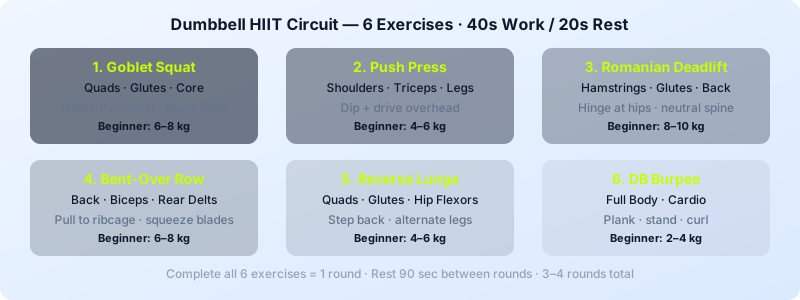
This workout uses 6 exercises in a circuit format. Each exercise lasts 40 seconds, followed by 20 seconds of rest, repeated for 3-4 rounds.
Timer setup:
- Work: 40 seconds
- Rest: 20 seconds
- Exercises: 6
- Rounds: 3 (beginners) to 4 (intermediate)
- Total time: 24-32 minutes (plus warm-up)
The Exercises:
1. Dumbbell Goblet Squat Hold one dumbbell vertically at your chest. Feet shoulder-width apart, toes slightly out. Squat until thighs are parallel to the floor, keeping your chest up. Drive through your heels to stand. Targets: quads, glutes, core.
2. Dumbbell Push Press Hold dumbbells at shoulder height, palms forward. Dip slightly at the knees, then drive upward and press the dumbbells overhead. Lower with control. Targets: shoulders, triceps, legs.
3. Dumbbell Romanian Deadlift Hold dumbbells in front of your thighs. Hinge at the hips, pushing your hips back as the dumbbells slide down your legs. Feel the stretch in your hamstrings, then drive hips forward to stand. Targets: hamstrings, glutes, lower back.
4. Dumbbell Bent-Over Row Hinge forward at the hips, dumbbells hanging below you. Pull both dumbbells to your ribcage, squeezing your shoulder blades together. Lower with control. Targets: back, biceps, rear delts.
5. Dumbbell Reverse Lunge Hold dumbbells at your sides. Step one foot back and lower your back knee toward the floor. Push through the front foot to return. Alternate legs. Targets: quads, glutes, hip flexors.
6. Dumbbell Burpee Hold light dumbbells. Place them on the floor, jump or step back to a plank, do a push-up (optional), jump or step forward, then stand and curl the dumbbells to your shoulders. Targets: full body.
How to Set Up Your Timer for Dumbbell HIIT
A 40-second work / 20-second rest format is the classic HIIT ratio — it's demanding enough to drive adaptation but leaves enough recovery to maintain form across all 6 exercises.
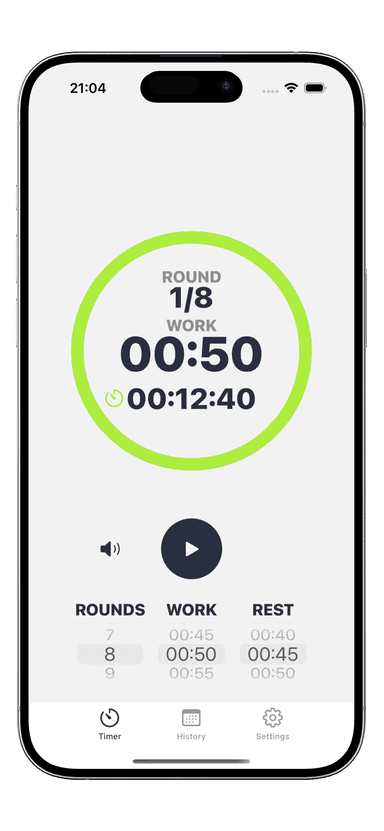
Set your Interval Timer app to:
- Work: 40 seconds
- Rest: 20 seconds
- Rounds: 6 (one per exercise per circuit)
- Circuits: 3-4
The audio cue at the 20-second mark tells you to stop the exercise and transition — no need to watch a screen while holding dumbbells. With Apple Watch, the wrist vibration is particularly useful since your hands are occupied.
Understanding your work to rest ratio helps you adapt this workout. If 40/20 feels too intense to maintain form, drop to 30/30. As you get stronger, progress to 45/15 for a greater challenge.
Safety Tips and Common Mistakes
Don't rush transitions. The 20-second rest period is also your transition time to pick up different weights or move to the next exercise. Keep your setup organized before you start.
Protect your lower back. In deadlifts and rows, maintain a neutral spine throughout. If your lower back rounds, the weight is too heavy or you're fatigued — reduce weight or stop the round.
Use the full rest period. Some beginners feel guilty resting. Don't. The rest interval is what lets you maintain intensity on the work intervals. Cutting rest short reduces your output on the next set and increases injury risk.
Warm up properly. Spend 5 minutes doing dynamic movements — leg swings, arm circles, hip rotations, and light bodyweight squats — before picking up any weight. Check out dynamic warmup exercises you can do before any interval training session.
Know how long your HIIT workout should be. For dumbbell HIIT, 20-30 minutes of actual work time (not counting warm-up) is plenty. More volume doesn't mean better results — intensity and recovery quality matter more.
Progressing Over 4 Weeks
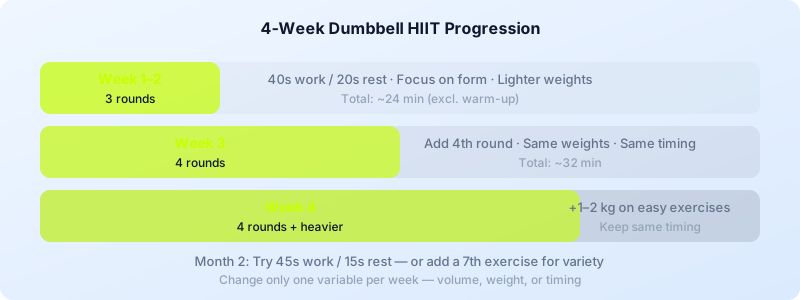
Week 1-2: 3 rounds, 40/20 timing, lighter weights. Focus on form over speed.
Week 3: Add a 4th round. Keep the same weights.
Week 4: Keep 4 rounds. Increase weights by 1-2 kg on exercises that feel easy.
Month 2: Try shortening rest to 15 seconds, or increasing work to 45 seconds. Add one more exercise (7-exercise circuit) for variety.
The beauty of this format is its scalability. The same timer structure works whether you're lifting 4 kg or 20 kg — the interval protocol adapts to your fitness level automatically.
Download Interval Timer to set up your dumbbell HIIT intervals in seconds. The app tracks your rounds automatically so you can focus entirely on form and effort instead of counting.