Zone 2 Cardio vs HIIT: Which Is Better for You?
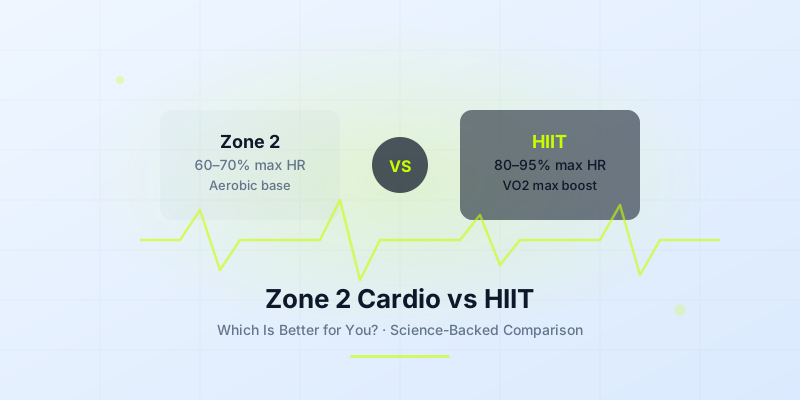
Zone 2 cardio vs HIIT is one of the most discussed training debates of recent years — and for good reason. Both methods improve cardiovascular fitness, but they do it through entirely different mechanisms. Understanding the difference helps you train smarter, not just harder.
The short answer: you need both. But the ratio depends on your goals, your fitness level, and how much recovery capacity you have each week.
What Is Zone 2 Cardio?
Zone 2 refers to a heart rate training zone — specifically 60-70% of your maximum heart rate. At this intensity, you can hold a full conversation, your breathing is elevated but not labored, and you feel like you could maintain the effort for hours.
Zone 2 training primarily develops your aerobic base — the mitochondrial density in your muscle cells, fat oxidation efficiency, and cardiac stroke volume. These adaptations build your engine: the foundation that makes all other training more effective.
Common Zone 2 activities include:
- Easy cycling (indoors or outdoors)
- Brisk walking or light jogging
- Easy rowing
- Swimming at a comfortable pace
- Light elliptical
Zone 2 sessions typically last 45-90 minutes. The long duration is part of the point — it takes extended time at this intensity to produce the mitochondrial adaptations that make Zone 2 valuable.
What Is HIIT and How Does It Differ?
HIIT (High-Intensity Interval Training) operates at 80-95% of your maximum heart rate during work intervals, alternating with rest or low-intensity recovery periods. Unlike Zone 2, you absolutely cannot hold a conversation during a HIIT work interval — you're working near your limit.
HIIT primarily develops your VO2 max, anaerobic capacity, and metabolic rate. It also produces the EPOC (excess post-exercise oxygen consumption) afterburn effect that continues burning calories for hours after the session ends.
HIIT sessions are typically 15-30 minutes of actual work — far shorter than Zone 2. The intensity makes longer sessions physiologically unsustainable and counterproductive. As explored in HIIT vs steady state cardio, HIIT's efficiency is its defining advantage.
Zone 2 vs HIIT — Head-to-Head Comparison
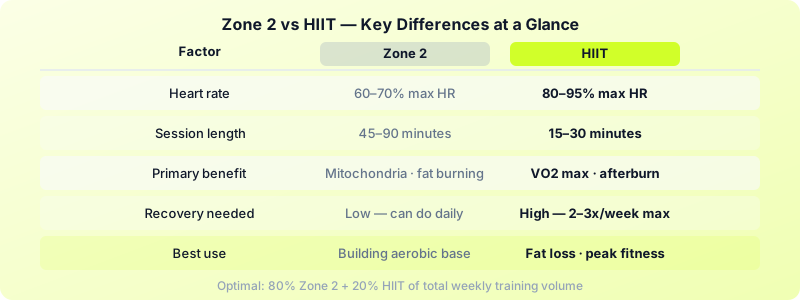
| Factor | Zone 2 | HIIT |
|---|---|---|
| Intensity | 60-70% max HR | 80-95% max HR |
| Session duration | 45-90 min | 15-30 min |
| Primary adaptation | Mitochondrial density, fat oxidation | VO2 max, anaerobic capacity |
| Calorie burn (session) | Moderate | High |
| After-burn effect | Minimal | Significant (24-48 hrs) |
| Recovery demand | Low | High |
| Sessions per week | 3-5 | 2-3 max |
| Joint stress | Low | Moderate-High |
Zone 2 wins on recovery — you can do it most days without accumulating fatigue. HIIT wins on time efficiency and metabolic stimulus per minute of training.
Which Should You Prioritize?
The answer depends on where you are right now:
Prioritize Zone 2 if:
- You're new to consistent exercise and building your aerobic base
- You're recovering from injury or illness
- You already do 3+ HIIT sessions per week and feel chronically fatigued
- You have a specific endurance event (5K, 10K, cycling race) coming up
- Your resting heart rate is elevated — a sign your nervous system needs lower-intensity work
Prioritize HIIT if:
- You're time-constrained and need maximum results in 20-30 minutes
- You've been doing mostly Zone 2 and hit a plateau
- Your goal is primarily fat loss and body composition
- You have good aerobic fitness already and want to push VO2 max higher
The honest truth: Most recreational fitness people do too much "moderate" intensity work — Zone 3 and 4 — which is hard enough to accumulate fatigue but not intense enough to drive meaningful adaptation. This is sometimes called the "grey zone." True Zone 2 and true HIIT are both more effective than grinding in the middle.
Check how often you should do HIIT per week before building your schedule — overloading HIIT without Zone 2 recovery work is a fast path to burnout.
How to Combine Zone 2 and HIIT in One Week
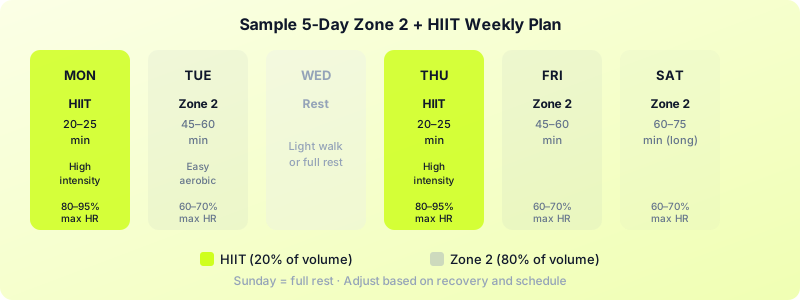
The most effective training programs use both. Here's a sample weekly structure:
3-day per week training:
- Monday: HIIT (20-25 min)
- Wednesday: Zone 2 (45-60 min)
- Friday: HIIT (20-25 min)
5-day per week training:
- Monday: HIIT
- Tuesday: Zone 2
- Wednesday: Rest or light activity
- Thursday: HIIT
- Friday: Zone 2
- Saturday: Zone 2 (longer session, 60-75 min)
- Sunday: Rest
The 80/20 principle used by elite endurance athletes — 80% easy, 20% hard — translates well to recreational fitness. If you train 5 hours per week, aim for roughly 4 hours of Zone 2 and 1 hour of HIIT.
How to Use Your Timer for Both Zones
Zone 2 doesn't traditionally need an interval timer — it's continuous effort. But a timer is useful for:
- Keeping your Zone 2 sessions to the planned duration
- Running Zone 2 walking or jogging intervals (like the Japanese walking method)
- Transitioning between Zone 2 warm-up and HIIT work intervals in a hybrid session
For HIIT, your interval timer is essential. Set your work intervals at 20-40 seconds (high intensity) and rest at 10-60 seconds depending on your HIIT fat loss goals, then let the timer manage the protocol while you focus on effort.
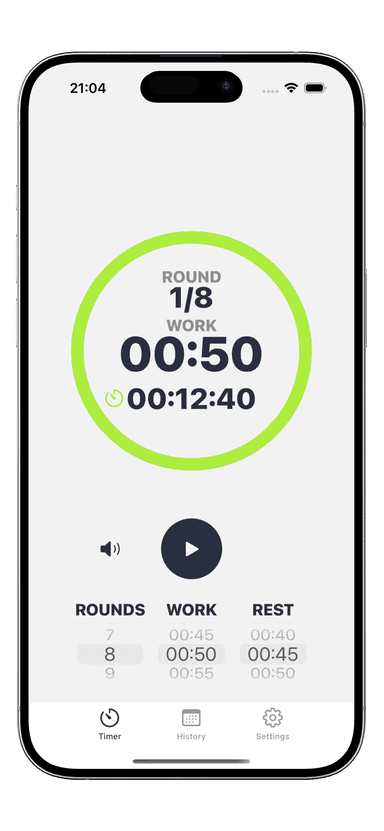
The Interval Timer app handles both: use the stopwatch mode for Zone 2 duration tracking and the interval timer for HIIT work/rest cycles. One app, both training zones.
Download Interval Timer to manage your HIIT intervals precisely and your Zone 2 session duration — so you can focus on effort instead of the clock.