30-20-10 Sprint Interval Training: The Treadmill Protocol That Works
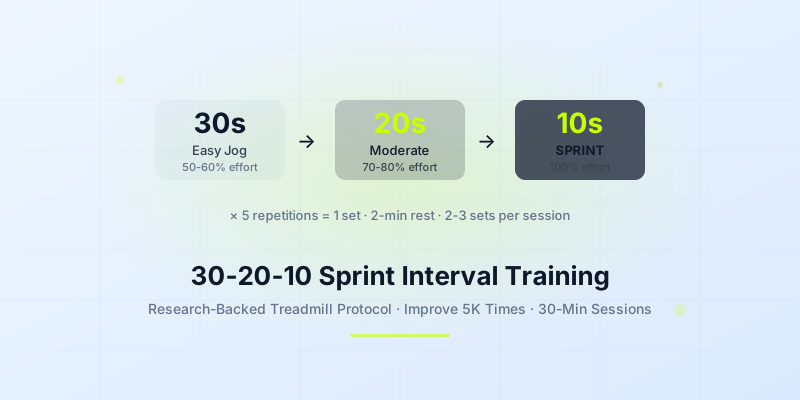
The 30-20-10 sprint interval training method turns a short treadmill run into a scientifically validated workout. In one 5-minute running block, you cycle through 30 seconds of easy jogging, 20 seconds of moderate running, and 10 seconds of maximum-effort sprinting — repeated continuously. Three to four blocks with 2-minute rest periods is all it takes.
Here's everything you need to run it correctly, what the research says, and how to set up your interval timer for it.
What Is the 30-20-10 Protocol?
The 30-20-10 method was developed by Danish sports scientists and published in the Journal of Applied Physiology in 2012. Recreational runners who replaced two of their three weekly runs with 30-20-10 sessions improved 5K times by 4% and VO2 max by 4% in just seven weeks — while running less total mileage.
Each block looks like this:
- 30 seconds: Easy jog (50-60% max effort)
- 20 seconds: Moderate run (70-80% max effort)
- 10 seconds: All-out sprint (100% max effort)
One block = 1 minute. Five consecutive blocks = a 5-minute running set. Rest 2 minutes, then repeat.
Typical session structure:
- Warm-up: 5-minute easy jog
- Set 1: 5 blocks (5 minutes running)
- Rest: 2 minutes walk
- Set 2: 5 blocks (5 minutes running)
- Rest: 2 minutes walk
- Set 3: 5 blocks (5 minutes running, optional for beginners → start with 2 sets)
- Cool-down: 5-minute easy jog
Total running time: 10-15 minutes of work intervals in 30-35 minutes total session time.
Why the 10-Second Sprint Is the Key
The 10-second all-out sprint is what makes this protocol different from standard interval training. Ten seconds is long enough to hit maximum neuromuscular recruitment and spike heart rate to near-maximum — but short enough that you can genuinely go 100% without pacing yourself.
Most people underestimate how hard "all-out" actually is on the treadmill. For the 10-second block, you should reach a speed you couldn't sustain for 30 seconds. If you're not gasping slightly at the end of the sprint block, you're not going hard enough.
The 30-second easy segment isn't passive recovery — you're still jogging. This keeps heart rate elevated throughout the entire block, unlike traditional HIIT where rest intervals allow more recovery. The result is higher average intensity across the session.
Treadmill Settings: Practical Numbers
Speed settings vary by fitness level, but this framework gives you a starting point:
| Segment | Beginner | Intermediate | Advanced |
|---|---|---|---|
| 30s easy jog | 7-8 km/h | 9-10 km/h | 11-12 km/h |
| 20s moderate | 10-11 km/h | 12-13 km/h | 14-15 km/h |
| 10s sprint | 14-16 km/h | 17-19 km/h | 20+ km/h |
The key is that the sprint speed should feel genuinely maximal. Most treadmills have a 1-2 second lag when you adjust speed, so you'll want to start increasing the belt speed during the final few seconds of the 20-second segment to hit full speed early in the sprint.
Incline option: Adding 1-2% incline on the treadmill better simulates outdoor running and increases calorie burn by approximately 10-12% without changing the perceived difficulty of the interval structure.
Setting Your Interval Timer for 30-20-10
This is where an interval timer becomes essential. The 30-20-10 cycle repeats without pause within each block — you cannot watch a clock while sprinting and expect to hit accurate segments. You need audio cues.
Timer settings for one complete session:
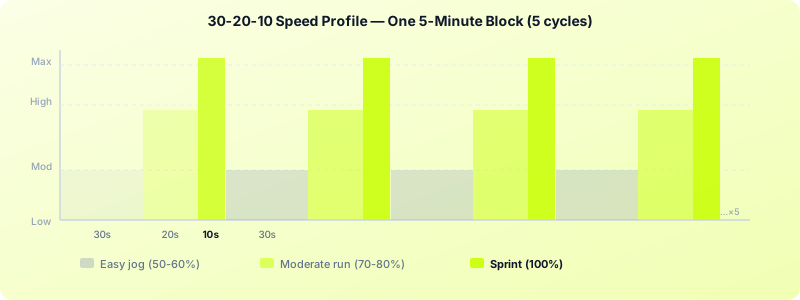
Set up a repeating cycle with three intervals:
- 30 seconds — easy jog (green / low alert)
- 20 seconds — moderate run (yellow / mid alert)
- 10 seconds — sprint (red / high alert)
Repeat this 3-interval cycle 5 times for one complete set. Then set a 2-minute rest interval between sets.
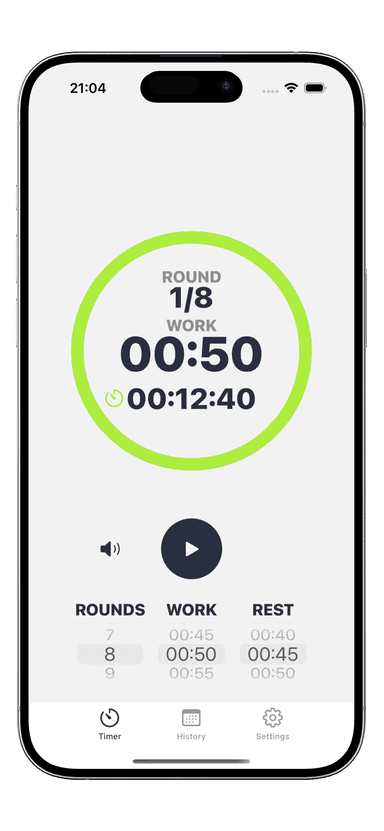
The Interval Timer app lets you build this exact structure: configure the three-interval cycle, set 5 repetitions per set, and a 2-minute rest between sets. The distinct audio tones tell you when each segment changes without looking at the screen — essential when your head is down and your legs are working.
Comparing 30-20-10 to Other Interval Methods
The 30-20-10 protocol occupies a specific niche. It's harder than Zone 2 cardio vs HIIT base building, but more structured than general HIIT vs steady state cardio work.
How it compares:
- vs. Tabata (20s on / 10s off): 30-20-10 runs continuously — no full rest within blocks, so sustained aerobic demand is higher
- vs. traditional sprint intervals (30s on / 90s off): 30-20-10 uses less total rest, which maintains higher average heart rate
- vs. easy jogging: 30-20-10 burns 30-40% more calories per minute due to sprint segments
The continuous nature of the protocol — even the "easy" 30-second segments involve actual jogging — means it builds both anaerobic capacity and aerobic base simultaneously. Most pure HIIT protocols neglect one or the other.
Who Should Use the 30-20-10 Protocol
Best suited for:
- Runners wanting to improve race times without adding mileage
- People who find traditional HIIT too stop-start and want continuous movement
- Intermediate fitness levels who need progression beyond steady jogging
- Anyone with 30-40 minutes for a high-efficiency run session
Not ideal for:
- Beginners who haven't built a base of easy jogging (build to 20+ minutes of continuous easy running first)
- People with knee or Achilles issues — the sprint segments create significant impact forces
- Those using a treadmill with slow speed response (manual treadmills or older machines may not adjust fast enough for 10-second sprints)
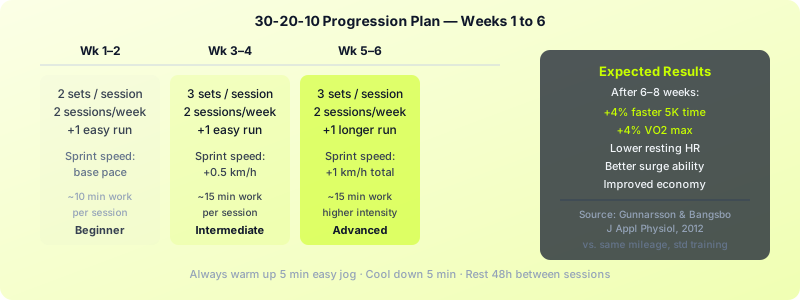
Progression: Start with 2 sets per session. Add a third set after two weeks. After four weeks, increase sprint speeds by 0.5-1 km/h while maintaining the same block structure.
Frequency and Recovery
Because the sprint segments fully tax your neuromuscular system, 30-20-10 sessions need adequate recovery between them. The original Danish research used two sessions per week, replacing moderate-effort runs — not adding to them.
Recommended weekly structure:
- Two 30-20-10 sessions (Tuesday and Friday, for example)
- One longer easy run (45-60 minutes at conversational pace)
- Rest or light walking on remaining days
This mirrors the approach used in cycling interval training and other sport-specific interval work — high-quality sessions separated by recovery.
After 4-6 weeks of consistent 30-20-10 training, most runners notice improved ability to surge during races, faster mile times, and reduced perceived effort at their previously-hard jogging pace. The sprint adaptations carry over directly to sustained running economy.
Download Interval Timer and set up the 30-20-10 cycle once — three intervals, five reps, two-minute rests — then let the audio guide you through each sprint without ever watching the clock.