5-Minute Mobility Routine for Rest Days
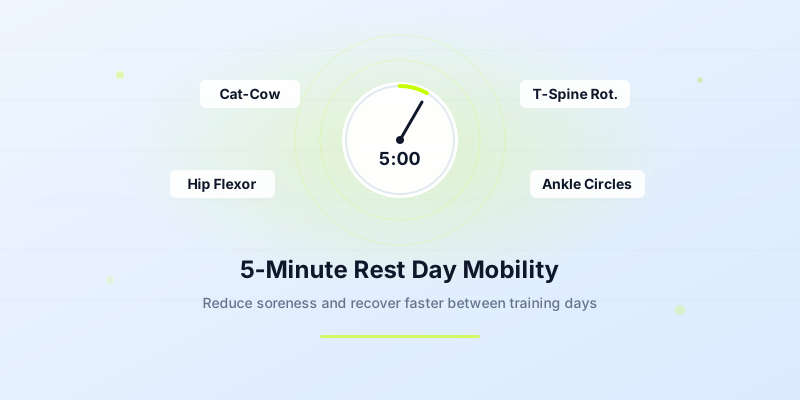
Rest days do not mean zero movement. Lying on the couch for 48 hours after a hard HIIT session might feel right, but your muscles and joints recover faster when you give them light, intentional motion. A 5 minute mobility routine for rest days is the sweet spot — short enough that you will actually do it, long enough to flush out soreness and keep your joints moving freely.
Active recovery through mobility work increases blood flow to damaged tissues, delivers oxygen, and clears metabolic waste. The result: less stiffness the next morning and better range of motion when your next training day arrives.
Why Mobility Work on Rest Days Speeds Recovery
After intense interval training, your muscles accumulate micro-damage and metabolic byproducts. Complete rest lets those byproducts linger. Low-intensity movement — the kind in a mobility routine — acts like a pump, pushing fresh blood into sore muscles and pulling waste out.
Research on active recovery shows that athletes who performed light movement between hard sessions maintained power output longer and reported less perceived fatigue compared to passive rest.
Here is what five minutes of rest-day mobility delivers:
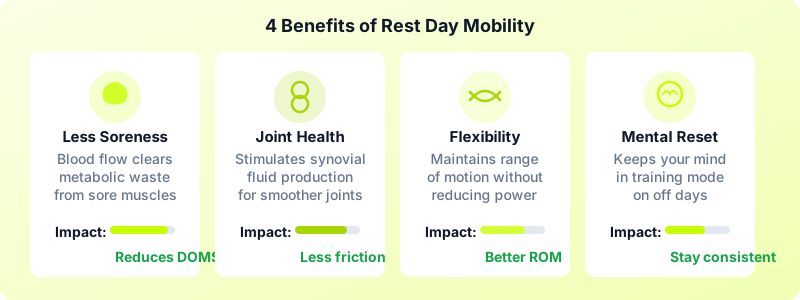
- Reduced delayed-onset muscle soreness (DOMS). Gentle movement keeps blood flowing to muscles that would otherwise tighten up.
- Better joint lubrication. Movement stimulates synovial fluid production, reducing friction in hips, knees, and shoulders.
- Improved flexibility without the performance cost. Unlike aggressive stretching, mobility holds at moderate ranges maintain elasticity without reducing power.
- Mental reset. A short routine signals to your brain that you are still in a training rhythm, even on off days.
If you are following a structured program like a pre-workout stretching routine, this rest-day routine is the perfect complement on your days between sessions.
The 5-Minute Rest Day Mobility Routine
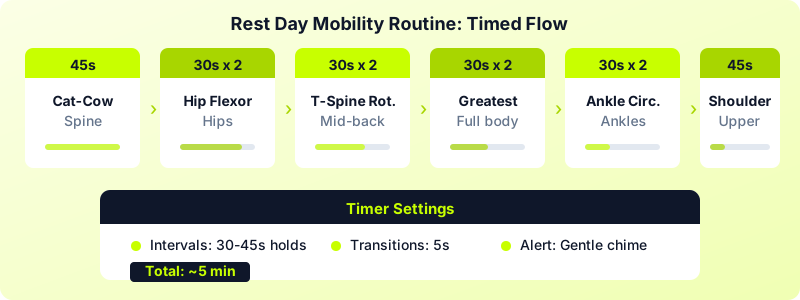
This routine targets the six areas that get tightest from interval training: hips, thoracic spine, ankles, shoulders, hamstrings, and lower back. Hold each position for 30 seconds per side (or 45 seconds total for bilateral moves).
1. Cat-Cow (45 seconds) Start on all fours. Inhale and arch your back, letting your belly drop toward the floor. Exhale and round your spine toward the ceiling. Flow slowly between positions. This mobilizes your entire spine and releases lower back tension.
2. Half-Kneeling Hip Flexor Stretch (30 seconds per side) Kneel on one knee with the other foot flat in front. Push your hips gently forward until you feel a stretch in the front of your rear hip. This counteracts the hip tightness that builds from squats, lunges, and running intervals.
3. Thoracic Rotation (30 seconds per side) Stay in the half-kneeling position. Place one hand behind your head and rotate your upper body toward the ceiling, following your elbow with your eyes. This opens the mid-back, which stiffens from desk work and forward-leaning exercises.
4. World's Greatest Stretch (30 seconds per side) Step into a deep lunge. Place the hand on the same side as your front foot on the floor. Rotate your other arm toward the ceiling. This single movement hits your hip flexors, hamstrings, thoracic spine, and groin.
5. Ankle Circles (30 seconds per foot) Stand on one leg (hold a wall for balance). Draw large, slow circles with your free foot. Reverse direction halfway. Ankle mobility affects squat depth, running form, and jump landing mechanics.
6. Shoulder Pass-Throughs (45 seconds) Hold a towel or resistance band with a wide grip. Keeping your arms straight, slowly raise it overhead and behind your back as far as comfortable, then return. This opens your chest and shoulder capsules.
Total time: approximately 5 minutes.
How to Time Each Mobility Hold With an Interval Timer
Counting seconds in your head during a stretch never works — you either rush through or lose track. An interval timer turns this routine into a guided flow.
Here is how to set up your interval timer for rest-day mobility:
- Create a new timer with intervals matching each hold duration (45s, 30s, 30s, etc.).
- Add 5-second transitions so you have time to switch positions.
- Name each exercise — Cat-Cow, Hip Flexor Left, Hip Flexor Right, and so on.
- Set a calm alert tone. This is recovery, not a sprint. Use a gentle chime or voice alert instead of a loud buzzer.
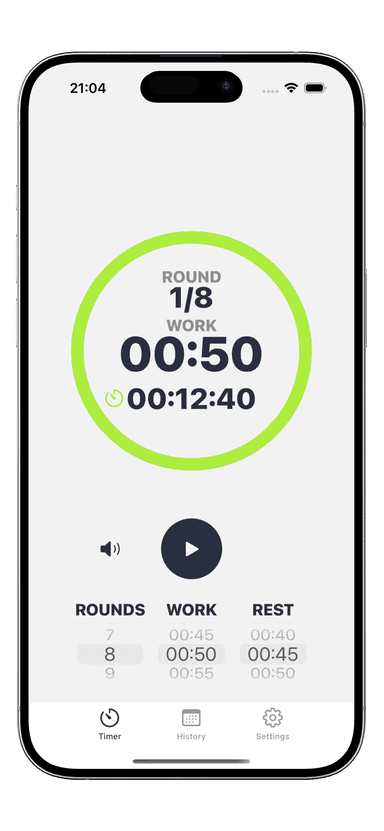
The Interval Timer app lets you save this as a preset called "Rest Day Mobility" so you can launch it with one tap every recovery day. Pair it with the cool-down stretches with timer preset for post-workout days, and you have a complete flexibility system.
Mobility vs Stretching: What Your Rest Days Actually Need
Mobility and stretching overlap, but they are not the same thing. Understanding the difference helps you pick the right movements for recovery days.
Stretching focuses on lengthening a specific muscle. You hold a position at end range and wait. It is passive — gravity or your body weight does the work.
Mobility focuses on improving how a joint moves through its full range. It is active — you use muscle control to explore and expand movement patterns. Mobility often includes rotation, circles, and controlled movement under light load.
On rest days, mobility beats passive stretching because:
- It promotes blood flow without overstretching sore fibers.
- It trains movement control, not just flexibility.
- It prepares your joints for the specific demands of your next workout.
Save deep, long-hold static stretching for dedicated flexibility sessions. On rest days, keep it moving.
How to Make Rest Day Mobility a Daily Habit
The biggest challenge is not the routine — it is remembering to do it. Five minutes is nothing, yet most people skip it because it is not part of their structure.
Here is how to make it stick:
- Anchor it to an existing habit. Do the routine right after your morning coffee or right before bed. Pairing it with something you already do every day removes the decision.
- Use your timer preset. Having the routine saved in Interval Timer means you never have to think about what to do or how long to hold. Open, tap, follow.
- Track your streak. Most people respond well to seeing consecutive days logged. Even a simple check mark on a calendar builds momentum.
- Accept imperfection. A three-minute version on a lazy day beats skipping entirely. Consistency matters more than duration.
Five minutes of mobility on your rest days adds up to 35 minutes per week of joint-friendly, recovery-boosting movement. Over a month, that is over two hours of work that makes every training session safer and more productive.
Download Interval Timer and build your rest-day mobility routine today.