Post-Workout Cool Down Stretches With a Timer
You just finished your last round. Your heart is pounding, your muscles are burning, and every instinct says to collapse on the couch. But skipping your post workout cool down stretches with a timer is one of the fastest ways to undo the progress you just made. A structured cool-down takes five minutes and can cut next-day soreness by up to 30%, improve your flexibility over time, and bring your heart rate back to safe levels before you stop moving entirely.
The best part? When you use a timer, you do not have to think about counting seconds or watching a clock. You just stretch, breathe, and recover.
Why Cooling Down After a Workout Matters
Your body does not have an off switch. After intense exercise, your heart is still pumping hard, your blood pressure is elevated, and your muscles are flooded with metabolic waste products like lactate. Stopping abruptly can cause blood to pool in your legs, leading to dizziness, lightheadedness, or even fainting.
The American Heart Association recommends cooling down for 5-10 minutes after exercise to gradually return your heart rate, body temperature, and blood pressure to resting levels. That transition period is not wasted time — it is when your recovery begins.
Here is what happens during a proper cool-down:
- Heart rate drops gradually — Going from 170 bpm to 70 bpm over five minutes is far safer than crashing to a stop. A gradual decline prevents blood pooling and reduces cardiovascular strain.
- Muscle temperature stays elevated — Warm muscles are pliable muscles. Stretching while your tissues are still warm gives you a deeper, more effective stretch than waiting until they cool and tighten.
- Waste removal accelerates — Gentle movement and stretching help flush lactate and other metabolic byproducts from your muscles, reducing the severity of delayed-onset muscle soreness (DOMS).
- Flexibility improves — Post-workout is the optimal window for flexibility gains. Your connective tissue is at its most extensible when it is warm, so holding static stretches after training delivers better long-term range of motion improvements than stretching cold.
If you just finished a beginner HIIT workout at home, cool down stretches after HIIT are especially important because those rapid, explosive movements create significant muscle tension that needs to be released.
Static vs Active Recovery — What Works Best
Not all cool-downs are the same. The two main approaches — static stretching and active recovery — serve different purposes, and the best timed cool down routine uses both.
Active recovery means continuing to move at low intensity. Walking, light cycling, or gentle bodyweight movements keep blood flowing without adding training stress. Active recovery is ideal for the first 1-2 minutes of your cool-down to bridge the gap between your final work interval and full rest.
Static stretching means holding a position for 20-60 seconds, allowing the muscle to lengthen gradually. This is what builds flexibility and releases accumulated tension. Static holds work best when your muscles are already warm — which is exactly where they are after your workout.
The research supports a combined approach. Active recovery followed by static stretching improves flexibility outcomes compared to static stretching alone, because the continued movement maintains muscle temperature longer.
Your ideal 5-minute structure looks like this:
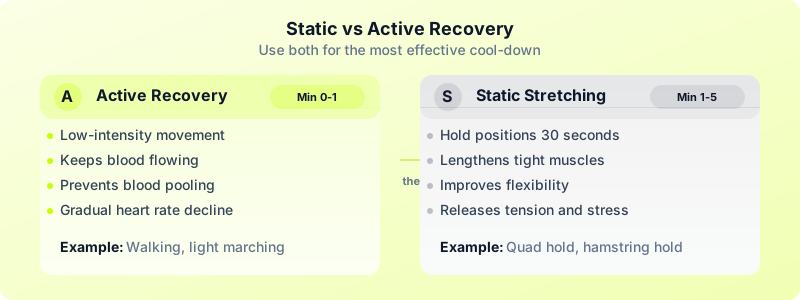
- Minutes 0-1: Walk in place or light marching (active recovery)
- Minutes 1-5: 10 static stretches, 30 seconds each (deep stretching)
10 Essential Cool Down Stretches (30 Seconds Each)
These ten stretches target every major muscle group you use during HIIT, circuit training, CrossFit, or any interval workout. Hold each for 30 seconds. Breathe deeply and do not bounce — let gravity and your exhale pull you deeper into each stretch.
-
Standing quad stretch — Stand on one leg, pull your opposite heel toward your glute. Keep your knees together and hips square. Switch sides at 15 seconds. Targets: quadriceps, hip flexors.
-
Standing hamstring stretch — Place one heel on a low surface or step forward and hinge at the hips with a flat back. Switch sides at 15 seconds. Targets: hamstrings, lower back.
-
Calf stretch — Step one foot back, press the heel into the floor, and lean forward into a wall or support. Switch sides at 15 seconds. Targets: calves, Achilles tendon.
-
Hip flexor stretch — Step into a deep lunge, drop your back knee to the floor, and push your hips forward gently. Switch sides at 15 seconds. Targets: hip flexors, psoas.
-
Pigeon stretch — From a lunge, bring your front shin across your body and lower onto your forearms. Switch sides at 15 seconds. Targets: glutes, hip rotators.
-
Chest opener — Clasp your hands behind your back, straighten your arms, and lift them while squeezing your shoulder blades together. Hold for 30 seconds. Targets: chest, front shoulders.
-
Shoulder cross-body stretch — Pull one arm across your chest with the opposite hand. Switch sides at 15 seconds. Targets: rear deltoids, upper back.
-
Triceps overhead stretch — Reach one arm behind your head, using the opposite hand to gently press the elbow down. Switch sides at 15 seconds. Targets: triceps, lats.
-
Seated spinal twist — Sit on the floor, extend one leg, cross the other over it, and twist your torso toward the bent knee. Switch sides at 15 seconds. Targets: lower back, obliques, glutes.
-
Child's pose — Kneel, sit back on your heels, and reach your arms forward on the floor. Hold for 30 seconds and breathe deeply. Targets: lower back, lats, shoulders.
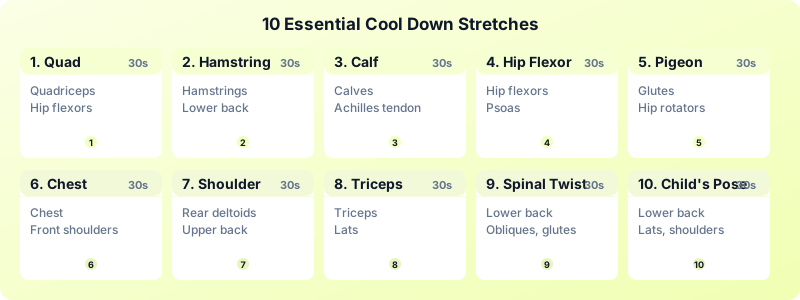
This sequence flows from standing to kneeling to floor, so you progressively lower your body as your heart rate comes down. That natural progression makes the routine feel intuitive — you never have to jump back up once you are on the ground.
The Complete 5-Minute Timed Cool Down Routine
Here is the full routine assembled into a single, timer-ready flow. The total time is 5 minutes and 30 seconds, including a 30-second active recovery walk at the start.
| Phase | Duration | Activity |
|---|---|---|
| Active recovery | 0:30 | Walk in place, shake out arms |
| Stretch 1 | 0:30 | Standing quad stretch |
| Stretch 2 | 0:30 | Standing hamstring stretch |
| Stretch 3 | 0:30 | Calf stretch |
| Stretch 4 | 0:30 | Hip flexor stretch |
| Stretch 5 | 0:30 | Pigeon stretch |
| Stretch 6 | 0:30 | Chest opener |
| Stretch 7 | 0:30 | Shoulder cross-body stretch |
| Stretch 8 | 0:30 | Triceps overhead stretch |
| Stretch 9 | 0:30 | Seated spinal twist |
| Stretch 10 | 0:30 | Child's pose |
You can add this routine directly after any workout. It pairs perfectly with a pre-workout stretching routine for HIIT to bookend your training sessions with proper movement preparation and recovery.
The key to making stretching after workout with timer effective is consistency. When you time every stretch at exactly 30 seconds, you guarantee each muscle gets adequate attention. No rushing, no guessing, no cutting corners when you are tired.
Setting Up Your Cool Down Timer
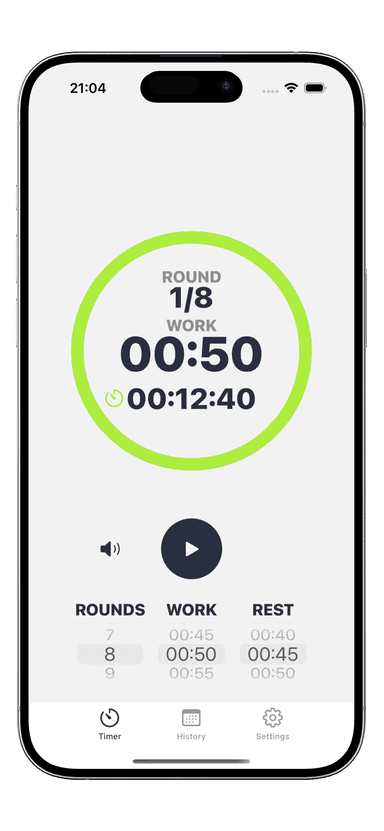
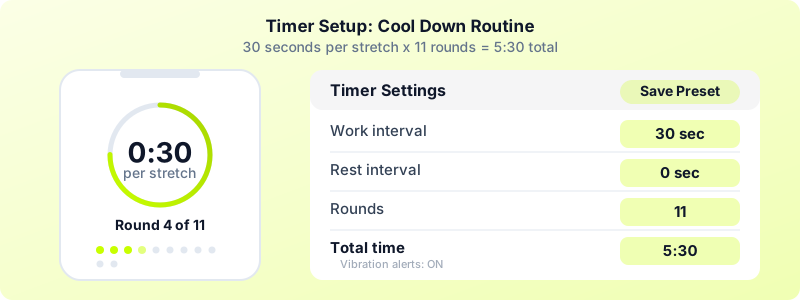
Configuring your cool-down timer takes about 30 seconds. Here is how to set it up in Interval Timer:
- Work interval: 30 seconds (each stretch hold)
- Rest interval: 0 seconds (transition directly to the next stretch)
- Rounds: 11 (1 active recovery round + 10 stretches)
- Total time: 5 minutes 30 seconds
Enable vibration alerts so you feel the transition signal without opening your eyes — especially useful during floor stretches like child's pose when you want to fully relax.
You can save this as a custom timer preset and add it after your existing workout timers. That way, your cool-down starts automatically as soon as your final work interval ends. No gap, no excuses, no forgetting.
If you are new to setting up timers for different workout formats, check out this guide on how to set up an interval timer for any workout. It covers everything from HIIT to Tabata to custom sequences like this cool-down routine.
Make Recovery Part of Your Training
Your workout is not truly finished until your cool-down is done. Five minutes of post workout cool down stretches with a timer is the simplest investment you can make in better recovery, less soreness, and improved flexibility over time. You already put in the hard work — now give your body the recovery it earned.
Save the routine above as a preset, press start after your final round, and let the timer guide you through every stretch. Your future self will thank you.
Download Interval Timer and build your timed cool-down routine in seconds — so recovery is never an afterthought.