Pre-Workout Stretching Routine for HIIT
You are about to crush a HIIT session. Your playlist is loaded, your timer is set, and your motivation is sky-high. But if you skip straight to the first work interval without a proper pre workout stretching routine for HIIT, you are setting yourself up for pulled muscles, stiff joints, and a workout that feels harder than it should.
A proper warm-up takes just five minutes. Those five minutes can be the difference between a session that feels fluid and powerful, and one that ends with a tweaked hamstring on round two.
Why Stretching Before HIIT Is Non-Negotiable
HIIT demands explosive movements. Squat jumps, burpees, high knees, mountain climbers — these exercises push your muscles through a wide range of motion at maximum speed. Cold muscles and connective tissues do not stretch easily, and forcing them into rapid, high-force movements is a recipe for strain.
Here is what a proper warm-up does for you before interval training:
- Raises muscle temperature — Warm muscles contract more forcefully and relax more quickly, reducing your risk of overstretching and tearing.
- Increases blood flow — More blood to your working muscles means more oxygen and fuel available when the first work interval starts.
- Activates your nervous system — Dynamic warm-up movements prime the connection between your brain and muscles, improving coordination and reaction time during fast transitions.
- Elevates heart rate gradually — Jumping from a resting heart rate of 65 bpm straight to 170 bpm puts unnecessary stress on your cardiovascular system. A warm-up bridges that gap.
Studies on muscular injury prevention have shown that muscles not properly warmed up are more inelastic at each increase in length, making them significantly more vulnerable to damage during high-intensity work.
If you are new to HIIT, check out this guide on how to start your first HIIT session at home before diving in.
Dynamic vs Static Stretching — Which One Before HIIT?
Not all stretching is created equal, and choosing the wrong type before your workout can actually hurt your performance.
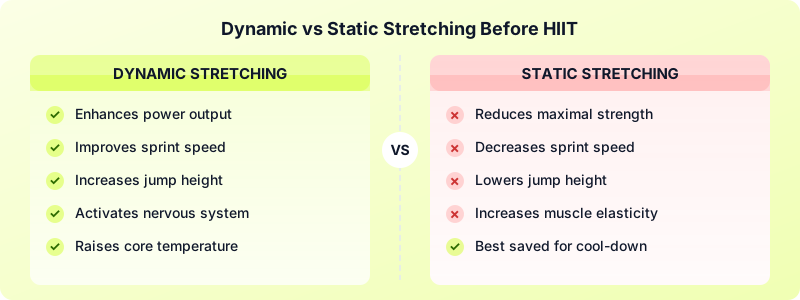
Dynamic stretching involves active, controlled movements that take your joints and muscles through their full range of motion. Think leg swings, arm circles, and walking lunges. Your body stays in motion the entire time.
Static stretching means holding a position for 15-60 seconds — like touching your toes or holding a quad stretch. This is what most people picture when they hear "stretching."
The research is clear: dynamic stretching before HIIT, static stretching after.
A meta-analysis published in the British Journal of Sports Medicine found that active warm-ups with dynamic movements substantially enhance power and strength performance. On the flip side, a 2019 study showed that static stretching before exercise can reduce maximal strength and power output. Holding a static stretch for over 60 seconds per muscle group has been shown to decrease sprint speed in runners and jump height in athletes.
The bottom line: save your static holds for the cool-down. Before HIIT, keep your body moving.
The 5-Minute Pre-HIIT Stretching Routine
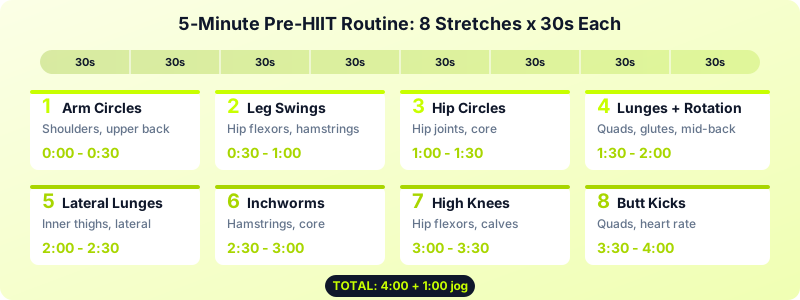
This HIIT warm up stretches sequence covers every major muscle group you will use during your session. Perform each movement for 30 seconds, moving through all eight stretches in order. Total time: 4 minutes of dynamic stretching before HIIT, plus a 60-second light jog or march in place to start.
Start with: 60 seconds of marching or light jogging in place to raise your core temperature.
Then perform each stretch for 30 seconds:
-
Arm circles — Extend your arms straight out to the sides. Make small circles, gradually increasing to large circles. Switch direction at 15 seconds. This warms up your shoulders, upper back, and chest.
-
Leg swings (forward/back) — Stand on one leg and swing the other leg forward and backward in a controlled arc. Hold a wall for balance if needed. Switch legs at 15 seconds. Targets hip flexors and hamstrings.
-
Hip circles — Place your hands on your hips and draw large circles with your hips, like you are using a hula hoop. Switch direction at 15 seconds. Opens up the hip joints and activates your core.
-
Walking lunges with rotation — Step forward into a lunge, then rotate your torso toward your front knee. Alternate legs with each step. This stretch hits your quads, hip flexors, glutes, and mid-back simultaneously.
-
Lateral lunges — Step wide to one side, bending that knee while keeping the other leg straight. Push back to center and repeat on the other side. Warms up your inner thighs and improves lateral mobility.
-
Inchworms — Stand tall, fold forward and walk your hands out to a push-up position, then walk your hands back and stand up. Each rep takes about 5 seconds. Activates your hamstrings, core, and shoulders.
-
High knees — Drive your knees up to hip height, pumping your arms as if running. Start at a moderate pace and build speed. Elevates your heart rate and activates your hip flexors and calves.
-
Butt kicks — Jog in place, kicking your heels up toward your glutes with each step. This warms up your quads and further elevates your heart rate right before your HIIT session starts.
After the last stretch, you should feel a light sweat starting, your muscles should move freely without stiffness, and your heart rate should be elevated but not maxed out. That is your green light to start your first work interval.
How to Time Your Warm-Up With an Interval Timer
Doing this warm-up routine before interval training is even easier when you let a timer handle the pacing. Instead of counting seconds in your head or watching a clock, set up a dedicated warm-up timer that tells you exactly when to switch stretches.
Here is how to configure it in Interval Timer:
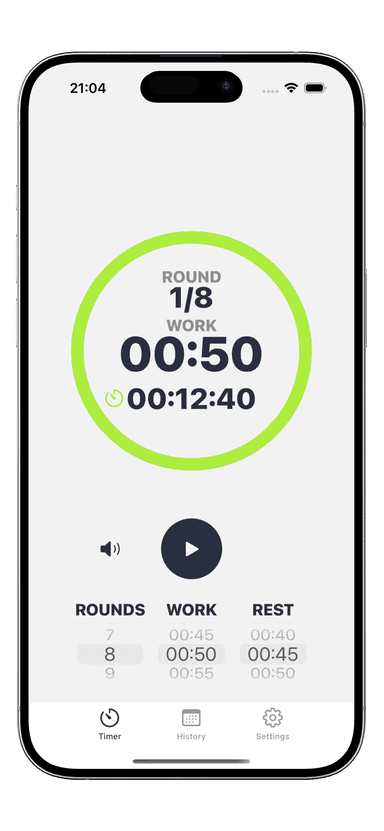
- Work interval: 30 seconds
- Rest interval: 0 seconds (move directly to the next stretch)
- Rounds: 8
- Total time: 4 minutes
You can also add a 60-second preparation countdown at the start for your initial marching or light jog. The app will beep or vibrate at each transition, so you never have to look at your phone — just listen for the signal and flow into the next movement.
If you want to learn more about setting up custom timers for any workout format, this guide on how to set up an interval timer for any workout walks you through the process step by step.
The beauty of timing your warm-up is consistency. When you use the same 5-minute structure every session, your body learns the sequence and you can focus on movement quality rather than logistics.

Signs You Are Not Warming Up Enough
Even if you do a warm-up, you might not be doing enough. Here are the warning signs that your body is not ready for high-intensity work:
-
Your joints crack or pop during the first few reps. Some joint noise is normal, but if your knees, hips, or shoulders are popping consistently in the first round of exercises, your joints need more time to lubricate and loosen.
-
You feel stiff during your first work interval. If your squat feels shallow or your lunges feel restricted in round one but fine by round three, your warm-up was too short. You should hit full range of motion from the very first rep.
-
No sweat at all before starting. A proper dynamic warm-up should produce at least a light sweat. If your skin is completely dry when the first beep hits, your core temperature has not risen enough.
-
Your heart rate spikes sharply in the first interval. Going from resting to max effort without a gradual ramp-up stresses your cardiovascular system unnecessarily. You should feel a moderate heart rate elevation before your first work set.
-
You experience recurring muscle strains or pulls. If you keep tweaking the same muscle group during HIIT — hamstrings, hip flexors, or calves are common culprits — your warm-up likely is not adequately preparing those specific areas.
-
You feel mentally unfocused. A warm-up is not just physical preparation. By the end of your stretching routine, you should feel locked in and ready to push. If you are still thinking about emails when the first interval starts, your warm-up did not include enough intentional movement to shift your focus.
If any of these sound familiar, add an extra 2-3 minutes to your warm-up or increase the intensity of your dynamic stretches. For a structured bodyweight interval session that includes built-in warm-up guidance, try following a complete workout plan that accounts for proper preparation.
Put It All Together
A five-minute pre workout stretching routine for HIIT is not optional — it is the foundation that makes everything else in your session safer and more effective. Dynamic stretching before HIIT primes your muscles, protects your joints, and gives your cardiovascular system the gradual ramp-up it needs.
Use the 8-stretch sequence above, time it with an interval timer, and make it a non-negotiable part of every session. Your body will move better, your performance will improve, and you will stay injury-free longer.
Download Interval Timer and set up your warm-up routine in seconds — so the only thing you have to think about is giving your next HIIT session everything you have got.