Does HIIT Burn More Fat Than Running?
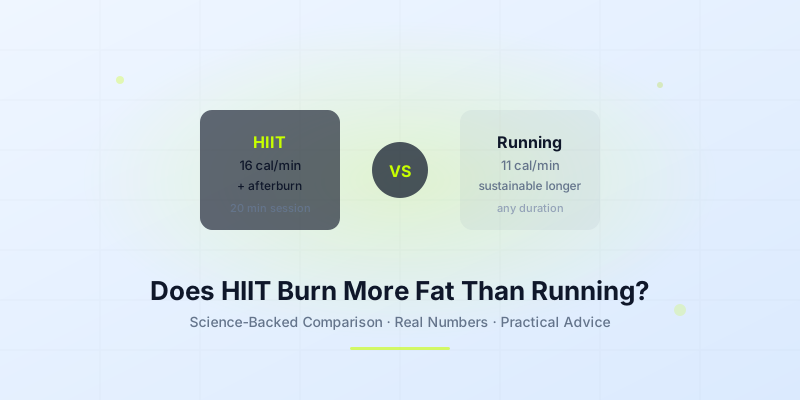
Does HIIT burn more fat than running? It's one of the most searched questions in fitness — and the answer is more nuanced than most articles admit. The short version: HIIT burns more calories per minute and produces a stronger afterburn effect, but steady-state running has advantages of its own. Which wins for fat loss depends on how you measure it and what your schedule allows.
Here's the honest comparison backed by numbers, not marketing claims.
Calories Burned: HIIT vs Running Head to Head
During the session itself, the calorie burn depends heavily on intensity and duration.
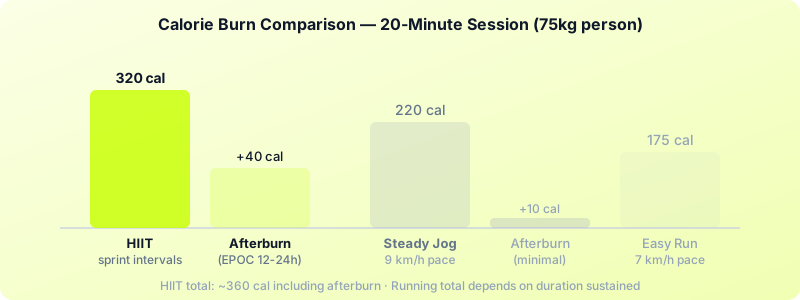
20-minute comparison (75kg person):
- 20-minute HIIT session (sprint intervals): ~250-320 calories
- 20-minute steady jog (9 km/h): ~200-240 calories
- 20-minute easy run (7 km/h): ~160-190 calories
HIIT wins on calories per minute — but running's advantage emerges with duration. A 45-minute run at a comfortable pace burns 360-420 calories. No HIIT session lasts 45 minutes — the intensity makes that physiologically impossible.
The practical reality: Most people can sustain a 45-minute run but can only manage 20-25 minutes of true HIIT. So the total calorie gap closes — and sometimes reverses — when you account for realistic session lengths.
The Afterburn Effect: Why HIIT Wins Long-Term
The real fat-loss advantage of HIIT is what happens after the session ends. EPOC — excess post-exercise oxygen consumption — refers to the elevated calorie burn that continues for hours after high-intensity training.
After a genuine HIIT session, your body burns an additional 6-15% of the session's calories over the next 12-24 hours while it recovers, replenishes glycogen, and repairs muscle tissue. After a steady jog, the EPOC effect is minimal — maybe 5-7% for 1-2 hours.
A 300-calorie HIIT session might generate an additional 30-45 afterburn calories. Over a week of 3 HIIT sessions, that's 90-135 extra calories burned — equivalent to an extra light snack eliminated from your daily deficit.
This is why HIIT for fat loss has consistently outperformed steady-state cardio in fat loss studies over 8-12 week periods, even when calorie intake is matched.
When Running Beats HIIT for Fat Loss
Running isn't without its advantages. There are specific scenarios where it outperforms HIIT:
Long sessions: A 60-90 minute run burns 500-800 calories — far more than any HIIT session can achieve. For people training for events or with significant time available, long runs produce total calorie burns that HIIT simply can't match.
Recovery days: Running at a comfortable pace on recovery days adds volume without taxing your nervous system. HIIT on consecutive days leads to overtraining and reduces the quality of each session.
Fat oxidation at lower intensity: During steady-state running, your body primarily burns fat as fuel. During HIIT, you rely more heavily on carbohydrates. Paradoxically, you burn a higher percentage of fat per calorie during easy running — but HIIT burns more total calories, so overall fat burned is still comparable or higher.
Consistency over time: Running is sustainable daily. HIIT is not — 2-3 sessions per week is the safe maximum. Someone who runs 5 days per week versus someone who HIITs 3 days per week will accumulate more total calorie burn through running if the intensities are comparable.
The HIIT vs steady state cardio debate ultimately comes down to this: HIIT is more efficient per minute, running allows higher total volume.
How to Combine HIIT and Running
The smartest fat-loss approach uses both. Here's a proven weekly structure:
3 HIIT sessions + 2 runs:
- Monday: HIIT (20-25 min)
- Tuesday: Easy run (30-40 min, conversational pace)
- Thursday: HIIT (20-25 min)
- Friday: Easy run (30-40 min)
- Saturday: HIIT (20-25 min) OR longer run (45-60 min)
This combination gives you HIIT's afterburn effect plus running's sustainable calorie volume. The easy running days also help active recovery between HIIT sessions.
Your interval timer makes both training types more effective. For HIIT, set precise work and rest intervals. For run/walk interval training — a gateway format between walking and running — use 1-minute run / 1-minute walk cycles, exactly as described in a Zone 2 vs HIIT training plan.
The Verdict: Which Should You Choose?
Choose HIIT if:
- You have 20-30 minutes and need maximum fat-burning stimulus
- You want to preserve muscle mass while losing fat (running can cause muscle loss at high volumes)
- You're already a runner and want to add intensity without more mileage
- You have joint issues that make long-duration running uncomfortable
Choose running if:
- You enjoy it and will do it consistently — consistency beats optimal format every time
- You have 45+ minutes available for cardio sessions
- You're training for a running event
- You need low-impact option on recovery days (easy running, not sprinting)
Do both if you want the best results — alternating HIIT and easy run days gives you HIIT's metabolic punch and running's volume advantage.
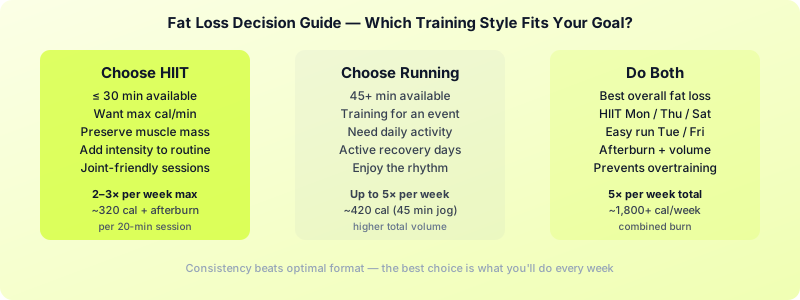
The bottom line: HIIT burns more fat per minute. Running allows more minutes. The winner is whichever one you'll actually do consistently — but combining them intelligently beats either alone.
Download Interval Timer to run structured HIIT intervals and timed run-walk sessions from the same app — set your protocol once and let the timer manage the rest.