Dynamic Warmup Exercises Before Interval Training
Jumping straight into a HIIT circuit with cold muscles is like flooring a car engine in January without letting it idle. Your body can technically do it, but performance drops and the risk of something breaking climbs fast. The right dynamic warmup exercises before interval training prime your joints, activate your nervous system, and raise your core temperature so every working interval hits harder.
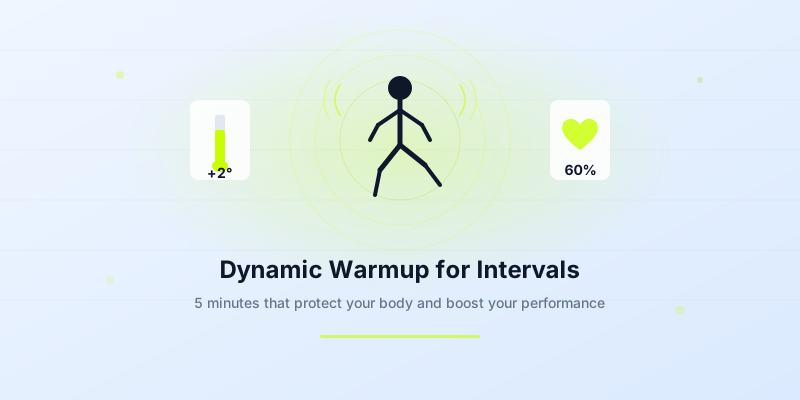
Research shows that a proper dynamic warmup can reduce muscle injuries by 30-50%. That five minutes of preparation pays for itself many times over — in fewer tweaks, better power output, and faster recovery between sets.
Why Dynamic Warmups Beat Static Stretching Before Intervals
Static stretching — holding a hamstring stretch for 30 seconds — was the gold standard for decades. We now know it is the wrong tool before high-intensity work.
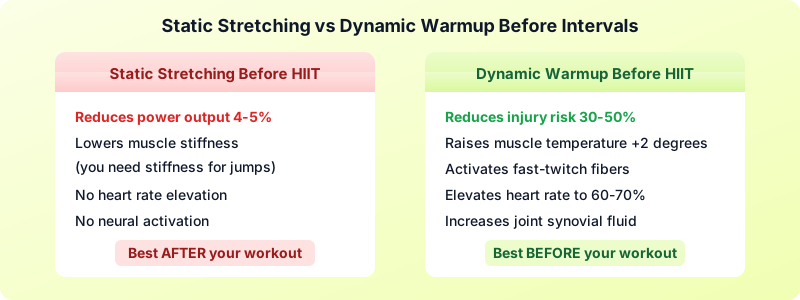
Static holds temporarily reduce muscle stiffness, which sounds helpful. But that stiffness is what gives you elastic rebound during explosive movements like jump squats, burpees, and sprint starts. A 2019 meta-analysis found that static stretching before power-based exercise reduced performance by an average of 4-5%.
Dynamic warmups work differently. Instead of holding, you move through increasing ranges of motion. This:
- Raises muscle temperature so fibers contract faster and absorb more force.
- Activates motor units and fast-twitch fibers, putting your muscles on high alert before the first working interval.
- Increases synovial fluid flow in your joints, cutting friction in hips, knees, and shoulders.
- Elevates your heart rate gradually so your cardiovascular system is ready for the sharp jump to 80-90% effort.
Save static stretching for your pre-workout stretching routine cool-down. Before intervals, move.
8 Best Dynamic Warmup Exercises for Interval Training
These eight movements cover every major muscle group and joint you will use during HIIT, Tabata, EMOM, or circuit training. Perform each for 30 seconds with no rest between exercises.
1. High Knees Drive your knees toward your chest at a jogging pace. This fires up your hip flexors, quads, and cardiovascular system. Keep your core tight and land on the balls of your feet.
2. Leg Swings (Front to Back) Hold a wall or doorframe for balance. Swing one leg forward and back in a controlled arc, gradually increasing the range. Do 15 seconds per leg. This opens your hamstrings and hip flexors.
3. Arm Circles Extend your arms to the sides and make large circles — 15 seconds forward, 15 seconds backward. This warms up your shoulder joints and rotator cuffs for push-ups, overhead presses, and burpees.
4. Walking Lunges Step forward into a deep lunge, keeping your front knee over your ankle. Alternate legs as you walk. This activates your glutes, quads, and hip stabilizers.
5. Inchworms From standing, fold forward, walk your hands out to a plank, then walk them back and stand up. This targets hamstrings, core, and shoulders in one fluid movement.
6. Lateral Shuffles Drop into a quarter squat and shuffle sideways for 4-5 steps, then reverse. This warms your inner and outer thighs, ankles, and builds lateral stability.
7. Hip Circles Stand on one leg and draw large circles with the opposite knee. Do 15 seconds per direction per leg. This mobilizes the hip socket, which takes heavy load during squats, lunges, and running.
8. Butt Kicks Jog in place while kicking your heels toward your glutes. This stretches your quads dynamically and continues building your heart rate toward working intensity.
The 5-Minute Dynamic Warmup Routine
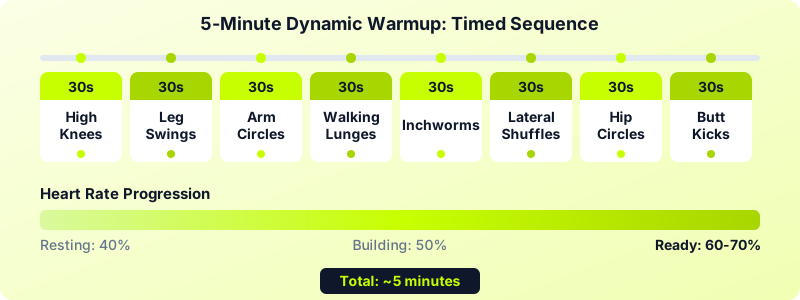
Here is the complete routine laid out as a timed sequence. Each exercise runs 30 seconds with a 5-second transition between movements.
| Exercise | Duration | Focus |
|---|---|---|
| High Knees | 30 sec | Cardio + hip flexors |
| Leg Swings | 30 sec | Hamstrings + hips |
| Arm Circles | 30 sec | Shoulders |
| Walking Lunges | 30 sec | Glutes + quads |
| Inchworms | 30 sec | Hamstrings + core |
| Lateral Shuffles | 30 sec | Inner/outer thighs |
| Hip Circles | 30 sec | Hip mobility |
| Butt Kicks | 30 sec | Quads + cardio |
Total time: approximately 4 minutes 40 seconds with transitions. Round up to 5 minutes with a few deep breaths at the end before your first working interval starts.
By the final exercise, your heart rate should sit around 60-70% of max — elevated enough to transition smoothly into high-intensity work without the shock of going from zero to full effort.
How to Time Your Warmup With an Interval Timer
Timing your warmup with the same tool you use for your workout creates a seamless session. Here is how to set up your interval timer for the warmup routine above:
- Create a new timer with 8 intervals of 30 seconds each.
- Set 5-second transitions between exercises (or use a 5-second rest interval).
- Name each exercise — High Knees, Leg Swings, Arm Circles, and so on — so the timer announces what is next.
- Chain it to your main workout. In Interval Timer, you can stack the warmup timer before your HIIT or Tabata block so the entire session runs hands-free from warmup to cool-down.
This approach eliminates the temptation to skip the warmup "just this once." When your timer starts the warmup automatically, it becomes a non-negotiable part of every session.
Common Warmup Mistakes That Hurt Performance
Even people who warm up consistently make errors that limit their results:
- Too short. A 60-second arm swing is not a warmup. You need at least 4-5 minutes of progressive movement to raise core temperature by the 1-2 degrees that unlock peak muscle performance.
- Too intense. The warmup is not the workout. If you are gasping after your warmup, you started your intervals already fatigued. Keep effort at 50-70% of max.
- Skipping lower body. Upper-body-only warmups leave your hips, knees, and ankles cold. Most interval training injuries happen below the waist — lunges, squats, and shuffles are essential.
- Static stretching first. As covered above, static holds before explosive work reduce power output. Go dynamic first, stretch static afterward.
- No consistency. A warmup only protects you if you do it every session. Use a timer preset so it runs automatically — no willpower required.
A proper dynamic warmup takes five minutes and makes every interval that follows safer, sharper, and more effective. If you are doing a beginner HIIT workout, this routine is especially important while your joints and connective tissue adapt to high-impact movements.
Download Interval Timer and build your warmup routine into every training session.