Home Workout Routine With Timed Intervals
You have 20 minutes, a living room floor, and zero excuses. That is all it takes to build a home workout routine with timed intervals that actually delivers results. No gym membership, no commute, no waiting for equipment. Just you, your bodyweight, and a timer calling the shots.
Research from Liverpool John Moores University found that interval training with 60-second work periods improved aerobic capacity significantly more than shorter intervals. And the American Sports & Fitness Association reports that time-based training often outperforms rep-based training because you focus on effort and form instead of counting. The bottom line: when you train on the clock at home, you work harder and stay more consistent.
Why Timed Intervals Transform Home Workouts
Most home workouts fall apart for one reason — you lose structure. Without a coach, a class, or a gym environment, it is easy to rest too long, skip exercises, or cut sessions short. A timed interval workout at home solves every one of those problems.
Here is what happens when you add a timer to your routine:
- Accountability built in — The timer tells you when to work and when to rest. No guessing, no negotiating with yourself.
- Consistent intensity — Fixed work and rest periods keep your heart rate in the right zone. A 20-minute timed session can burn 200-350 calories depending on the exercises and your effort level.
- Faster workouts — Timed intervals eliminate dead time. What used to be a 45-minute session becomes 20-25 minutes of focused, effective training.
- Measurable progress — When you use the same intervals each week, you can track whether you are completing more reps, moving faster, or recovering quicker.
The structure of timed intervals also frees up mental energy. Instead of counting reps and wondering if you have done enough, you simply give maximum effort until the beep. That mental shift is what makes an interval training routine at home so effective for long-term consistency.
How to Structure a Timed Interval Routine
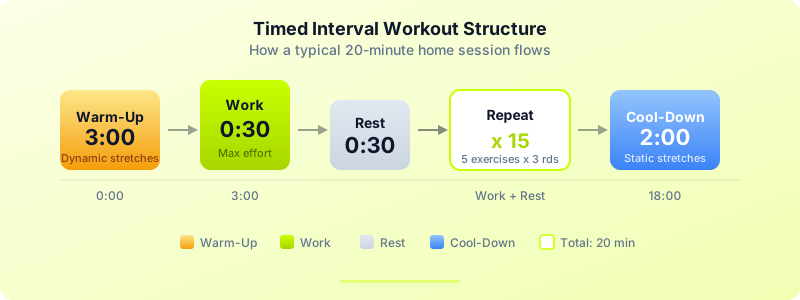
A well-structured home workout with timer follows a predictable pattern: warm-up, work intervals, rest intervals, and cool-down. The specific durations depend on your fitness level and goals.
Beginner structure (20 minutes total):
- Warm-up: 3 minutes (light movement, dynamic stretches)
- Work intervals: 30 seconds
- Rest intervals: 30 seconds (1:1 ratio)
- Rounds: 4-5 exercises x 3 rounds
- Cool-down: 2 minutes
Intermediate structure (25 minutes total):
- Warm-up: 3 minutes
- Work intervals: 40 seconds
- Rest intervals: 20 seconds (2:1 ratio)
- Rounds: 5-6 exercises x 3 rounds
- Cool-down: 2 minutes
Advanced structure (30 minutes total):
- Warm-up: 3 minutes
- Work intervals: 45 seconds
- Rest intervals: 15 seconds (3:1 ratio)
- Rounds: 5-6 exercises x 4 rounds
- Cool-down: 2 minutes
The work-to-rest ratio is the single most important variable. Beginners should start at 1:1 (equal work and rest) and gradually shift toward 2:1 or 3:1 as fitness improves. Jumping to advanced ratios too soon leads to poor form and burnout.
Choose exercises that target multiple muscle groups. Compound movements like squats, push-ups, lunges, and burpees give you more training stimulus per second than isolation exercises. For a home setting, stick with movements that do not require much space or create noise for downstairs neighbors.
3 Ready-to-Use Home Interval Routines
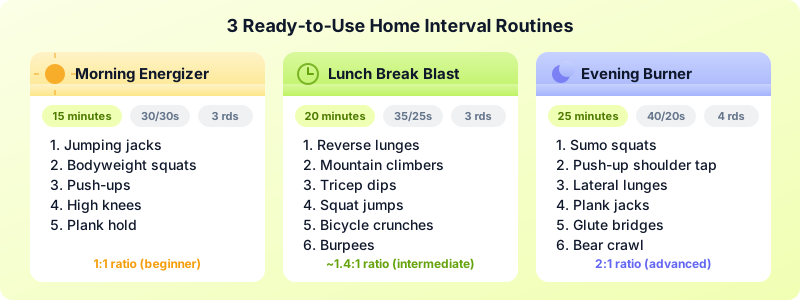
Here are three complete routines you can start today. Each one fits a different time slot in your day.
Morning Energizer (15 minutes)
This quick routine wakes up your body and boosts energy for the day ahead. Use 30 seconds work, 30 seconds rest, 3 rounds.
- Jumping jacks
- Bodyweight squats
- Push-ups (knees or full)
- High knees
- Plank hold
Total work time: 7.5 minutes. Total session: 15 minutes with warm-up and cool-down.
Lunch Break Blast (20 minutes)
Designed for a midday reset. Use 35 seconds work, 25 seconds rest, 3 rounds.
- Reverse lunges (alternating)
- Mountain climbers
- Tricep dips (using a chair)
- Squat jumps (or regular squats)
- Bicycle crunches
- Burpees (step-back modification available)
Total work time: 10.5 minutes. Total session: 20 minutes with warm-up and cool-down.
Evening Burner (25 minutes)
A full-body session for when you have more time. Use 40 seconds work, 20 seconds rest, 4 rounds.
- Sumo squats
- Push-up to shoulder tap
- Lateral lunges
- Plank jacks
- Glute bridges
- Bear crawl (in place)
Total work time: 16 minutes. Total session: 25 minutes with warm-up and cool-down.
Pick the routine that matches your schedule and energy level. You do not need to do all three — one session done consistently beats three sessions done once.
Tips for Staying Consistent With Home Training
Starting a routine is easy. Sticking with it past week two is where most people fail. Here are strategies that actually work for maintaining a home workout routine with timed intervals.
Anchor your workout to an existing habit. Put your session immediately before or after something you already do every day — morning coffee, lunch break, or right before your evening shower. Research shows that habit stacking increases follow-through by 40-60% compared to vague goals like "I will work out more."
Start shorter than you think you should. A 10-minute session you actually complete is worth more than a 45-minute plan you skip. Begin with 15-minute routines and add time only after you have been consistent for two weeks.
Track your sessions visually. Use a wall calendar, a notebook, or your phone to mark each completed workout. Seeing an unbroken streak is one of the strongest motivators for keeping it going. Interval Timer tracks your workout history automatically, so you can see your progress without extra effort.
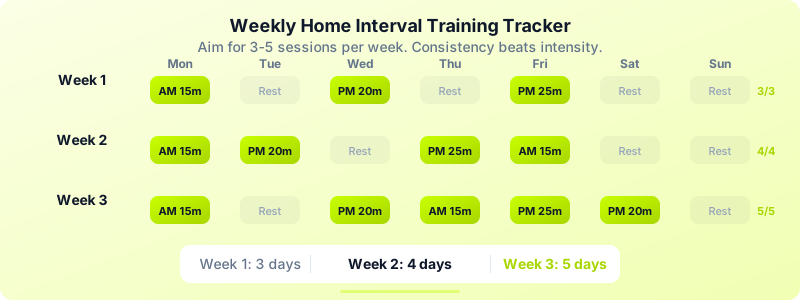
Rotate routines to prevent boredom. Use the three routines above on different days. Monday morning energizer, Wednesday lunch blast, Friday evening burner. The variety keeps your muscles guessing and your mind engaged.
Set a non-negotiable minimum. On days when motivation is low, commit to just one round of any routine. That is 2.5 to 4 minutes of work. Most of the time, once you start, you will finish the full session.
Setting Up Your Timer for Home Workouts
The right timer setup removes friction and lets you focus entirely on the workout. Here is how to configure your intervals for each routine above.
For the Morning Energizer:
- Work: 30 seconds
- Rest: 30 seconds
- Exercises per round: 5
- Rounds: 3
- Warm-up: 3 minutes
- Cool-down: 2 minutes
For the Lunch Break Blast:
- Work: 35 seconds
- Rest: 25 seconds
- Exercises per round: 6
- Rounds: 3
- Warm-up: 3 minutes
- Cool-down: 2 minutes
For the Evening Burner:
- Work: 40 seconds
- Rest: 20 seconds
- Exercises per round: 6
- Rounds: 4
- Warm-up: 3 minutes
- Cool-down: 2 minutes
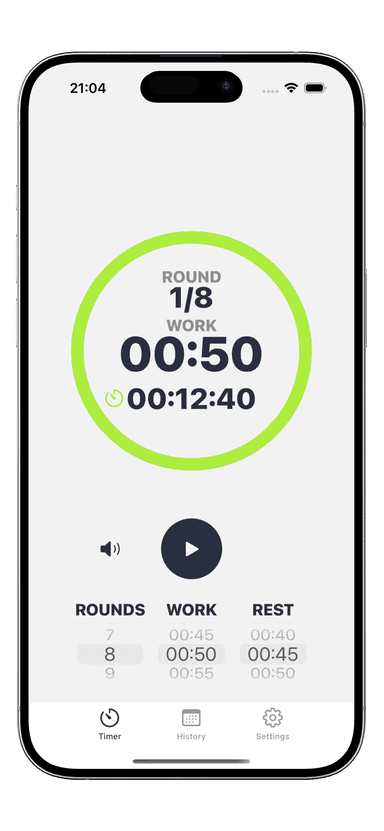
Interval Timer lets you save each of these as a custom preset, so you can start any routine with a single tap. Set distinct audio cues for work and rest transitions — a sharp beep for "go" and a softer tone for "rest" helps your brain switch gears without looking at the screen. If you train in an apartment, enable vibration alerts on your Apple Watch so you can keep the volume off.
The biggest timer mistake people make is skipping the warm-up and cool-down intervals. Build them into your timer setup rather than relying on memory. When the timer handles the full session structure, you just show up and move.
A home workout routine with timed intervals is one of the most time-efficient ways to build strength, burn fat, and stay consistent — all without leaving your house. Pick one of the three routines above, set your timer, and press start.
Download Interval Timer and save these routines as custom presets for one-tap workouts at home.