How to Program Your Own Workout Schedule for the Week
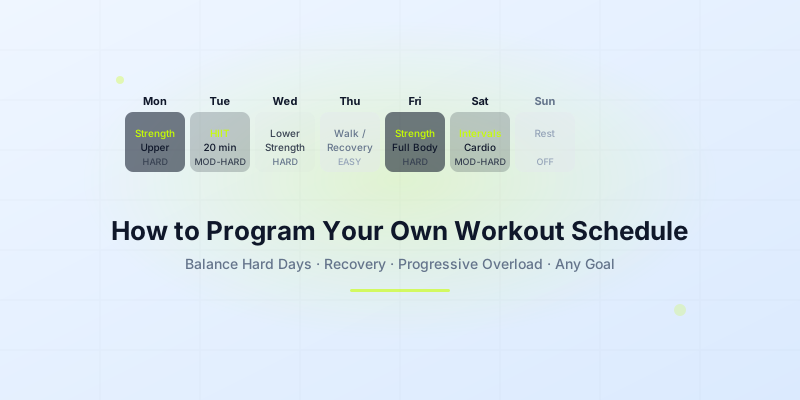
Programming your own workout schedule doesn't require a personal trainer or expensive software. It requires understanding four things: how many days you can train, what your goal is, how hard each session should be, and how to sequence rest and work to avoid overtraining. Get those four right and the schedule writes itself.
Here's a practical framework used by intermediate-level athletes to build sustainable weekly training plans.
Start With Recovery, Not Training Days
Most people make the mistake of picking training days first. The smarter approach is to decide how many rest days you need and work backward from there.
Recovery is where adaptation happens. Training stresses the body — rest allows it to rebuild stronger. Without sufficient recovery, you accumulate fatigue faster than you adapt, and performance stagnates or declines.
General recovery requirements by training type:
- Heavy strength training (squats, deadlifts, heavy compound lifts): 48-72 hours before training the same muscle group
- HIIT / high-intensity cardio: 48 hours minimum between sessions
- Easy cardio / Zone 2 / walking: can be done daily without recovery concerns
- Skill-based training (sport, martial arts): moderate — 24 hours minimum
If you're combining strength and HIIT, plan at least one full rest day or active recovery day (walking, stretching) between hard sessions.
Choose Your Weekly Structure Based on Goals
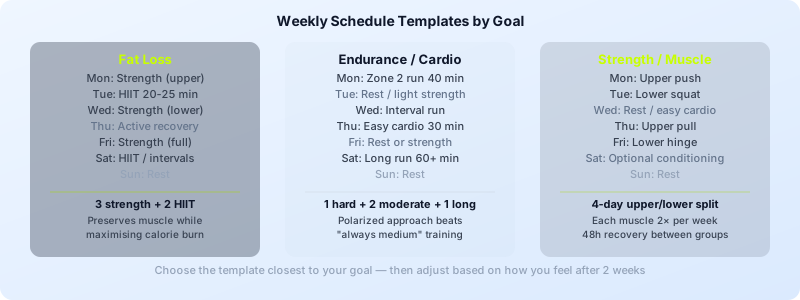
Goal: Fat loss
The most effective weekly structure for fat loss combines resistance training with interval cardio — not daily cardio alone, which leads to muscle loss over time.
Recommended: 3 strength sessions + 2 HIIT or interval cardio sessions + 2 rest/active recovery days
Example:
- Monday: Strength (upper body)
- Tuesday: HIIT / interval cardio (20-25 min)
- Wednesday: Strength (lower body)
- Thursday: Active recovery (30-min walk)
- Friday: Strength (full body or upper)
- Saturday: HIIT or cycling intervals
- Sunday: Rest
Goal: Cardiovascular fitness / endurance
3-4 cardio sessions per week with varying intensity is the evidence-backed approach. Doing the same moderate-intensity run every day produces diminishing returns.
Recommended: 1 high-intensity session + 1-2 Zone 2 sessions + 1 longer session + 2-3 rest or strength days
Example:
- Monday: Easy run or Zone 2 cardio (40-50 min)
- Tuesday: Rest or light strength
- Wednesday: Interval run (30-20-10 or tempo)
- Thursday: Easy cardio (30 min)
- Friday: Strength or rest
- Saturday: Long run (60+ min easy pace)
- Sunday: Rest
Goal: Strength and muscle building
Train each muscle group 2× per week with adequate recovery between sessions. A 4-day upper/lower split works well for most people.
Example:
- Monday: Upper body strength (push focus)
- Tuesday: Lower body strength (squat focus)
- Wednesday: Rest or light cardio
- Thursday: Upper body strength (pull focus)
- Friday: Lower body strength (hinge/deadlift focus)
- Saturday: Optional conditioning or active recovery
- Sunday: Rest
How to Set Intensity Across the Week
Not every training day should be hard. Distributing intensity correctly prevents burnout and produces better results than going all-out every session.
Use a simple three-tier system:
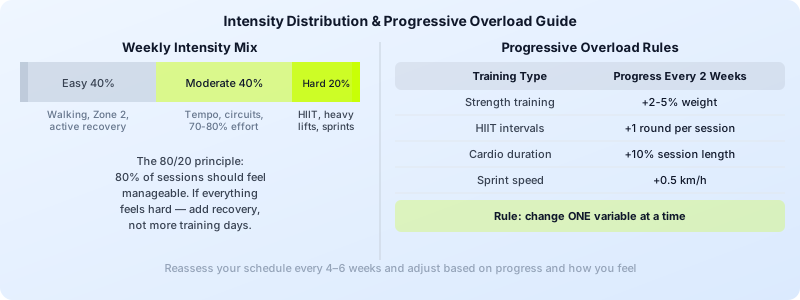
Hard days (1-2 per week): Maximum effort. Heaviest lifts, fastest intervals, highest heart rate. You need 48+ hours before another hard session.
Moderate days (2-3 per week): Working hard but not at your limit. Tempo runs, moderate weight training, circuit training at 70-80% effort.
Easy days (1-2 per week): Active recovery. Light jogging, walking, mobility work, or easy swimming. Heart rate stays below 65% max.
A common mistake is making every session moderate-to-hard. This feels productive but produces a flat performance plateau over weeks. The polarized approach — mostly easy with occasional very hard sessions — consistently outperforms the "always medium" approach in endurance sports research.
Programming HIIT Into Your Week
HIIT should appear no more than 2-3 times per week. Its intensity means recovery is non-negotiable between sessions. The HIIT workout for beginners at home template works as a starting point — but scheduling it is equally important.
Rules for placing HIIT in your schedule:
- Never program HIIT the day before heavy strength training (your CNS won't recover in time)
- Always have at least one day between HIIT sessions
- If you do HIIT and strength on the same day, do strength first (when you're fresh)
- Limit true HIIT — all-out sprint intervals, Tabata, etc. — to 2 sessions per week when starting out
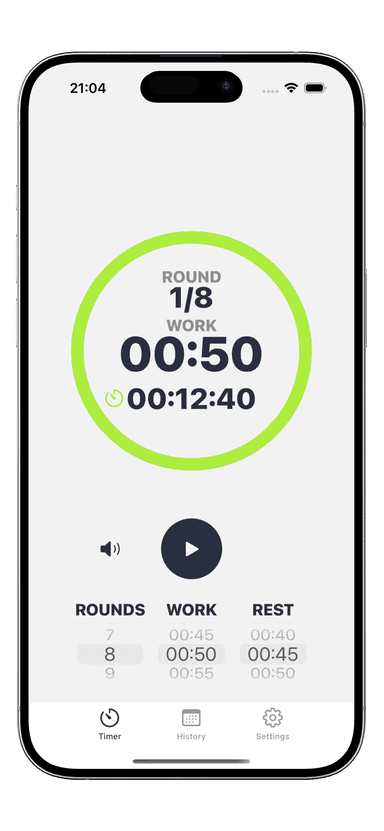
Using an interval timer for HIIT sessions ensures you hit exact work-rest ratios rather than guessing. Set your protocol once and the timer manages the session structure — freeing you to focus on effort rather than clock-watching.
Progressive Overload: How to Make the Schedule Harder Over Time
A schedule that doesn't change stops producing results. Progressive overload means gradually increasing the stress on your body over weeks and months.
Simple progression rules:
- Increase weight by 2-5% when you can complete all reps with good form for 2 consecutive sessions
- Add one more interval round per session after two weeks at the same volume
- Increase session duration by 10% every two weeks for cardio
- Never increase more than one variable at a time (don't add weight AND reps AND sessions simultaneously)
After 4-6 weeks on a schedule, reassess. If progress has stalled, you likely need either more volume, more intensity, or more recovery — rarely all three at once.
Practical Weekly Programming Rules
The 80/20 rule: 80% of your sessions should feel manageable. 20% should be genuinely hard. If every session feels hard, you're undertiming your recovery.
Write it down: A schedule you commit to paper (or your phone) is significantly more likely to be followed than one in your head. Plan the week on Sunday evening.
Same time slots: Scheduling workouts at consistent times reduces decision fatigue. Morning trainers are more consistent on average because the session is done before daily demands accumulate.
Account for life: Build one flexible slot into your week — a session you can move or skip without breaking the plan. Rigid 7-day schedules fall apart at the first work conflict; flexible ones adapt and continue.
Use your interval timer for time-based sessions: Whether it's 20-second HIIT intervals, 5-minute rowing blocks, or 45-minute cardio sessions with timed effort periods, the Interval Timer app tracks your session structure so you can focus on effort — not the clock.
The best workout schedule is the one you actually follow. Start with fewer days than you think you need, build the habit, then add volume once consistency is established.