Japanese Walking: The Interval Walking Method That Works
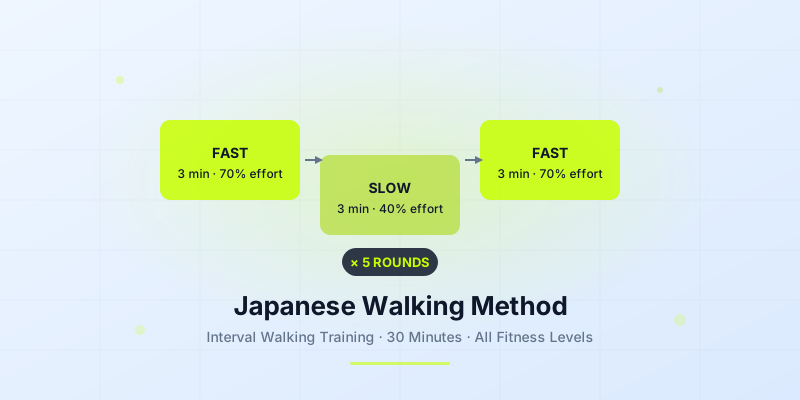
Japanese walking interval training is one of the most effective low-impact workouts you can do — and it requires zero equipment, zero gym membership, and zero running. Developed by Japanese researchers in the early 2000s, this method alternates between 3 minutes of brisk walking and 3 minutes of slow walking, repeated five times for a 30-minute session. The results are surprisingly powerful.
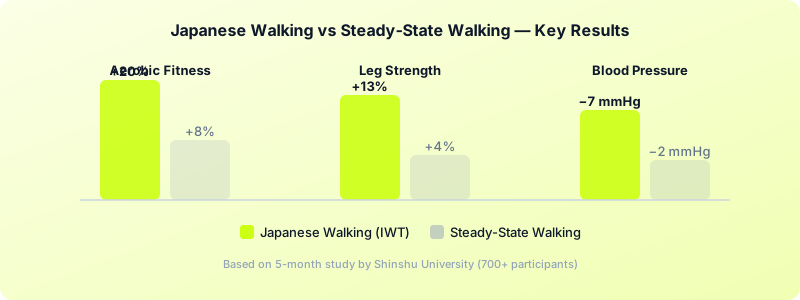
Research shows that people who practiced the Japanese walking method four or more days per week for five months improved their aerobic fitness by 20%, reduced blood pressure, and built measurable leg strength — better outcomes than those who walked at a steady, comfortable pace.
What Is Japanese Walking (Interval Walking Training)?
The Japanese walking method — also called Interval Walking Training (IWT) — was developed by Professor Hiroshi Nose at Shinshu University in Japan. The core idea is simple: alternating walking intensity triggers the same metabolic adaptations as more intense forms of interval training, but with far less stress on your joints.
The protocol is straightforward:
- 3 minutes fast: Walk at 70% of your maximum effort — brisk enough that talking feels hard
- 3 minutes slow: Drop to 40% effort, a comfortable recovery stroll
- Repeat 5 times for a 30-minute total workout
- Aim for 4 sessions per week for full benefits
This 3:3 ratio is what separates IWT from ordinary walking. The fast intervals push your cardiovascular system hard enough to stimulate real adaptation. The slow intervals let you recover just enough to go again.
How to Do the Japanese Walking Method Step by Step
You don't need a track or a treadmill. A flat sidewalk, park path, or even a treadmill at home works perfectly.
Step 1: Warm up for 3-5 minutes Start with a slow, easy walk to get your muscles and joints ready. Think 30-40% effort — a gentle stroll.
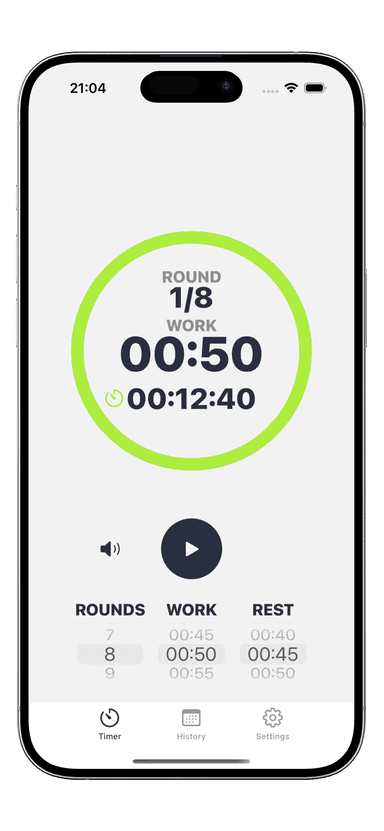
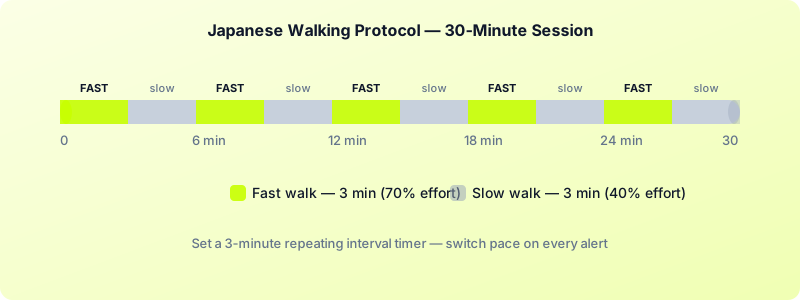
Step 2: Start your interval timer Set your timer for 3-minute intervals. This is critical — walking "by feel" rarely produces the intensity changes that make IWT work. Your interval timer for running can handle this perfectly with simple alternating intervals.
Step 3: Walk fast for 3 minutes Push your pace to a 7 out of 10 on the effort scale. Your breathing should be heavy enough that you can say a few words, but holding a full conversation would be difficult. Pump your arms and take longer strides.
Step 4: Walk slow for 3 minutes Drop back to a comfortable 4 out of 10. Let your heart rate come down. This isn't stopping — keep moving and stay loose.
Step 5: Repeat 5 full cycles Five complete 3+3 cycles equals 30 minutes of workout time. Resist the urge to cut cycles short on the fast intervals.
Step 6: Cool down for 3-5 minutes Finish with gentle walking and light stretching to bring your heart rate down.
Japanese Walking Benefits Backed by Science
The Japanese walking method isn't just an internet trend — it has decades of peer-reviewed research behind it. A landmark 5-month study published by the Shinshu University team tracked over 700 participants and found:
- Aerobic capacity improved 20% compared to those doing continuous moderate walking
- Leg strength increased — measured by leg press strength tests
- Blood pressure decreased measurably in participants with high baseline readings
- Calorie burn was higher than steady-state walking at the same total duration
The mechanism is similar to other interval training methods like HIIT: the hard intervals create metabolic demand, and the easy periods allow partial recovery — so you can sustain a higher total workload than you could at a constant hard pace. If you've read about HIIT vs steady-state cardio, you'll recognize the same principles at play.
The big advantage over traditional HIIT is the impact. Running and jumping place significant stress on your knees and hips. Walking — even brisk walking — is low-impact enough for most ages and fitness levels.
How to Set Up Your Timer for Japanese Walking
The hardest part of IWT is maintaining accurate 3-minute intervals without checking your watch every 30 seconds. A dedicated interval timer solves this completely.
Set up your timer with:
- Work interval: 3 minutes (fast walking)
- Rest interval: 3 minutes (slow walking)
- Rounds: 5
- Audio cue: On — so you hear the switch without looking at the screen
With the Interval Timer app on your iPhone or Apple Watch, you can set this up in under 30 seconds and let it run in your pocket while you walk. The vibration alert on Apple Watch is especially useful — you feel the buzz on your wrist and immediately switch your pace without breaking stride.
Many people try IWT without a timer and end up drifting — their "3 minutes fast" becomes 90 seconds, and their "3 minutes slow" stretches to 5. The timer enforces the protocol that produces results.
Who Should Try Japanese Walking?
Japanese walking interval training is an excellent fit for:
Complete beginners — If running feels too hard or your joints protest after impact exercise, IWT gives you the physiological benefits of interval training at a walking pace.
Older adults — Research on IWT specifically included participants in their 50s, 60s, and 70s. The low-impact nature makes it sustainable for people who need to protect their knees and hips.
Post-injury rehab — Walking is typically cleared much earlier than running after lower body injuries. IWT lets you maintain cardiovascular fitness while you recover.
Runners on easy days — Use IWT as a structured active recovery session. It's challenging enough to be productive, gentle enough to let your muscles rebuild. Check out a full running interval training plan for beginners once you're ready to add running to your routine.
Anyone who finds the gym boring — IWT works outdoors, in a park, on a beach, or through your neighborhood. The 30-minute duration is short enough to fit before work or on a lunch break.
Track Your Progress Over Time
One of the best indicators that IWT is working: your fast-pace sections start feeling easier. What felt like a 7 out of 10 effort in week 1 might feel like a 6 by week 4 — which means your cardiovascular fitness has improved.
To track progression, either note your distance covered in 30 minutes (more distance = better fitness) or gradually increase your fast-walking effort from 70% to 75-80% of maximum. Some people eventually graduate to adding short 30-60 second running segments into the fast intervals as their fitness improves.
Download Interval Timer and set up your Japanese walking timer in seconds. The Apple Watch companion app makes it effortless to switch pace on cue — no phone fumbling, just a buzz on your wrist and a stride change.