Running Interval Training for Beginners: A Plan
You want to start running, but every time you try, you are gasping for air within two minutes. That is completely normal. The problem is not your fitness — it is your approach. Running interval training for beginners solves this by breaking your run into manageable chunks of effort and recovery, so you build endurance without burning out.
A run/walk interval plan lets you cover more total distance, recover between efforts, and gradually shift the balance from walking to running. Within six weeks, most beginners go from struggling through 60-second jogs to running 5 minutes straight. And all you need to get started is a pair of shoes and a timer.
What Is Running Interval Training?
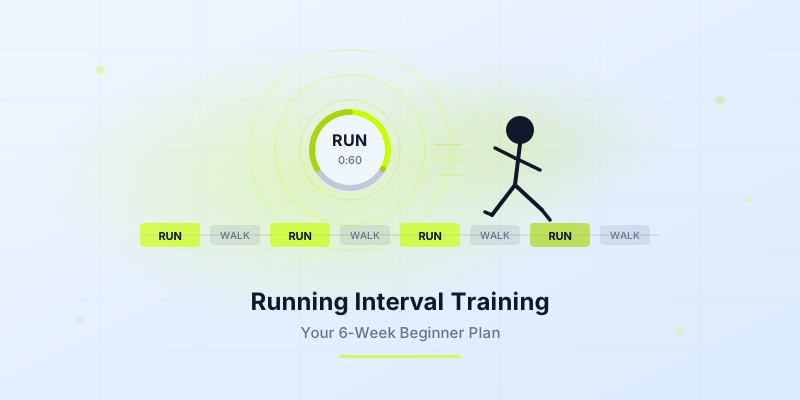
Running interval training alternates between periods of running and periods of walking or slow jogging. Instead of trying to run for 30 minutes nonstop on day one, you break the session into short run intervals separated by walking recovery periods.
A typical beginner running interval might look like this:
- Run for 60 seconds at a conversational pace
- Walk for 90 seconds to recover
- Repeat for 20-25 minutes total
This is the same principle behind the popular Couch to 5K program and the Galloway run-walk method. The magic is in the progression: each week, the run intervals get slightly longer and the walk intervals get slightly shorter until you can run continuously.
Beginner running intervals work because they keep your heart rate in a manageable zone. When you run nonstop, your heart rate spikes and stays elevated until you have to stop entirely. With intervals, your heart rate rises during the run segment and drops during the walk, letting you accumulate more total running time per session.
Why Intervals Are Better Than Steady Running for Beginners
Many new runners assume they should just lace up and jog until they cannot go any farther. That approach leads to three problems: injury, discouragement, and slow progress. A run walk interval plan avoids all three.
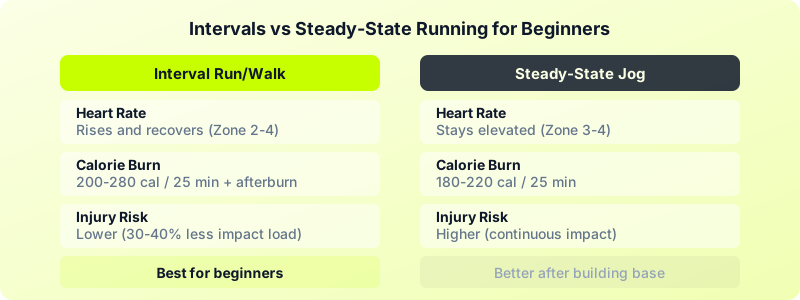
Here is how intervals stack up against steady-state running for someone just starting out:
- Lower injury risk — Running places 2-3 times your body weight on your joints with every stride. Walk breaks reduce the total impact load per session by 30-40%, giving your bones, tendons, and muscles time to adapt.
- Higher completion rate — Research on beginner running programs shows that interval-based plans have significantly higher adherence rates than continuous running plans. When the workout feels achievable, you keep showing up.
- Better cardiovascular gains — A study published in the Journal of Sports Science and Medicine found that interval training improved VO2max by up to 19% in untrained subjects over 8 weeks — comparable to steady-state training but in shorter sessions.
- More total running time — This sounds counterintuitive, but walk breaks let you accumulate more minutes of actual running per workout. A beginner who tries to run nonstop might last 8 minutes. The same beginner using 60-second run / 90-second walk intervals can accumulate 10-12 minutes of running in a 25-minute session.
The bottom line: intervals help you run more by running less at a time. Understanding the right work-to-rest ratio is key to making this approach work.
Your 6-Week Beginner Running Interval Plan
This interval running program takes you from short run/walk intervals to running 5 minutes straight. Each session is about 25 minutes including a 5-minute warm-up walk and a 3-minute cool-down walk. Run three times per week with at least one rest day between sessions.
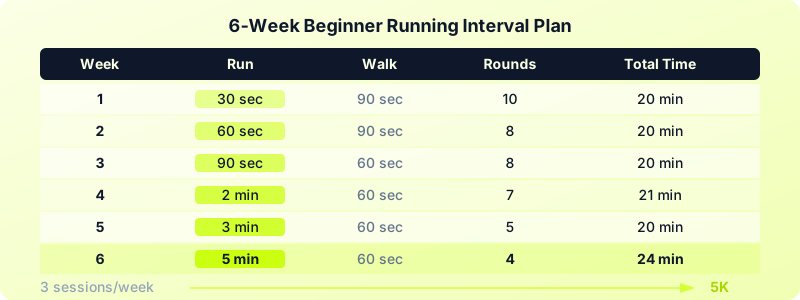
Week 1: Run 30s / Walk 90s x 10 rounds (20 min) Start with 30-second running intervals. This is intentionally short. Focus on landing softly and breathing rhythmically. You should be able to say a full sentence during your run segments.
Week 2: Run 60s / Walk 90s x 8 rounds (20 min) Double the run time but keep the same walk duration. Eight rounds gives you 8 minutes of total running — a solid jump from week one.
Week 3: Run 90s / Walk 60s x 8 rounds (20 min) The run and walk durations swap. For the first time, you are running more than you are walking. If this feels too hard, repeat week 2 before moving on.
Week 4: Run 2min / Walk 60s x 7 rounds (21 min) Two-minute runs are where you start feeling like a runner. Settle into a rhythm and resist the urge to speed up at the start of each interval.
Week 5: Run 3min / Walk 60s x 5 rounds (20 min) Three-minute intervals build real endurance. You might notice your breathing settles after the first 60 seconds — that is your aerobic system kicking in.
Week 6: Run 5min / Walk 60s x 4 rounds (24 min) Five-minute continuous runs. By this point, you are running 20 minutes per session. Some runners are ready to try a full 20-minute jog at the end of this week.
Key rules for this plan:
- If a week feels too hard, repeat it. There is no deadline.
- Run at a pace where you can hold a conversation. If you are gasping, slow down.
- Walk briskly during recovery — do not stop moving.
- Skip a session if something hurts (sharp pain, not general tiredness).
How to Use an Interval Timer for Running
Counting seconds in your head while running is a recipe for distraction and inconsistency. An interval timer handles the timing so you can focus on your form and breathing.
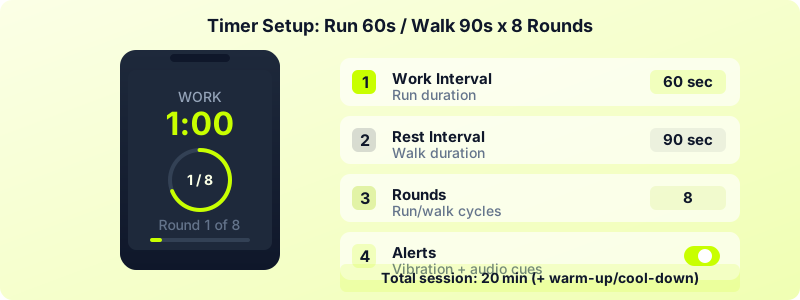
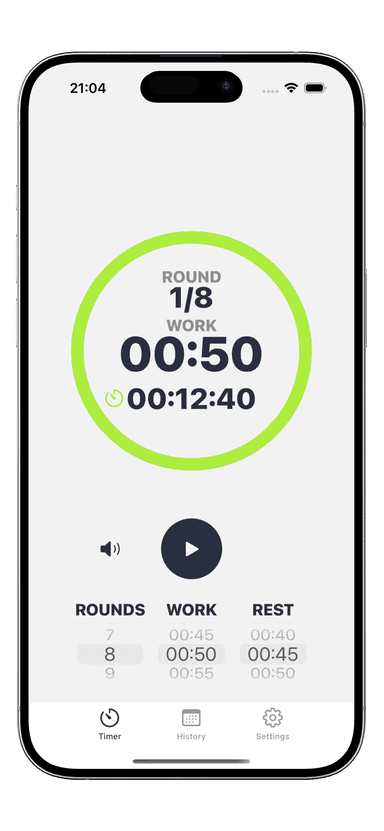
Here is how to set up an interval timer for the week 2 workout (60s run / 90s walk x 8 rounds):
- Set the work interval to 60 seconds (this is your run period)
- Set the rest interval to 90 seconds (this is your walk period)
- Set the rounds to 8
- Enable audio or vibration alerts so you do not need to watch your screen while running
With Interval Timer, you can save this as a custom workout and adjust the durations each week as you progress through the plan. The vibration alerts on Apple Watch are especially useful for running since you feel the buzz on your wrist without pulling out your phone.
Most runners also add a separate warm-up timer: 5 minutes of walking before the intervals start. You can chain these together in the app so the entire session runs automatically from warm-up through cool-down.
Common Mistakes New Runners Make With Intervals
Even with a solid plan, beginners often trip up in predictable ways. Avoid these five mistakes to get the most from your interval running program.
1. Running too fast during work intervals The number one mistake. Your run intervals should feel like a 5-6 out of 10 effort, not an 8. If you cannot speak in short sentences while running, you are going too fast. Slow down and save the speed work for later.
2. Skipping the warm-up walk Five minutes of brisk walking before your first run interval raises your heart rate gradually, loosens your joints, and increases blood flow to your muscles. Skipping it makes the first two run intervals feel brutal and increases your injury risk.
3. Progressing too quickly Jumping from 60-second runs to 3-minute runs in one week is how overuse injuries happen. Your cardiovascular system adapts faster than your tendons and bones. Follow the plan and repeat weeks when needed.
4. Running every day Your body builds fitness during rest, not during the workout itself. Three running days per week with rest days in between is plenty for beginners. On off days, walk, stretch, or try a beginner HIIT workout for variety.
5. Ignoring surface and shoes Run on flat, even surfaces like sidewalks, tracks, or treadmills when starting out. Trails with roots and rocks demand ankle stability that new runners have not built yet. And worn-out shoes with no cushion multiply impact forces on your joints.
Start Your First Running Interval Workout Today
Running interval training for beginners works because it meets you where you are. You do not need to run a mile nonstop on day one. You just need to run for 30 seconds, walk for 90 seconds, and repeat. The plan does the rest.
Print out the 6-week schedule, set up your timer, and head out the door. Your only job in week one is to finish the session — speed and distance do not matter yet.
Download Interval Timer and set up your run/walk intervals in seconds so you can focus on the road ahead.