Optimal Rest Time Between Circuit Training Exercises
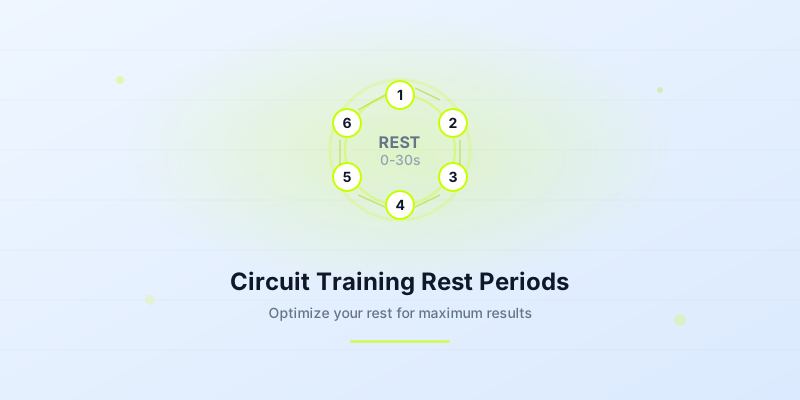
Getting the optimal rest time between circuit training exercises right is the difference between a productive session and wasted effort. Rest too long and you lose the cardiovascular benefit that makes circuits so efficient. Cut it too short and your form falls apart before you finish the round.
Why Rest Time Matters in Circuit Training
Circuit training works by stacking exercises back-to-back with minimal rest. This keeps your heart rate elevated, which drives both calorie burn and muscular endurance in a fraction of the time traditional training takes.
Research shows that circuit protocols can deliver similar results to conventional resistance training while cutting session time by 35-60%. The trade-off is that strength gains are 30-50% lower than traditional training, largely because of the shorter rest windows.
That makes your rest intervals a strategic tool. The amount of rest you take between exercises directly controls whether your circuit leans toward cardiovascular conditioning, muscular endurance, or strength development.
How Long to Rest Between Circuit Training Exercises
The standard rest time between individual exercises in a circuit ranges from 0 to 30 seconds. Where you land depends on your fitness level and the intensity of each movement.
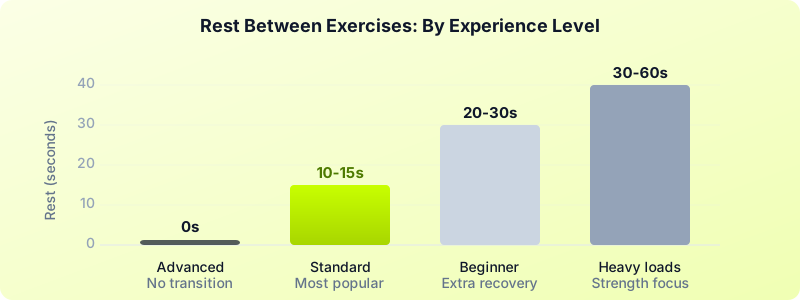
Zero rest (immediate transition): You move from one exercise to the next without stopping. This works best when you alternate muscle groups — for example, push-ups followed by squats followed by planks. Each muscle group gets passive rest while you work a different area.
10-15 seconds rest: Just enough time to transition between stations, catch a quick breath, and set up for the next exercise. This is the most common circuit format and works well for general fitness and fat loss goals.
20-30 seconds rest: Use this when exercises are more demanding or target the same muscle groups. Heavier loaded circuits or plyometric movements benefit from the extra recovery to maintain form and power output.
For beginners, starting with 15-second rest periods between exercises and 30-45 second work periods is a solid entry point. As your conditioning improves, you can reduce rest or increase work duration.
Rest Time Between Full Circuit Rounds
The rest between individual exercises is short, but the rest between complete rounds is where real recovery happens. Here is what the research supports:
General fitness circuits: Take 1-2 minutes between rounds. This allows your heart rate to drop enough to maintain quality through the next round without losing the elevated metabolic state.
Endurance-focused circuits: Keep round rest to 60-90 seconds. The goal is to build stamina, so you want to start each new round before you are fully recovered.
Strength or power circuits: Take 3-5 minutes between rounds. When you are lifting heavier loads or performing explosive movements, your nervous system needs more time to recover. Rushing back in leads to sloppy reps and injury risk.
A practical test: if your performance drops by more than 20% from round one to round three, your between-round rest is too short. If you feel completely fresh at the start of each round, it is probably too long.
If you have been exploring HIIT rest periods, you will notice the same principle at work — partial recovery drives adaptation.
Adjust Your Rest by Training Goal
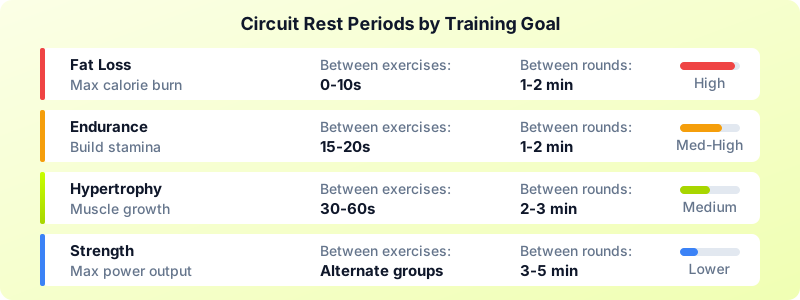
Your training goal should dictate your rest strategy. Here is a breakdown:
Fat loss and cardiovascular conditioning:
- Between exercises: 0-10 seconds
- Between rounds: 1-2 minutes
- Work-to-rest ratio: 1:1 or higher
- Example: 40 seconds work, 10 seconds transition, 5 exercises, 90 seconds between rounds
Muscular endurance:
- Between exercises: 15-20 seconds
- Between rounds: 1-2 minutes
- Work-to-rest ratio: 2:1
- Example: 45 seconds work, 15 seconds rest, 6 exercises, 2 minutes between rounds
Hypertrophy (muscle building):
- Between exercises: 30-60 seconds
- Between rounds: 2-3 minutes
- Moderate loads with short rest maximize growth hormone response
- Example: 30 seconds work, 30 seconds rest, 5 exercises, 3 minutes between rounds
Strength and power:
- Between exercises: alternate muscle groups for built-in rest
- Between rounds: 3-5 minutes
- Focus on quality reps over speed
- Example: 6 exercises alternating upper/lower body, zero transition rest, 4 minutes between rounds
This approach pairs well with bodyweight interval training where you can scale difficulty by adjusting rest rather than adding equipment.
How to Time Your Circuit Training Rest Periods
Counting rest in your head while fatigued is unreliable. Most people either cut it short when they are eager or let it stretch when they are tired. A dedicated timer solves both problems.
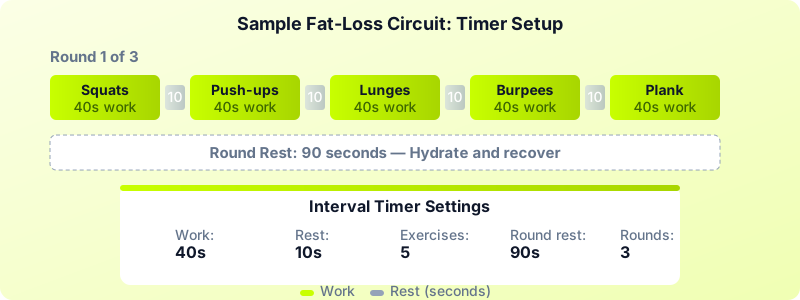
Here is how to set up an interval timer for a typical circuit:
Basic fat-loss circuit setup:
- Work interval: 40 seconds
- Rest interval: 10 seconds
- Exercises per round: 5
- Rest between rounds: 90 seconds
- Total rounds: 3
Endurance circuit setup:
- Work interval: 45 seconds
- Rest interval: 15 seconds
- Exercises per round: 6
- Rest between rounds: 2 minutes
- Total rounds: 4
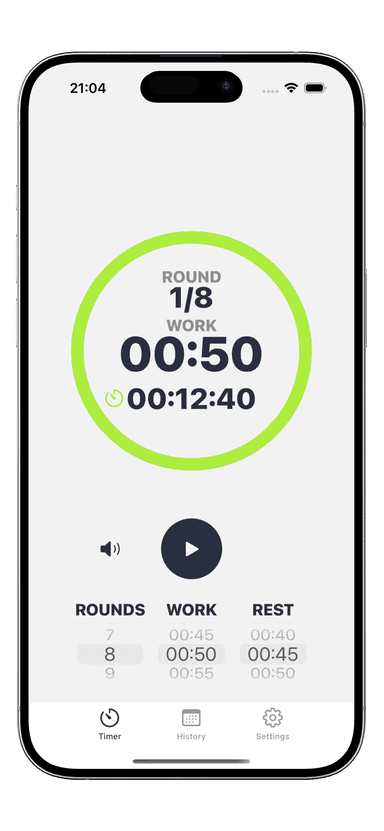
Interval Timer handles complex circuit structures with custom work periods, rest periods, round counts, and longer recovery breaks between rounds. Set it once, press start, and follow the audio cues through your entire session. No watching the clock, no mental math, and no accidentally resting 90 seconds when you planned for 15.
The app also logs your workout history, so you can track whether you are hitting the same number of rounds and exercises each week — a reliable measure of progress in circuit training.
Common Circuit Rest Mistakes to Avoid
Even experienced athletes make rest period errors in circuits. Here are the most common ones:
Resting the same amount regardless of exercise. A heavy deadlift demands more recovery than a plank hold. Adjust your rest based on the intensity of each movement, not just a blanket timer setting.
Skipping round rest entirely. Some people rush through multiple rounds without a proper break. This tanks your performance by round three and turns strength work into sloppy cardio.
Using your phone as a timer. Scrolling between apps mid-circuit kills your momentum. A dedicated interval timer with preset work and rest periods eliminates distractions and keeps your transitions tight.
Build Better Circuits With the Right Rest
Finding the optimal rest time between circuit training exercises comes down to matching your rest to your goal. Start with slightly longer rest if you are new to circuits, then tighten the windows as your conditioning improves. Track your round-over-round performance to know whether your rest is dialed in, and use a timer to keep every session consistent.
Download Interval Timer and build your perfect circuit training timer in seconds.