Rowing Machine Interval Workout for Fat Loss
The rowing machine interval workout is one of the best-kept secrets in fat loss training. It engages 86% of your muscles — legs, core, back, and arms — in every stroke, making it a full-body cardio machine that most gym-goers walk straight past on their way to the treadmill. Add structured intervals and you have a fat-burning workout that's genuinely hard to beat.
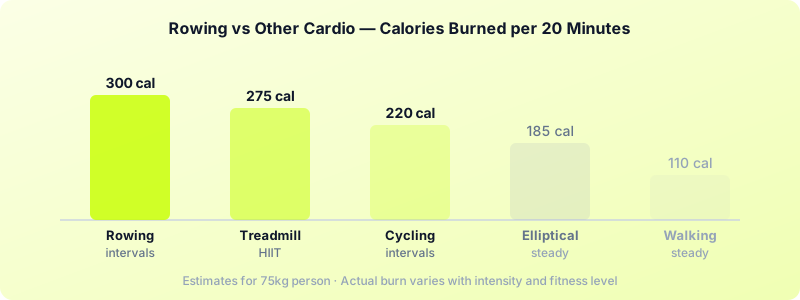
A 20-minute rowing interval session can burn 250-350 calories while building muscular endurance across your entire body. Compare that to the same duration on a stationary bike — typically 180-250 calories with far less upper body engagement.
Why the Rowing Machine Is a Fat-Loss Powerhouse
Rowing produces a higher calorie burn per minute than most cardio machines because of the muscle mass involved. The more muscles working simultaneously, the more oxygen your body needs, and the more fat you burn.
The stroke itself has four phases: catch, drive, finish, and recovery. The drive phase — where you push through your legs and pull the handle to your chest — is the high-intensity moment. Do that explosively during your work intervals and you're recruiting fast-twitch muscle fibers that aren't touched during steady-state cardio.
That fast-twitch recruitment is why rowing intervals are so effective for HIIT fat loss. Your body continues burning calories for hours after the session ends — the EPOC (excess post-exercise oxygen consumption) effect that makes interval training superior to steady-state cardio for fat loss.
The rowing machine is also genuinely low-impact. Your feet stay planted on the footrests throughout, so there's no joint-loading impact with each stroke. People with knee or hip issues that prevent running often find rowing intervals completely comfortable.
Rowing Technique Before You Add Intervals
Before you push the intensity, get the stroke order right. Bad rowing technique under fatigue leads to lower back pain and wasted effort.
The correct sequence is legs → body → arms on the drive, and arms → body → legs on the recovery. This matters because your legs are your most powerful muscles — they should initiate every stroke.
Quick technique checklist:
- Catch position: shins vertical, arms straight, lean slightly forward from the hips
- Drive: push with your legs first, then lean back slightly, then pull the handle to your lower ribs
- Finish: handle at your lower chest, slight backward lean, legs extended
- Recovery: arms extend first, then hinge forward, then slide back to catch
Spend your first 2-3 sessions rowing at 60% effort just practicing the sequence. Intervals at poor technique train bad habits — fix the stroke first, then add intensity.
Rowing Interval Workout for Beginners
This plan uses time-based intervals rather than distance-based ones, which makes timer setup straightforward.
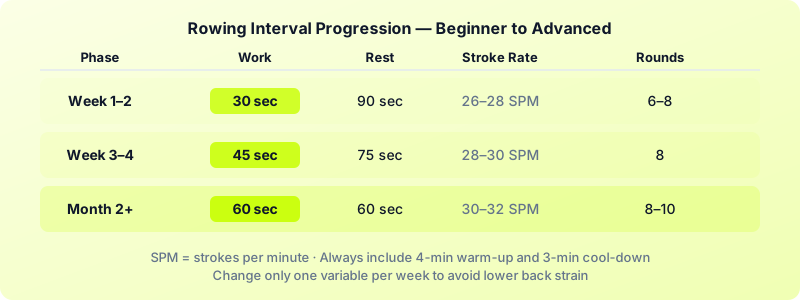
Beginner Rowing HIIT — Week 1-2:
- Warm up: 4 minutes easy rowing (stroke rate 18-20 SPM)
- Work interval: 30 seconds hard (stroke rate 26-28 SPM, ~80% effort)
- Rest interval: 90 seconds easy (stroke rate 16-18 SPM)
- Rounds: 6-8
- Cool down: 3 minutes easy
- Total: ~22-26 minutes
Intermediate Rowing HIIT — Week 3-4:
- Warm up: 4 minutes easy
- Work interval: 45 seconds hard (stroke rate 28-30 SPM)
- Rest interval: 75 seconds easy
- Rounds: 8
- Cool down: 3 minutes easy
- Total: ~26 minutes
Advanced Rowing HIIT — Month 2+:
- Work interval: 60 seconds hard
- Rest interval: 60 seconds easy (1:1 ratio)
- Rounds: 8-10
- Total: ~25-30 minutes (plus warm-up and cool-down)
The work to rest ratio is the same progression as other interval sports — start generous at 1:3, then compress rest as your fitness improves.
How to Time Your Rowing Intervals
The rowing machine's built-in monitor tracks distance and stroke rate, but it's not designed as an interval timer. Watching a small screen while maintaining proper form is difficult, and most built-in interval programs are basic.
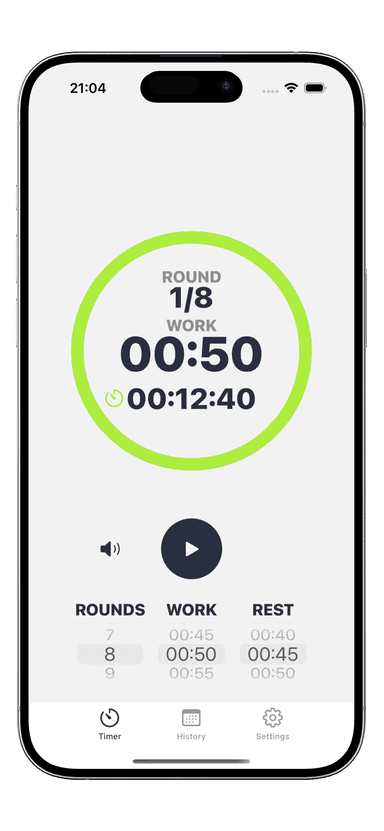
Use a dedicated interval timer instead. Set your work and rest periods, turn on audio alerts, and place your phone where you can glance at it without breaking your stroke rhythm. With the Interval Timer app on Apple Watch, you get a wrist vibration the moment to shift effort — no head-turning, no screen fumbling.
Timer settings for beginner rowing intervals:
- Work: 30 seconds
- Rest: 90 seconds
- Rounds: 8
- Alert: vibration + audio
As you progress, adjust the work/rest times while keeping the round count the same. Once 8 rounds feels manageable, add 2 more rounds before compressing the rest period.
Progressing Your Rowing HIIT Workouts
Three variables control rowing interval difficulty: intensity (stroke rate and effort), duration of work intervals, and rest period length. Change only one at a time.
Signs you're ready to progress:
- Your hard intervals feel like a 6-7/10 instead of 8-9/10
- Your heart rate recovers fully during rest periods
- You finish the session feeling challenged but not destroyed
Progression sequence:
- Add rounds (go from 8 to 10)
- Shorten rest (90s → 75s → 60s)
- Increase work interval length (30s → 45s → 60s)
- Increase stroke rate or damper setting during work intervals
Never skip the warm-up. Cold rowing with high intensity is a fast route to a strained lower back. Five minutes of easy rowing at low stroke rate gets blood into the muscles and lubricates the hip joints before you push hard. This pairs well with your cycling interval training sessions — alternate the two on different days for full-body conditioning without repetitive strain.
Sample Weekly Rowing Interval Schedule
For fat loss, 3 rowing interval sessions per week with rest days between is the sweet spot for most people:
- Monday: Rowing intervals (20-25 min)
- Tuesday: Rest or light activity
- Wednesday: Rowing intervals (20-25 min)
- Thursday: Rest or active recovery
- Friday: Rowing intervals (25-30 min)
- Weekend: Rest or low-intensity cardio
Don't row intervals on consecutive days when starting out. Your back, lats, and biceps need 48 hours to recover from the pulling load. As you get stronger over 6-8 weeks, you can add a fourth session if desired.
The rowing machine rewards consistency. A beginner following this plan for 6 weeks will feel dramatically different from week one — stronger pulls, lower heart rate at the same effort, and noticeably faster recovery between intervals.
Download Interval Timer to set up your rowing intervals in seconds and let the Apple Watch vibration cues keep you on protocol while you focus on your stroke.