Short Workouts vs Long Workouts: Which Is Better?
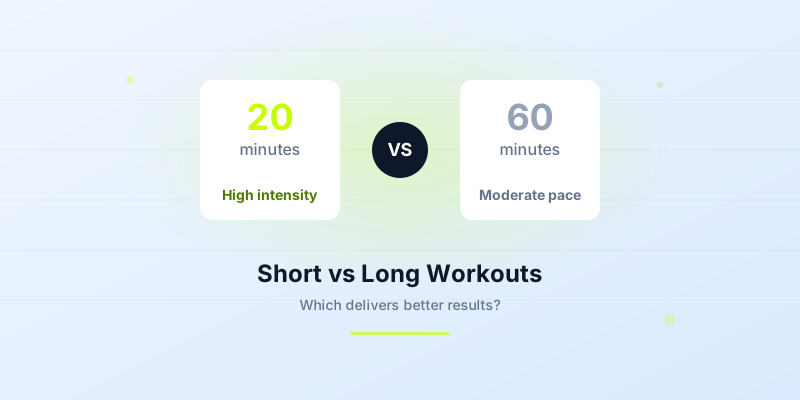
The debate between short workouts vs long workouts comes down to one thing most people overlook: the workout you actually do consistently beats the one you skip. But beyond consistency, research has clear answers about when shorter sessions outperform longer ones — and when you genuinely need more time.
What the Research Says About Workout Length
A large-scale study in JAMA Internal Medicine tracked over 400,000 adults and found that shorter vigorous workouts produced the same reductions in mortality risk as longer moderate sessions. Twenty minutes of high-intensity work delivered comparable cardiovascular and metabolic benefits to 40-60 minutes of steady-state exercise.
Research from Edith Cowan University showed that frequent short sessions beat fewer long sessions for building muscle strength. Both approaches produced similar muscle thickness, but participants who trained briefly every day gained significantly more strength than those who did the same total volume in one or two weekly sessions.
The takeaway is straightforward: intensity and consistency matter more than duration. A focused 20-minute session where you push hard can match or exceed the benefits of an unfocused hour.
Benefits of Short Workouts (Under 30 Minutes)
Short workouts have several advantages backed by science:
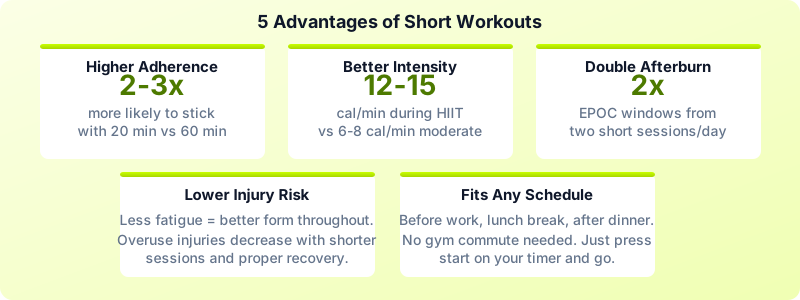
Higher adherence. Time is the number one reason people skip exercise. A 20-minute commitment is far easier to protect in a busy schedule than a 60-minute block. When the barrier is lower, you show up more often — and frequency drives results.
Better intensity. It is easier to maintain high effort for 15-20 minutes than for an hour. HIIT formats like 10-minute HIIT workouts pack maximum effort into minimum time, which drives cardiovascular adaptation and calorie burn.
Multiple afterburn windows. Each workout triggers excess post-exercise oxygen consumption (EPOC) — an elevated calorie burn that lasts 1-2 hours after you stop. Two 15-minute sessions create two EPOC windows, burning more total calories than a single 30-minute session at the same intensity.
Lower injury risk. Fatigue accumulates across long sessions. Form breaks down, reaction time slows, and overuse injuries creep in. Shorter sessions keep you fresh and sharp from start to finish.
Fits any schedule. A beginner HIIT workout takes 15-20 minutes. You can do it before work, during a lunch break, or after dinner. No commute to the gym required.
When Longer Workouts Make Sense
Short workouts are not always the answer. There are specific situations where longer sessions deliver what shorter ones cannot:
Endurance training. If you are preparing for a marathon, triathlon, or long-distance cycling event, your body needs to practice sustained effort. You cannot simulate a 2-hour race with 20-minute intervals. Long runs and rides build the aerobic base, mental toughness, and fueling strategies that races demand.
High-volume strength training. Serious muscle building programs often require 15-20 sets per muscle group per week. Fitting that volume into a 20-minute window is mathematically impossible once you account for rest periods between heavy sets. Strength-focused athletes genuinely need 45-75 minute sessions.
Skill development. Sports-specific training, martial arts practice, and technique work require repetition and time under instruction. Rushing through a skill session defeats the purpose.
Active recovery days. A 45-minute gentle yoga session, long walk, or mobility routine serves a different purpose than a HIIT sprint. These sessions prioritize restoration over intensity, and the extended time is part of the benefit.
The key distinction: longer workouts are better for specific goals, not for general fitness. If your goal is to be healthier, leaner, and stronger, short intense sessions deliver.
How to Get Maximum Results From Short Sessions
If you are going to train for 20-30 minutes, every second needs to count. Here is how to make short workouts as effective as possible:
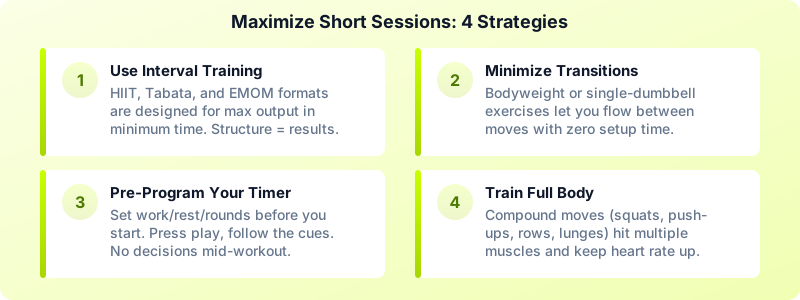
Use interval training. Structured intervals with timed work and rest periods eliminate guesswork and keep intensity high. Formats like HIIT, Tabata, and EMOM are designed to maximize output in minimal time.
Minimize transition time. Choose exercises that require little or no equipment setup. Bodyweight movements, a single pair of dumbbells, or a kettlebell let you flow from one exercise to the next without wasted time.
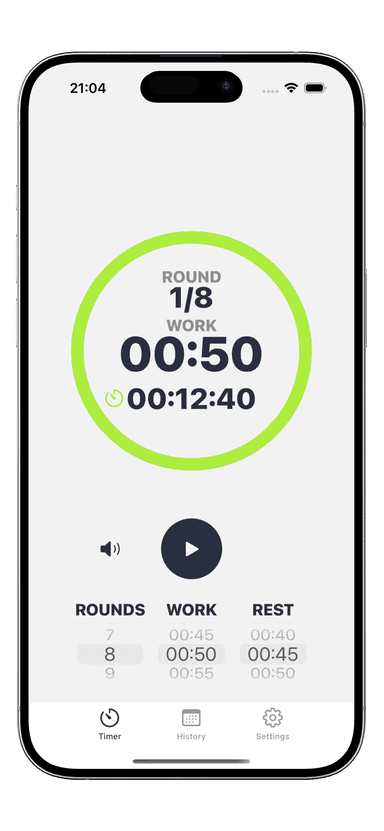
Pre-program your timer. Before the session starts, set up an interval timer with your work periods, rest periods, and round count locked in. When you press start, you follow the cues without thinking. Interval Timer handles the countdown so you stay focused on effort, not clock-watching.
Train full body. Short sessions cannot afford the luxury of isolating one muscle group. Compound movements like squats, push-ups, rows, and lunges hit multiple muscles per exercise and keep your heart rate elevated.
Track your sessions. Log what you did, how long it took, and how it felt. Interval Timer records your workout history automatically, so you can see whether you are progressing week over week without maintaining a separate journal.
Short vs Long: A Side-by-Side Comparison
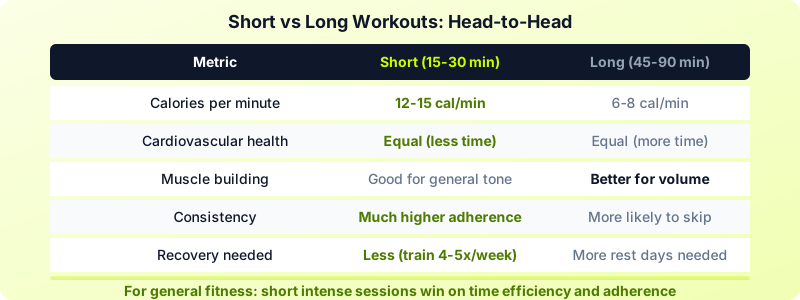
Here is how short and long workouts compare across the metrics that matter most:
Calorie burn per minute: Short intense sessions burn 12-15 calories per minute during HIIT, compared to 6-8 calories per minute during moderate steady-state work. Minute for minute, short intense workouts win.
Cardiovascular health: Both deliver similar improvements in VO2 max and heart health when total weekly volume is matched. Short sessions require less total time to achieve the same benefit.
Muscle building: For hypertrophy, longer sessions allow more training volume per muscle group. For general strength and tone, short sessions with compound movements are sufficient.
Consistency: Short workouts win overwhelmingly. People who commit to 20-minute sessions stick with their programs at significantly higher rates than those who commit to 60-minute sessions.
Recovery: Short sessions produce less overall fatigue and require less recovery time. You can train 4-5 days per week with short intense sessions, while long intense sessions typically require more rest days.
Enjoyment: Research shows that people rate shorter sessions as more enjoyable and less daunting, which feeds back into higher adherence over time.
The bottom line: for most people pursuing general health, fat loss, and functional fitness, short workouts deliver equal or better results with a fraction of the time commitment.
Pick the Length That You Will Actually Do
The short workouts vs long workouts debate has a clear winner for most people: the shorter session you do four times a week beats the long session you do once. Match your workout length to your schedule, your goals, and your energy. When in doubt, start with 20 minutes of focused interval training and build from there.
Download Interval Timer and turn any 20-minute window into a structured, effective workout session.