Sleep and Muscle Recovery: How Much Do You Need?
You crush your workouts, track your macros, and push through every set. But if your sleep and muscle recovery are not aligned, you are leaving gains on the table. The truth is that most of your muscle repair happens while you are asleep — not in the gym. Getting this right might be the simplest upgrade you can make to your training.
Why Sleep Is the Most Underrated Recovery Tool
Sleep is when your body shifts into repair mode. During deep sleep, your pituitary gland releases about 75 percent of your daily growth hormone output. This hormone drives tissue repair, muscle protein synthesis, and fat metabolism.
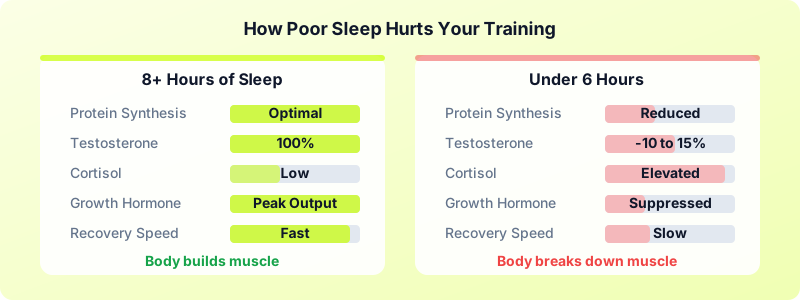
Without enough sleep, your body produces more cortisol — a stress hormone that breaks down muscle tissue. At the same time, testosterone production drops. One study found that young men who slept only 5 hours per night for one week saw testosterone levels drop by 10 to 15 percent. That is a significant hit to one of the most important hormones for building and maintaining muscle.
Think of sleep as the second half of your training. The gym creates the stimulus. Sleep delivers the adaptation.
How Much Sleep Do You Actually Need for Muscle Growth?
The general recommendation for adults is 7 to 9 hours per night. But if you train hard — especially with high-intensity interval training, heavy lifting, or high-volume programs — you should aim for the upper end of that range.
Here is a practical breakdown:
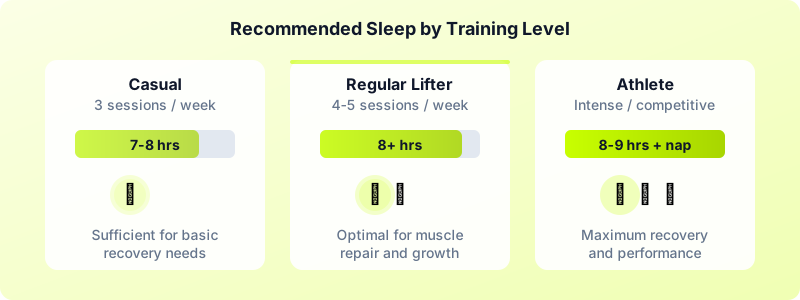
- Casual exercisers (3 sessions per week): 7 to 8 hours is usually sufficient.
- Regular lifters (4 to 5 sessions per week): Aim for 8 hours minimum.
- Competitive athletes or intense training blocks: 8 to 9 hours, plus a 20 to 30 minute nap if your schedule allows it.
Seven hours is the minimum threshold where muscle recovery functions normally. Below that, the research consistently shows reduced protein synthesis, slower recovery between sessions, and increased injury risk.
Quality matters just as much as quantity. Six hours of uninterrupted deep sleep can sometimes beat eight hours of fragmented, light sleep. If you wake up multiple times per night, the total hours on paper mean less than you think.
What Happens to Your Muscles While You Sleep
Your body cycles through several sleep stages each night, and each stage plays a different role in recovery.
Stage 1 and 2 (Light Sleep): Your heart rate and breathing slow down. Your body temperature drops. These stages prepare your system for deeper recovery.
Stage 3 (Deep Sleep / Slow-Wave Sleep): This is where the real muscle repair happens. Growth hormone surges, blood flow to your muscles increases, and your body ramps up protein synthesis. Damaged muscle fibers from your workout get repaired and rebuilt stronger. If you cut your sleep short, you lose the most from this stage.
REM Sleep: Your brain consolidates motor patterns and movement skills. If you are learning new exercises or refining technique, REM sleep helps lock those patterns in.
A full sleep cycle takes about 90 minutes. You typically complete 4 to 6 cycles per night. The deepest slow-wave sleep happens in the first two cycles, while REM sleep increases in the later cycles. This is why both falling asleep early and sleeping long enough matter.
How Poor Sleep Sabotages Your Training
Skipping sleep does not just make you tired. It actively works against your training goals.
- Reduced muscle protein synthesis. Your body builds less muscle from the same workout when sleep is inadequate.
- Higher cortisol levels. Elevated cortisol promotes muscle breakdown and fat storage — the opposite of what you want.
- Lower pain tolerance. You perceive the same effort as harder, which limits performance.
- Impaired decision-making. You are more likely to skip workouts, eat poorly, and cut sessions short.
- Slower reaction times. For HIIT, boxing, or any fast-paced training, poor sleep increases injury risk.
If you are training hard but not seeing results, check your sleep before changing your program. Often the fix is not a new workout — it is an extra hour in bed. Watch for signs of overtraining that might actually be signs of under-recovering.
How to Improve Your Sleep for Better Recovery
You do not need a complete lifestyle overhaul. Small, consistent changes add up fast.
Set a consistent schedule. Go to bed and wake up at the same time every day — even on weekends. Your circadian rhythm thrives on predictability.
Finish intense workouts 3 or more hours before bed. High-intensity training raises your core temperature, heart rate, and adrenaline. Your body needs time to come down before it can enter deep sleep. Use your Interval Timer to schedule your HIIT sessions earlier in the day so your body has time to wind down.
Keep your room cool, dark, and quiet. Aim for 65 to 68 degrees Fahrenheit (18 to 20 Celsius). Use blackout curtains if light is an issue. Even small amounts of light can reduce melatonin production.
Limit screens 30 to 60 minutes before bed. Blue light from phones and laptops suppresses melatonin. If you must use screens, enable a blue light filter.
Avoid caffeine after 2 PM. Caffeine has a half-life of about 5 to 6 hours. That afternoon coffee could still be in your system at midnight.
Consider a pre-sleep protein source. Research shows that 30 to 40 grams of casein protein before bed can boost overnight muscle protein synthesis by up to 22 percent. A simple casein shake or a bowl of cottage cheese does the job.
Track your sleep like you track your lifts. Most smartwatches and fitness trackers measure sleep duration and quality. Pay attention to how many hours of deep sleep you get each night. If deep sleep is consistently low, your recovery is suffering even if total hours look fine.
Wind down with a routine. Spend 15 to 20 minutes before bed doing the same calming activities each night — reading, light stretching, or breathing exercises. This signals your nervous system that it is time to shift into recovery mode.
On rest days, add light active recovery workouts to reduce muscle soreness without disrupting sleep. If fatigue persists even with good sleep habits, a deload week can help your body fully catch up on recovery.
Your training is only as good as your recovery. Prioritize sleep and muscle recovery the same way you prioritize your sets and reps — with intention and consistency. The gains follow.
Download Interval Timer and schedule your workouts earlier in the day to protect your sleep and maximize recovery.