Stair Climbing Interval Workout: The Apartment-Friendly HIIT Session
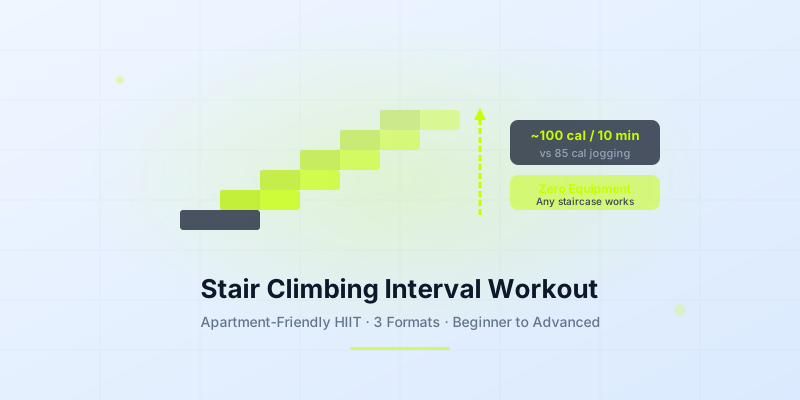
Stair climbing burns more calories per minute than jogging, requires zero equipment, and fits inside any apartment building or home with a single flight of stairs. When you apply interval structure to stair climbing — alternating hard climbs with recovery descents — you create a genuine HIIT session that rivals treadmill sprints in cardiovascular demand.
Here's how to build effective stair interval workouts, what the numbers look like, and how to use a timer to structure sessions properly.
Why Stair Climbing Works So Well as Interval Training
Stairs force your legs to work against gravity with each step, engaging quadriceps, glutes, hamstrings, and calves simultaneously. The calorie burn is disproportionately high compared to flat-surface movement at the same effort level.
Estimated calorie burn per 10 minutes (75kg person):
- Stair climbing at moderate pace: ~90-110 cal
- Jogging at 9 km/h: ~80-90 cal
- Walking briskly: ~55-65 cal
The interval structure multiplies this. Sprinting up stairs elevates heart rate to near-maximum within 20-30 seconds — faster than most other exercises. The descent acts as active recovery, bringing heart rate down before the next climb.
This combination of rapid heart rate elevation and recovery mirrors the mechanism behind HIIT vs steady state cardio benefits: short bursts of maximum intensity followed by partial recovery to keep metabolic demand high throughout the session.
Stair Interval Workout Formats
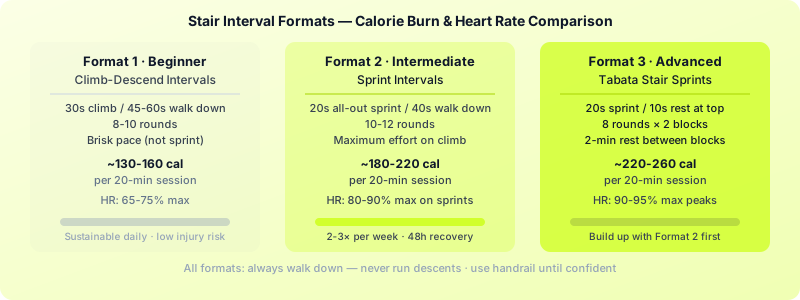
Format 1: Basic Climb-Descend Intervals (Beginners)
Best for: people new to stair training or interval work
Structure:
- Warm-up: Walk up and down stairs at easy pace for 3-5 minutes
- Work interval: Climb at brisk pace (not sprint) for 30 seconds
- Recovery: Walk slowly down for 45-60 seconds
- Repeat: 8-10 rounds
- Cool-down: 3 minutes easy walking
Total time: 20-25 minutes. Heart rate stays elevated throughout without reaching maximum.
Format 2: Sprint Intervals (Intermediate)
Best for: people with a cardio base who want maximum calorie burn
Structure:
- Warm-up: 5 minutes easy climbing
- Sprint up: 20 seconds all-out (every step or every other step)
- Walk down: 40 seconds recovery descent
- Repeat: 10-12 rounds
- Cool-down: 3-5 minutes easy descent
Total work intervals: ~3.5-4 minutes of sprinting embedded in a 20-minute session. Heart rate peaks above 85% max during sprints and partially recovers on descent.
Format 3: Tabata Stair Sprints (Advanced)
Best for: experienced interval trainers wanting maximum intensity in minimum time
Structure:
- Warm-up: 5 minutes easy climbing
- Tabata cycle: 20 seconds sprint up / 10 seconds rest at top (4 minutes = 8 rounds)
- Rest: 2 minutes walking
- Second Tabata cycle: 4 minutes
- Cool-down: 5 minutes easy descent
Total time: ~20 minutes. This format is genuinely brutal — most people need 4-6 weeks of Format 2 before attempting Tabata stairs.
Using Your Interval Timer for Stair Workouts
A timer is essential for stair intervals because you cannot safely watch your phone while sprinting up stairs. You need audio cues — beeps or voice prompts — that tell you when to start and stop without looking at the screen.
Timer settings for Format 2 (Sprint Intervals):
- Interval 1 (work): 20 seconds
- Interval 2 (rest): 40 seconds
- Rounds: 12
- Rest between rounds: continuous (no extra rest needed — the descent IS the rest)
Timer settings for Format 3 (Tabata):
- Work: 20 seconds
- Rest: 10 seconds
- Rounds: 8 (= 4-minute block)
- Between blocks: 2-minute rest
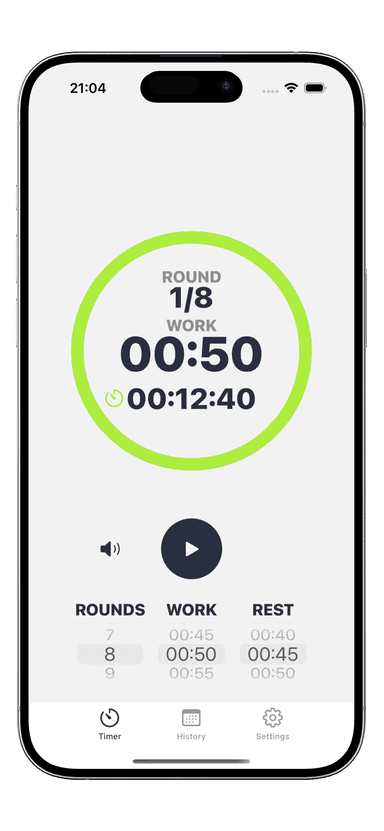
Set these up in the Interval Timer app before starting, put your phone in your pocket, and let the audio guide you through each sprint. This allows full focus on your footing and effort rather than the clock.
Stair Climbing Technique for Safety and Effectiveness
Stairs are unforgiving if your technique breaks down at speed. These cues keep the session effective and safe:
Going up:
- Drive through the heel of your leading foot, not just the ball of the foot
- Keep torso slightly forward — don't lean back
- Use your arms actively to generate momentum on sprints
- On double-step climbing (every other step), focus on hip extension through each stride
Coming down:
- Always walk down — running downstairs dramatically increases injury risk
- Hold the handrail when descending at speed for balance
- Land on the ball of the foot with each step, not flat-footed
- Slow the descent pace on the first few rounds until knees feel warm
Handrail use: Using the handrail during ascent is acceptable for beginners but reduces lower-body demand. Progressively reduce handrail use as confidence builds.
Programming Stair Intervals Into Your Week
Stair climbing hits the same muscle groups as squats and lunges — so it counts as both cardio and lower-body work. Program it accordingly.
Recommended frequency:
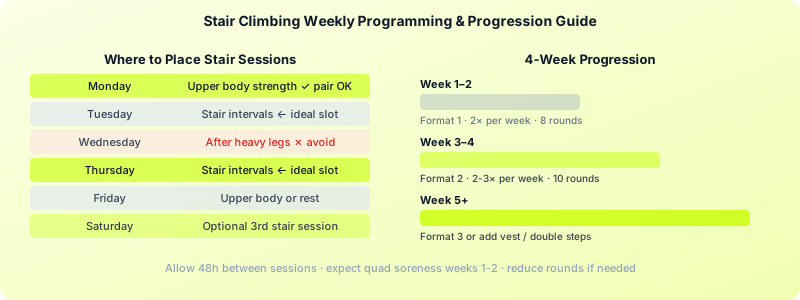
- Beginners: 2 sessions per week, at least 2 days apart
- Intermediate/advanced: 3 sessions per week maximum
Don't program stair sprint sessions the day after heavy leg training (squats, deadlifts) — your quads and glutes need 48 hours to recover. Stair climbing pairs well with upper body strength sessions on the same day if needed.
As part of a weekly workout schedule, stair intervals work well on days between lower-body strength sessions — they maintain cardiovascular training stimulus without significantly adding to muscle fatigue when programmed at moderate volume.
The dumbbell HIIT workout format and stair climbing can be rotated across the week to vary movement patterns while keeping training frequency high.
What to Expect After 4 Weeks
Stair climbing improvements come quickly because it's a high-demand, full-body movement pattern:
- Week 1-2: Significant leg soreness after sessions (especially quads). Reduce rounds if soreness limits next session quality.
- Week 3-4: Soreness diminishes. Heart rate during identical sessions drops as cardiovascular adaptation occurs.
- Week 5+: Increase intensity (sprint speed, double steps, weighted vest) or rounds to continue progress.
The cardio adaptations from stair interval training transfer directly to running, cycling, and general fitness. People who add stair climbing to their training consistently report improved ability to sustain higher efforts in other activities after 4-6 weeks.
Download Interval Timer to set up your stair sprint protocol — configure your work/rest intervals once, start the audio countdown, and focus entirely on climbing hard.