What Muscles Does HIIT Work? Full Body Breakdown
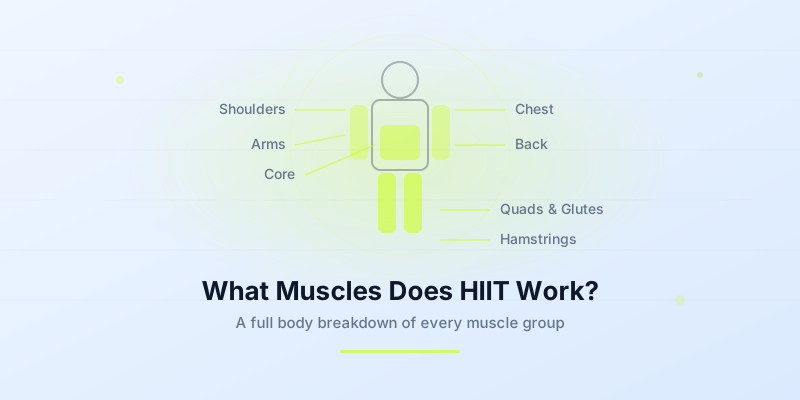
You might think of HIIT as a cardio workout, but it does far more than just raise your heart rate. So what muscles does HIIT work? The short answer is all of them — if you choose the right exercises. A well-designed HIIT session can hit every major muscle group in your body while torching calories at the same time.
The key is exercise selection. Unlike steady-state cardio where you repeat one movement for 30 to 60 minutes, HIIT lets you cycle through different exercises that target different muscles. That variety is what makes it a true full body training method.
Does HIIT Actually Work Your Muscles?
Yes — and more effectively than many people realize. HIIT activates fast-twitch muscle fibers, the same fibers you use during heavy lifting and explosive movements. These fibers have the greatest potential for growth and strength.
Traditional cardio mostly recruits slow-twitch fibers built for endurance. HIIT bridges the gap by demanding both power and endurance in the same session. That is why research shows HIIT can increase lean muscle mass, especially in beginners and people who are new to resistance training.
The catch is that HIIT alone will not build muscle like a dedicated strength program. It works best as a complement to lifting or as a standalone option when your goal is general fitness and fat loss. If you are wondering whether HIIT counts as cardio or strength training, the answer is that it sits right in the middle.
Lower Body Muscles Targeted by HIIT
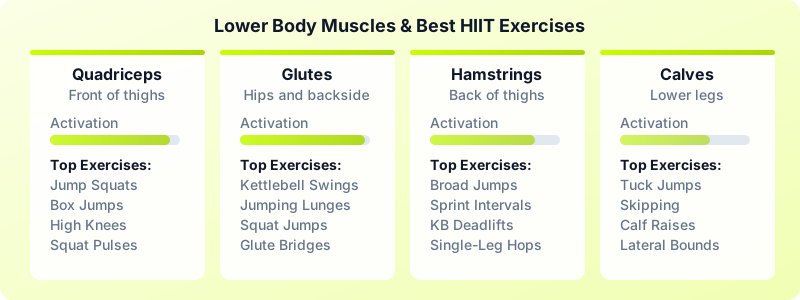
Your legs do the heaviest lifting in most HIIT workouts. These are the largest muscle groups in your body, and engaging them drives the highest calorie burn.
Quadriceps — The front of your thighs power every squat jump, lunge, and sprint. Exercises like jump squats, box jumps, and high knees hammer your quads with explosive force.
Glutes — Your glutes fire during any hip extension movement. Kettlebell swings, jumping lunges, and squat variations all demand serious glute engagement. Strong glutes also protect your lower back during high-impact exercises.
Hamstrings — The back of your thighs work during deadlift variations, broad jumps, and sprint intervals. Hamstrings act as the brakes when you decelerate, which happens constantly during HIIT transitions.
Calves — Every jump, sprint, and skipping movement loads your calves. They are the unsung heroes of HIIT, providing the spring for explosive takeoffs and absorbing impact on every landing.
A single round of jump squats into jumping lunges into high knees can light up your entire lower body in under 2 minutes.
Upper Body Muscles Targeted by HIIT
Most people skip upper body work in HIIT, but adding the right exercises creates a balanced routine that builds real strength above the waist.
Chest and Triceps — Push-ups, burpees, and plyo push-ups target your chest and triceps. A standard burpee includes a push-up at the bottom, which means every rep works these muscles under fatigue.
Shoulders — Overhead movements like dumbbell thrusters, push presses, and mountain climbers keep your shoulders engaged. Even holding a plank position puts constant tension on your deltoids.
Back and Biceps — Renegade rows, kettlebell swings, and battle rope slams target your lats and biceps. These pulling movements balance out the pushing exercises and help prevent imbalances.
The best approach is to alternate between upper and lower body exercises within your HIIT circuit. While your legs recover during push-ups, your upper body recovers during squat jumps. This keeps your heart rate high without any single muscle group giving out too early.
Core Muscles That HIIT Engages
Here is something most people miss — almost every HIIT exercise works your core, even when it is not the primary target.
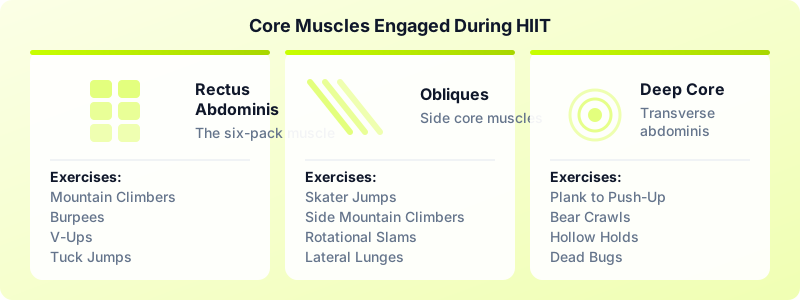
Rectus Abdominis — Mountain climbers, burpees, and V-ups directly target your abs. But even squat jumps and push-ups require core bracing to maintain form under speed.
Obliques — Lateral movements like skater jumps, side-to-side mountain climbers, and rotational slams challenge your obliques. These muscles stabilize your torso during quick direction changes.
Deep Core (Transverse Abdominis) — Every explosive movement in HIIT demands that your deep core muscles engage to protect your spine. Plank-based exercises, bear crawls, and hollow holds train this stabilization directly.
Your core acts as the link between your upper and lower body. When you do a burpee, your core connects the push-up at the bottom to the jump at the top. A weak core limits your performance in every other exercise.
If you want to emphasize core work in your HIIT sessions, dedicate one full round to core-specific movements. Alternate between dynamic exercises like mountain climbers and static holds like planks. The combination of movement and isometric tension trains your core for both power and endurance — exactly what you need for athletic performance.
How to Build a Full Body HIIT Workout With a Timer
To hit every muscle group in one session, pick 6 to 8 exercises that cover all three zones: lower body, upper body, and core.
Sample Full Body HIIT Circuit (24 minutes)
Round 1 — Lower Body Focus:
- Jump Squats — 40 seconds work, 20 seconds rest
- Jumping Lunges — 40 seconds work, 20 seconds rest
- High Knees — 40 seconds work, 20 seconds rest
Round 2 — Upper Body Focus:
- Push-Ups — 40 seconds work, 20 seconds rest
- Renegade Rows — 40 seconds work, 20 seconds rest
- Burpees — 40 seconds work, 20 seconds rest
Round 3 — Core Focus:
- Mountain Climbers — 40 seconds work, 20 seconds rest
- Plank to Push-Up — 40 seconds work, 20 seconds rest
Repeat for 2 to 3 total rounds with 60 seconds rest between rounds.
Set up your Interval Timer with 40-second work intervals and 20-second rest intervals. The timer handles the pacing so you can focus on form and intensity. If you are just starting out, try a beginner HIIT workout with longer rest periods before progressing to this full body circuit.
For shorter sessions, a 10-minute HIIT workout can still target multiple muscle groups if you choose compound exercises like burpees, thrusters, and mountain climbers.
The muscles HIIT works depend entirely on the exercises you choose. Pick movements that cover all three zones, set your timer, and you have a complete full body workout in under 30 minutes.
Download Interval Timer and build your own full body HIIT circuit with custom work and rest intervals.