What to Eat Before a HIIT Workout for Maximum Energy

What you eat before a HIIT workout can make or break your session. Show up underfueled and your intervals feel like torture — you'll cut rounds short, lose form, and burn fewer calories. Show up with the right fuel and you push harder, recover faster between intervals, and get more out of every minute.
The good news: pre-workout nutrition for HIIT doesn't need to be complicated. A few simple rules cover most situations, whether you're training first thing in the morning or hitting a session after work.
Why Pre-Workout Nutrition Matters for HIIT
HIIT is different from a gentle jog or a weights session. You're repeatedly pushing to near-maximum effort — which means your muscles need readily available fuel, particularly glycogen (stored carbohydrate). When glycogen runs low, your body can't sustain the high-intensity intervals that make HIIT effective.
Your digestive system also matters. Eating a heavy meal right before sprinting or jump squats is a recipe for cramps and nausea. The goal is to top up your fuel stores without filling your stomach.
Three nutrients play specific roles before HIIT:
- Carbohydrates — Your primary fuel for high-intensity effort. Fast-digesting carbs give you accessible energy within 30-60 minutes.
- Protein — A small amount before training helps reduce muscle breakdown, especially for fasted morning workouts.
- Fat — Slows digestion significantly. Keep it minimal before HIIT to avoid GI discomfort.
What to Eat Before HIIT Based on Timing
Timing determines what you should eat. Here's the breakdown:
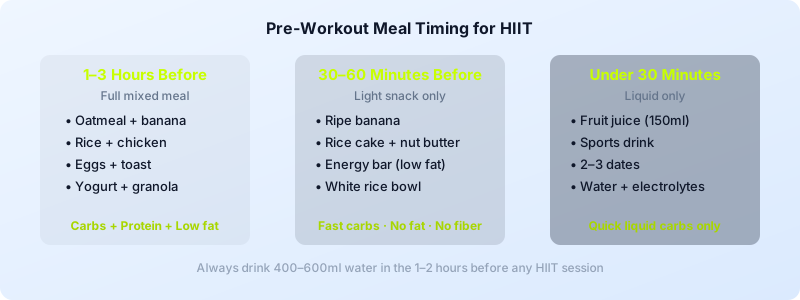
1-3 hours before your HIIT session: You have time for a proper mixed meal. Aim for moderate carbs, lean protein, and low fat.
- Oatmeal with a banana and a scoop of protein powder
- Brown rice with chicken breast and steamed vegetables
- Whole grain toast with eggs and sliced avocado (keep the avocado small — fat slows digestion)
- Greek yogurt with berries and granola
30-60 minutes before: Keep it light and fast-digesting. Skip fat and fiber — both slow gastric emptying.
- A ripe banana (one of the best pre-workout snacks — fast carbs, easy to digest)
- A small bowl of white rice or instant oatmeal
- A rice cake with a thin layer of peanut butter
- An energy bar with mostly carbs and minimal fat (read the label)
Under 30 minutes before: At this point, anything solid is risky. Stick to quick liquid carbs if you need something.
- 150-200ml of fruit juice or a sports drink
- A few dates or dried fruit
Best Pre-Workout Foods for HIIT Energy
These are the most reliable options that deliver energy without digestive issues:
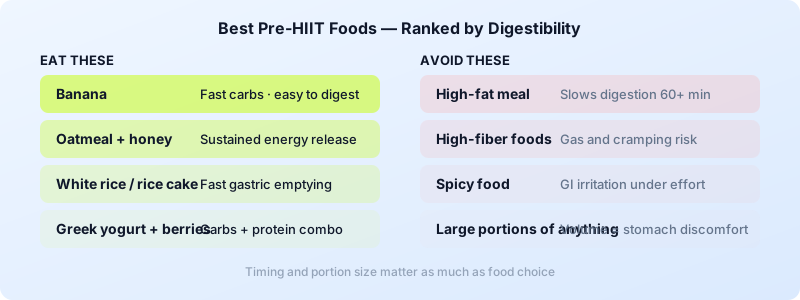
Bananas — The classic pre-workout food for good reason. Ripe bananas provide fast-acting simple carbs plus potassium, which helps muscle contractions. Eat one 30-60 minutes before training.
Oatmeal — Slow-releasing oats provide sustained energy for longer sessions. Add a tablespoon of honey for a faster-acting carb boost. Best eaten 1-2 hours before your HIIT workout.
White rice or rice cakes — Surprisingly effective pre-workout fuel. White rice digests fast and hits your bloodstream quickly. Athletes use rice cakes specifically because they're easy on the stomach.
Fruit smoothie — Blend banana, berries, and a handful of spinach with water or low-fat milk. Liquid carbs digest faster than solid food, making this a great option 45-60 minutes out.
Greek yogurt with honey — Combines fast carbs (honey) with a moderate protein boost. Easy to eat, easy to digest, and keeps you from going into your session completely empty.
Foods to Avoid Before a HIIT Workout
Some foods that are healthy in general become problems right before HIIT:
High-fat meals — Avocado toast sounds healthy, but fat slows gastric emptying dramatically. A high-fat meal within 60 minutes of training keeps food sitting in your stomach during your intervals.
High-fiber foods — Lentils, chickpeas, raw vegetables, and bran cereals are all excellent nutritionally, but the fiber can cause gas and cramping under HIIT intensity.
Alcohol — Impairs coordination, reduces power output, and disrupts hydration. Even the night before a morning HIIT session, heavy alcohol consumption affects performance.
Spicy food — Capsaicin irritates the GI tract under exercise stress. Skip the hot sauce before a tough session.
Large portions of anything — Even ideal foods cause problems if you eat too much. Volume is the enemy before HIIT.
Pre-Workout Nutrition for Different HIIT Goals
Your goal changes what you should prioritize:
Fat loss: Training in a fasted or semi-fasted state (small snack only) can increase fat oxidation during the session. If you're targeting HIIT for fat loss, a light snack or small meal is fine — don't skip nutrition entirely, as it reduces workout intensity and overall calorie burn.
Performance and muscle building: Eat more. A full carb-and-protein meal 1-2 hours before gives you maximum fuel to push hard. This matters if your HIIT includes loaded movements like kettlebells or weighted circuits.
Short sessions (20 minutes or less): You likely don't need to eat much. A banana or nothing at all is sufficient for a quick 20-minute blast. Check what a well-timed HIIT session looks like to plan your nutrition accordingly.
Morning fasted training: If your session is first thing in the morning and you don't want to eat beforehand, at minimum have a glass of water and 150-200ml of fruit juice 15 minutes before. It's a small glycogen boost that takes the edge off the fasted state without requiring a real meal.
Hydration Matters Too
Pre-workout nutrition isn't just food. Arriving at your HIIT session dehydrated kills performance — even mild dehydration (2% of body weight) reduces power output and increases perceived effort.
Drink 400-600ml of water in the 1-2 hours before your session. Then take a few sips in the final minutes before you start. Don't chug a large amount right before — that sloshes around uncomfortably during jump exercises.
The formula is simple: eat carbs, keep fat and fiber low, time it right, and stay hydrated. Do that consistently and your HIIT sessions will feel noticeably more powerful within a week or two.
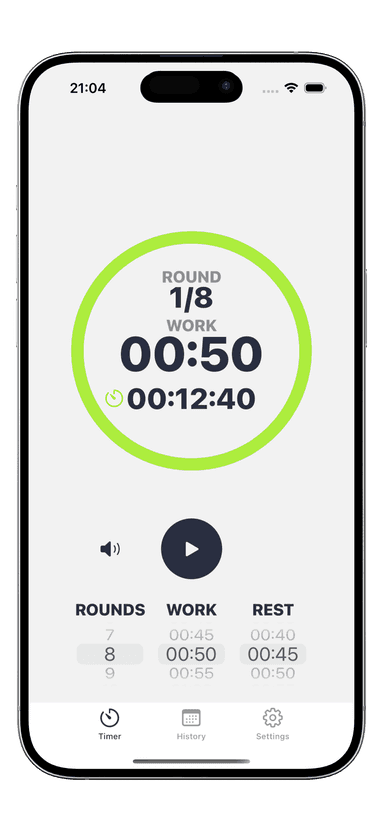
Download Interval Timer to make every fueled session count — set up your HIIT intervals, track your rounds, and time your rest periods precisely so you make the most of your pre-workout nutrition.