Workout Accountability Partner Tips That Work
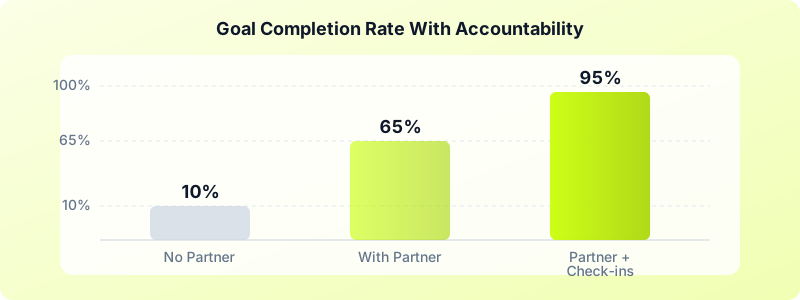
You know what you should be doing. You have the plan, the gym membership, and the motivation on Monday morning. But by Wednesday, the excuses start. A workout accountability partner can be the difference between staying consistent and quietly quitting. Research shows you have a 65 percent chance of completing a goal when you commit to someone — and that jumps to 95 percent with regular check-ins.
The problem is that most accountability partnerships fizzle out within a few weeks. Here is how to find the right partner and set up a system that actually lasts.
Why an Accountability Partner Makes You More Consistent
Working out alone relies entirely on willpower. And willpower is a limited resource — it fades when you are tired, stressed, or busy. An accountability partner adds external motivation that does not depend on how you feel.
When someone is counting on you to show up, skipping a session has a social cost. You are not just letting yourself down — you are letting your partner down too. This psychological pressure is called the Kohler Effect, and studies confirm it makes people work harder and stick with commitments longer.
Beyond consistency, a good partner pushes your performance. You naturally work harder when someone is watching or training alongside you. That extra rep, that faster sprint, that longer hold — it happens because you do not want to be the one who quits first.
An accountability partner also provides something no app or plan can replicate: genuine human connection around your fitness goals. That shared experience builds momentum over time.
How to Find the Right Workout Accountability Partner
Not every gym buddy makes a good accountability partner. Here is what to look for.
Similar commitment level. Your partner does not need the same goals, but they need the same level of seriousness. If you train 4 days a week and your partner flakes after 2, frustration builds fast.
Compatible schedule. You do not have to train together every session, but overlapping availability makes check-ins easier. Working parents pair well with other working parents. Early risers pair well with early risers.
Reliability over fitness level. Pick someone who shows up consistently, not someone who can outlift you. The whole point is dependability. A beginner who never misses a session is a better partner than an advanced athlete who cancels every other week.
Consider remote partners. You do not need to be in the same gym or even the same city. A text thread, shared progress photos, or a quick video call after workouts can be just as effective. What matters is the commitment, not the location.
Try your existing network first. Coworkers, neighbors, or friends who have mentioned wanting to get in shape are your best starting point. The existing relationship makes it easier to be honest about progress and setbacks.
7 Tips to Make Your Accountability Partnership Work
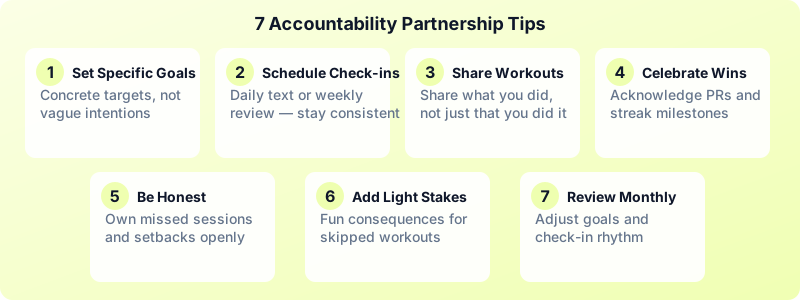
Finding a partner is the easy part. Keeping the partnership alive takes structure. Here are seven tips that prevent the common fade-out.
1. Set specific goals together. Vague intentions like "get in shape" collapse fast. Instead, commit to something concrete: complete 16 workouts this month, run a 5K by June, or finish a beginner HIIT workout program together. When you are setting realistic fitness goals, make sure both partners have equal buy-in.
2. Agree on a check-in schedule. Decide upfront how and when you will check in. A daily text after each workout or a weekly Sunday review both work — pick whatever fits your routine and stick with it. The rhythm matters more than the format.
3. Share your workouts, not just results. Do not just report whether you trained. Share what you did — the exercises, the times, the effort level. This creates a richer conversation and helps both of you learn.
4. Celebrate small wins. Hit a new personal record? Completed a full week without missing a session? Acknowledge it. Small celebrations reinforce the habit loop and keep motivation high.
5. Be honest about setbacks. Missed a workout? Say so. Ate poorly all weekend? Own it. Accountability only works when honesty goes both ways. A judgment-free partnership is a lasting one.
6. Build in consequences. Light stakes raise commitment. If one person skips a session without a valid reason, they buy the other coffee or do an extra 5-minute finisher at their next workout. Keep it fun, not punishing.
7. Review and adjust monthly. Check in at the end of each month. Are the goals still relevant? Is the check-in schedule working? Adjust as needed instead of letting small friction points grow into partnership-ending frustrations.
How to Stay Accountable When You Train Solo
Not everyone has a partner available. If you train alone, you can still build accountability into your routine.
Track everything. Log your workouts, sets, reps, and times. When you track your workout progress consistently, skipping a day creates a visible gap that motivates you to stay on track.
Join an online community. Share your workouts in a fitness group or forum. The social element — even with strangers — creates enough external pressure to keep you showing up.
Set public commitments. Tell a friend, post on social media, or write your weekly plan on a whiteboard at home. Making your goal visible to others raises the stakes.
Use streaks. Consecutive days or weeks of training create their own momentum. Once you hit a 10-day streak, you do not want to break it.
Use a Timer to Build Your Own Accountability System
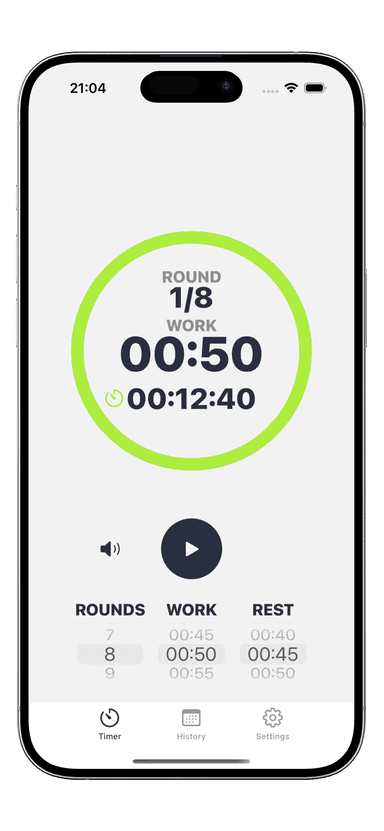
Your Interval Timer doubles as an accountability tool. The workout history feature tracks every session automatically — when you trained, how long, and what intervals you used. Over time, that log becomes a visual record of your consistency.
Set up a weekly challenge with your partner using the same timer settings. Both of you complete the same 20-minute HIIT circuit, share your times, and compare notes. The shared format makes it easy to stay connected even if you train at different times.
If you train solo, use the timer to enforce consistency. Schedule the same workouts at the same times each week. The structure removes decision fatigue — you do not have to figure out what to do, you just press start.
Accountability is not about perfection. It is about showing up more often than you skip. Whether you have a partner or a timer keeping you honest, the habit compounds over time.
Download Interval Timer and use workout history tracking to hold yourself accountable every session.