HIIT Timer Intervals for Weight Loss: Best Settings
If you have been doing cardio for months with nothing to show for it, the problem might not be effort — it might be timing. HIIT timer intervals for weight loss work because they force your body to alternate between maximum output and brief recovery, triggering a metabolic response that steady-state cardio simply cannot match.
A 20-minute HIIT session can burn 250-400 calories and keeps your metabolism elevated for hours afterward through a process called excess post-exercise oxygen consumption (EPOC). But the key to unlocking those results is getting your timer settings right.
In this guide, you will learn exactly which intervals burn the most fat, how to set up your timer, and how to progress as you get fitter.
Why HIIT Timer Intervals Accelerate Weight Loss
The magic of HIIT is not just intensity — it is the structured alternation between work and rest. When you push to 85-90% of your maximum heart rate during work intervals, your body taps into anaerobic energy systems. During rest intervals, your heart rate drops but never fully recovers before the next round hits.
This cycle creates an oxygen debt that your body spends hours repaying after the workout ends. Studies show that HIIT can elevate your resting metabolic rate for up to 24 hours post-exercise, burning additional calories while you recover.
Here is what makes timed intervals superior to random effort:
- Consistent intensity: a timer removes guesswork and keeps you honest during every round
- Structured rest: too much rest kills the metabolic effect, too little causes burnout
- Progressive overload: you can shorten rest periods or extend work periods week by week
- Time efficiency: most HIIT fat-loss workouts take just 15-25 minutes
Understanding your work-to-rest ratio is the foundation for choosing the right timer settings.
Best HIIT Timer Settings for Fat Loss
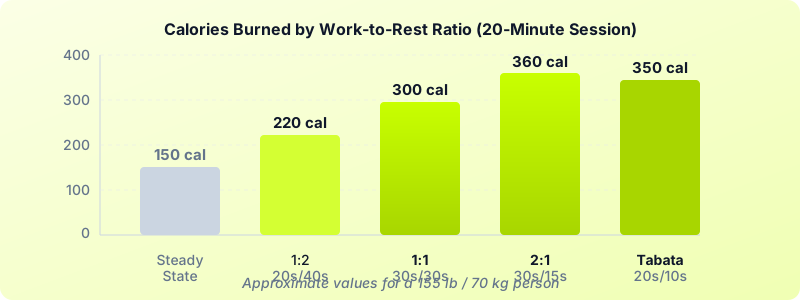
Not all interval settings are equal for weight loss. Research and coaching practice point to specific ranges that maximize fat oxidation while keeping workouts sustainable.
Beginner Fat-Loss Timer (Weeks 1-4)
- Work: 20 seconds
- Rest: 40 seconds
- Rounds: 10
- Total time: 10 minutes
A 1:2 work-to-rest ratio gives beginners enough recovery to maintain intensity through every round. Start here if you are new to HIIT or returning after a break.
Intermediate Fat-Loss Timer (Weeks 5-8)
- Work: 30 seconds
- Rest: 30 seconds
- Rounds: 12-15
- Total time: 12-15 minutes
A 1:1 ratio pushes your cardiovascular system harder. Your heart rate stays elevated throughout, maximizing calorie burn and EPOC.
Advanced Fat-Loss Timer (Weeks 9+)
- Work: 30 seconds
- Rest: 15 seconds
- Rounds: 15-20
- Total time: 11-15 minutes
A 2:1 work-to-rest ratio is demanding. Only progress here once you can complete every round of the intermediate setting without form breakdown.
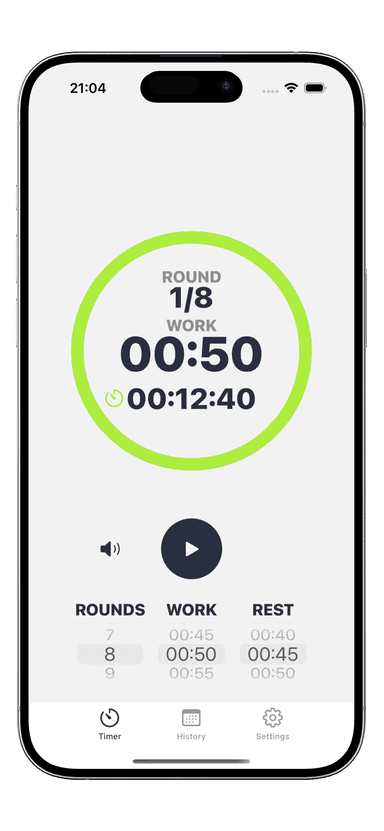
You can set up your interval timer for any of these protocols in under 30 seconds with the right app.

3 Proven HIIT Interval Workouts for Weight Loss
Here are three complete workouts you can start today. Each uses a different timer format to keep your body guessing.
Workout 1: The 10-Minute Scorcher
Timer: 20 seconds work / 40 seconds rest x 10 rounds
Perform each exercise for one round, then repeat:
- Jumping jacks
- Bodyweight squats
- Mountain climbers
- Push-ups
- High knees
This workout burns approximately 150-200 calories and is perfect for mornings or lunch breaks. Want even more intensity in 10 minutes? Try a 10-minute no-rest HIIT workout that keeps you moving the entire time.
Workout 2: The 15-Minute Metabolic Blast
Timer: 30 seconds work / 30 seconds rest x 15 rounds
Cycle through these five exercises three times:
- Burpees
- Alternating lunges
- Plank jacks
- Squat jumps
- Bicycle crunches
Expect to burn 200-300 calories. The equal work-rest ratio keeps your heart rate in the fat-burning zone.
Workout 3: The 20-Minute Fat Furnace
Timer: 40 seconds work / 20 seconds rest x 20 rounds
Four rounds of five exercises:
- Kettlebell swings (or squat pulses)
- Push-up to shoulder tap
- Speed skaters
- Renegade rows (or plank holds)
- Tuck jumps (or step-ups)
This burns 300-400 calories and is the most challenging option. Save it for days when energy is high.
If you are just starting out, try a beginner HIIT workout first to build your base.
Common Timer Mistakes That Slow Fat Loss
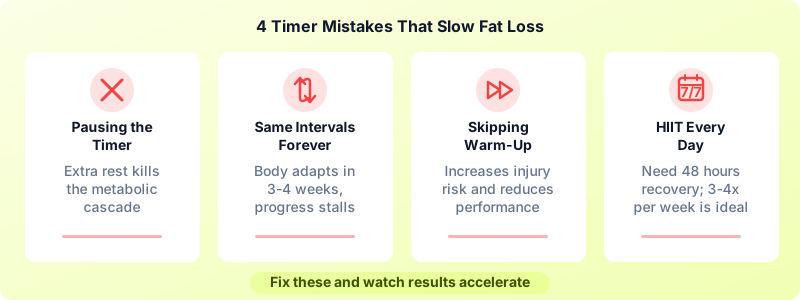
Getting your timer settings right is only half the battle. These common errors can sabotage your weight loss progress.
Resting too long between rounds. If you pause the timer to catch your breath, you lose the metabolic cascade that makes HIIT effective. Keep the timer running and modify the exercise intensity instead of stopping.
Using the same intervals forever. Your body adapts to repeated stimuli within 3-4 weeks. Progress by shortening rest, adding rounds, or increasing work duration every month.
Skipping the warm-up. Jumping straight into max effort increases injury risk and reduces performance. Add a 3-minute dynamic warm-up before starting your timer.
Training HIIT every day. Your body needs 48 hours between HIIT sessions to recover. Three to four sessions per week with rest days in between delivers better fat loss than daily sessions that lead to burnout and elevated cortisol.
How to Track Your HIIT Weight Loss Progress
Weight loss from HIIT is not always linear, and the scale does not tell the whole story. Here is how to measure real progress.
Track workout completion. Log every session with the number of rounds completed at full intensity. Interval Timer saves your workout history automatically, so you can see your consistency over weeks and months.
Monitor interval progression. When you move from 20s/40s to 30s/30s intervals, that is measurable progress regardless of what the scale says.
Take body measurements. Waist, hip, and thigh measurements change faster than scale weight when you combine HIIT with proper nutrition. Measure every two weeks at the same time of day.
Use heart rate data. If your heart rate recovers faster during rest intervals compared to last month, your cardiovascular fitness is improving — a strong indicator that fat loss is happening.
Be patient with the timeline. Expect noticeable energy improvements in 1-2 weeks, visible fat loss in 4-6 weeks, and a significant body composition change in 12-16 weeks when combining HIIT with a moderate caloric deficit of 300-500 calories per day.
The combination of precise HIIT timer intervals for weight loss, progressive overload, and consistent tracking is the most efficient path to lasting results. Set your intervals, trust the process, and let the timer do the work.
Download Interval Timer and set up your first fat-loss HIIT workout in seconds — with custom intervals, workout history tracking, and Apple Watch support to keep you on pace.