How to Do a Proper Warm-Up Before Any Workout
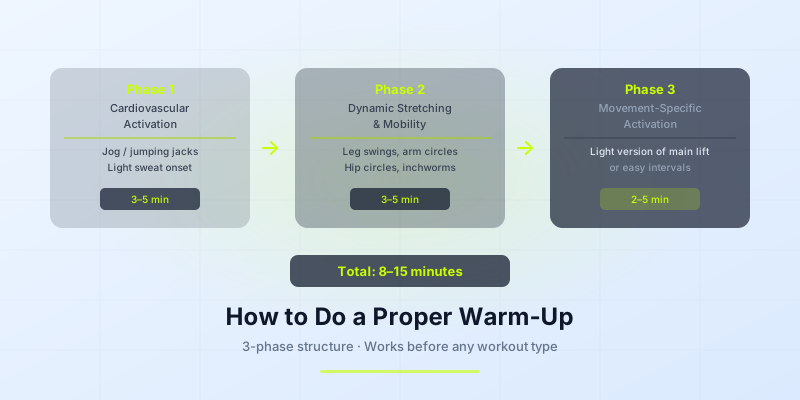
A warm-up is not optional filler before the real workout — it's the preparatory phase that determines how well you perform and how low your injury risk stays during the session. Done properly, it takes 5–10 minutes and makes a measurable difference in both output quality and safety.
Here's what a proper warm-up does physiologically, what it should include, and how to tailor it for different workout types.
What a Warm-Up Actually Does
The term "warm-up" is literal: the goal is to raise core and muscle tissue temperature. At rest, muscles are cooler and less pliable. As temperature rises:
- Enzyme activity increases: The metabolic reactions that fuel muscle contraction happen faster at higher temperatures. Warm muscles produce energy more efficiently.
- Nerve conduction improves: Signals from brain to muscle travel faster, improving reaction time and coordination.
- Tissue extensibility increases: Warmer connective tissue (tendons, ligaments) tolerates more range of motion without risk of strain.
- Blood flow redirects: Cardiac output increases and blood is shunted from non-working tissues to the muscles that need it.
- Mental preparation: Transitioning from rest to exercise-readiness mentally — rehearsing movement patterns, focusing on the session.
A good warm-up takes 8–15 minutes for most training sessions. Shorter for light sessions, longer before maximal effort or competition.
The Three Phases of an Effective Warm-Up
Phase 1: General Cardiovascular Activation (3–5 minutes)
Raise heart rate and blood flow broadly. This doesn't have to match the upcoming workout — any continuous movement works:
- Light jog or march in place
- Jumping jacks or skipping
- Rowing machine at easy pace
- Cycling at low resistance
The goal is to reach a light sweat and get breathing elevated. Heart rate should be 50–60% of maximum — you can still hold a conversation easily.
For HIIT or interval sessions: Start with 3 minutes of easy movement before any interval work. Going straight into 20-second maximum efforts from rest significantly increases injury risk and reduces performance in the early rounds.
Phase 2: Dynamic Stretching and Mobility (3–5 minutes)
Dynamic stretching — controlled movements through a range of motion — is the right warm-up approach. Static stretching (holding a position for 30+ seconds) before exercise is now understood to temporarily reduce force production and should be saved for the cool-down.
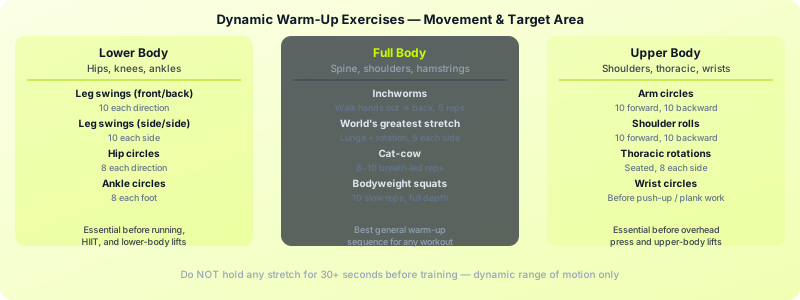
Dynamic movements to include:
- Leg swings (front/back, side/side): Hip joint mobility and hip flexor activation
- Arm circles and shoulder rolls: Shoulder joint range and rotator cuff activation
- Hip circles: Loosens hip capsule, activates glutes and hip stabilisers
- Thoracic rotations: Seated or standing rotation through the upper back — critical before any overhead or rotational movement
- Ankle circles: Wrist and ankle joint prep before weight-bearing exercises
- Inchworms: Walk hands out to plank, walk back. Full-body dynamic movement hitting hamstrings, spine, and shoulder girdle
Move through each one for 8–10 reps or 20–30 seconds. Move at a controlled pace — the goal is range of motion, not speed.
Phase 3: Movement-Specific Activation (2–5 minutes)
Perform lighter versions of what you're about to do. This primes the exact neuromuscular patterns you'll use in the session:
- Before squats or lower-body strength: Bodyweight squats, glute bridges, lateral band walks
- Before upper-body pressing: Push-up progressions, band pull-aparts, light dumbbell presses
- Before HIIT or running: Slow jogging → strides → one or two easy intervals at 50% effort
- Before kettlebell work: Light kettlebell swings, halos, goblet squats
- Before Pilates or core work: Cat-cow, dead bugs, hollow body hold at low difficulty
This phase is the most important for performance. The movement patterns you prime here are the ones your body executes well when intensity increases.
Warm-Up for Specific Workout Types
Before HIIT or Interval Training
HIIT demands immediate high-intensity effort. A compressed warm-up works poorly here — the first interval of a Tabata or sprint session should not be a warm-up round.
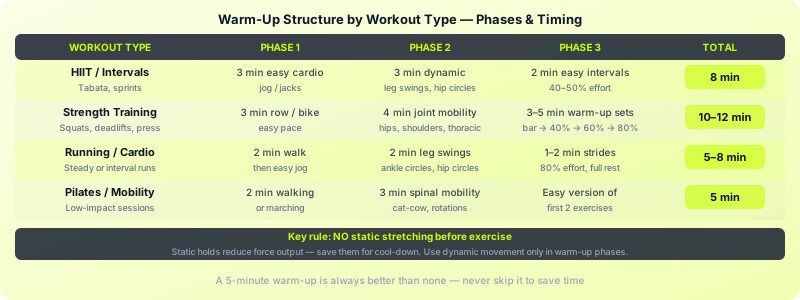
HIIT warm-up (8 minutes):
- 3 min: easy jog or jumping jacks
- 3 min: dynamic stretching (leg swings, hip circles, arm swings)
- 2 min: 3–4 easy intervals at 40–50% effort with full rest
After this, the first true work interval will feel like the workout, not a shock to the system. For Tabata workouts, this is especially important — the 20-second maximum effort rounds require neuromuscular readiness.
Before Strength Training
Heavy compound lifts (squats, deadlifts, overhead press) require joint-specific preparation. The movement-specific phase is longer here.
Strength warm-up (10–12 minutes):
- 3 min: rowing or cycling
- 4 min: dynamic mobility (focus on joints involved in main lift)
- 3–5 min: progressive warm-up sets (e.g., bar only → 40% → 60% → 80% of working weight, 3–5 reps each)
Never skip warm-up sets for heavy lifting. A proper burpee warm-up sequence can also prime the whole body before mixed sessions.
Before Running or Cardio
Running warm-ups are often skipped because the early easy pace feels like a warm-up. But cold muscles running produces different mechanics than warmed muscles — and injury risk is higher.
Running warm-up (5–8 minutes):
- 2 min: walk
- 2 min: easy jog (conversational pace)
- 2 min: dynamic leg swings, hip circles, ankle rotations
- 1–2 min: strides (short 10–15 second accelerations at 80% effort with full recovery)
Before Pilates or Mobility Work
Even low-impact sessions benefit from preparatory movement. Cold connective tissue doesn't move as freely and the neuromuscular connection to deep stabilizers is dormant.
Pilates warm-up (5 minutes):
- 2 min: walking or marching
- 3 min: cat-cow, spinal rotations, hip circles, child's pose to cobra
Using a Timer for Structured Warm-Ups
Warm-up phases are easy to cut short when motivation is low. A timer holds you accountable to the full sequence.
Set up a simple interval timer with:
- Phase 1: 3–5 minutes (single long interval)
- Phase 2: 30 seconds per dynamic movement × 6–8 movements
- Phase 3: movement-specific at your own count
The Interval Timer app works for this — set 30-second intervals for the dynamic phase so you move through each mobility exercise without stopping to check the time.
Common Warm-Up Mistakes
Starting too fast: The warm-up should never feel hard. If you're breathing heavily in the first 60 seconds, you've started too intensely.
Static stretching only: Holding hamstring or hip flexor stretches before a HIIT session temporarily reduces power output. Save these for the cool-down.
Skipping it when time is short: A 5-minute warm-up is far better than none. Cut session length, not the warm-up.
Repeating the same warm-up for every session: A warm-up before plyometric exercises should look different from one before kettlebell swings. Match the preparation to the demand.
Download Interval Timer to time your warm-up phases precisely — it removes the temptation to skip ahead and ensures every phase gets the time it needs.