Tabata Workout for Abs and Core: 4-Minute Protocols That Work
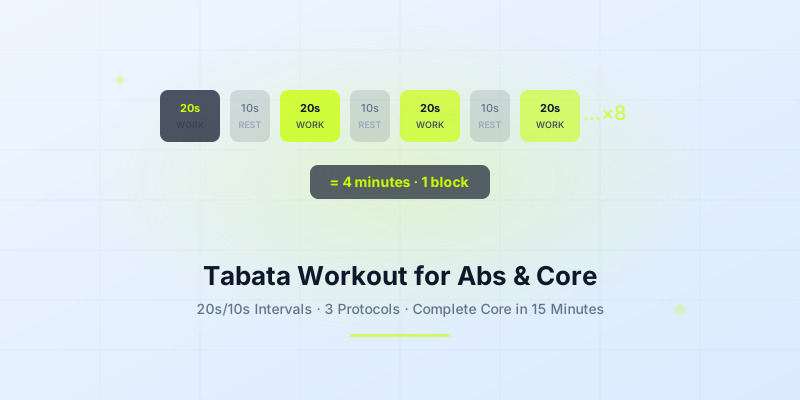
Tabata training applied to core exercises creates a different kind of ab workout — one that trains endurance, power, and stability under fatigue rather than just counting slow reps. The 20-second all-out effort followed by 10 seconds of rest forces your core to work at high intensity repeatedly, producing both strength and metabolic conditioning benefits.
Here's how to build an effective Tabata abs session, which exercises work best in the format, and how to set up your timer.
Why Tabata Works for Core Training
The Tabata structure — 20 seconds of maximum effort, 10 seconds of rest, 8 rounds — was originally designed to develop both aerobic and anaerobic systems simultaneously. For core work, this translates to:
Muscular endurance under fatigue: Performing ab exercises with incomplete recovery forces the core muscles to maintain tension and control when fatigued — which mirrors real-world demands (sport, heavy lifting, extended runs) better than fresh, isolated ab reps.
Higher metabolic demand: Core exercises done in a Tabata format elevate heart rate significantly more than traditional sets with full rest. This adds a cardiovascular component to what is often treated as a pure strength exercise.
Time efficiency: One 4-minute Tabata block delivers meaningful training stimulus. Two or three blocks targeting different movement patterns — flexion, rotation, anti-rotation — creates a complete core session in under 20 minutes.
The key difference from standard ab workouts: Tabata core training requires sustained maximum effort during each 20-second interval. If you're coasting through the work period at 60% effort, you're not doing Tabata — you're doing interval ab training, which is fine but different.
The Best Core Exercises for Tabata Format
Not all core exercises suit the Tabata structure. The best choices share these traits: they can be performed explosively or with sustained high effort, they don't require equipment or floor position changes that eat into the 10-second rest, and they train meaningful movement patterns.
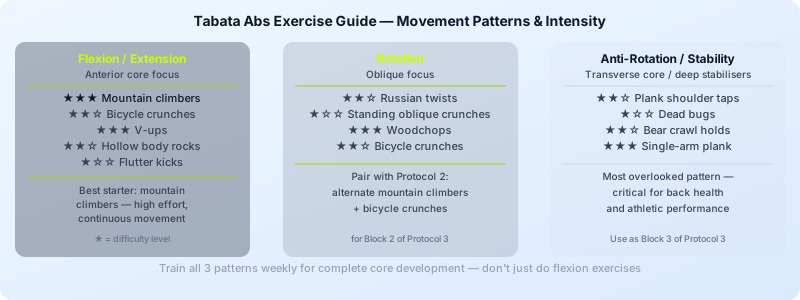
Flexion/extension (anterior core):
- Mountain climbers: Drive alternating knees toward chest rapidly. Trains hip flexors, core stability, and cardiovascular system simultaneously. Excellent Tabata movement.
- Bicycle crunches: Alternating elbow-to-knee with rotation. Medium intensity, high volume per 20 seconds.
- V-ups: From lying flat, simultaneously raise legs and torso to meet in a V shape. High demand, lower volume per interval.
- Hollow body rocks: Hold a hollow body position and rock forward/back. Isometric-plus-dynamic, very effective for anterior core.
Anti-rotation/stability:
- Plank shoulder taps: In a plank, alternately tap each shoulder without rotating the hips. Forces anti-rotation bracing under time pressure.
- Dead bugs: On your back, extend opposite arm/leg while maintaining lower back contact with the floor. Controlled, precise movement.
Rotation (obliques):
- Russian twists: Seated, lean back slightly, rotate torso side to side. Add weight for progression.
- Standing oblique crunches: Stand upright, crunch elbow toward same-side knee. Accessible for those who can't do floor work.
- Woodchops (with or without weight): Diagonal pulling/chopping pattern from high to low across the body.
Lower core / hip flexor integration:
- Leg raises: Lying flat, raise straight legs from floor to vertical and lower under control. High demand on lower abs.
- Flutter kicks: Alternating small leg raises while keeping lower back pressed to floor. Sustained intensity, minimal rest between reps.
Three Complete Tabata Ab Protocols
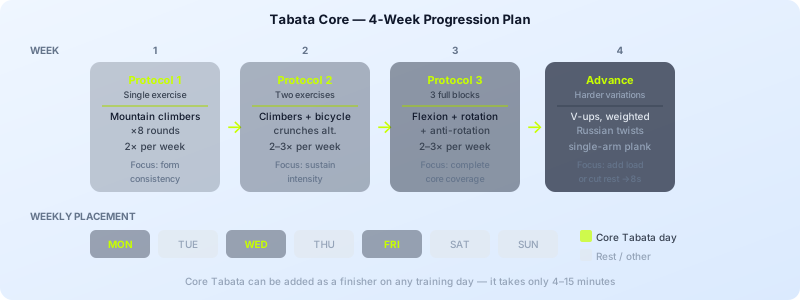
Protocol 1: Beginner Tabata Core (Single Exercise)
Pick one exercise and perform it for the full 8 rounds:
- Work: 20 seconds mountain climbers
- Rest: 10 seconds
- Rounds: 8 (= 4 minutes total)
This is the purest Tabata format. It's harder than it sounds — by round 5-6, maintaining quality form becomes the challenge. Choose a movement you can perform continuously for 20 seconds without stopping.
Protocol 2: Two-Exercise Tabata Core (Alternating)
Alternate between two exercises across 8 rounds (4 rounds each):
- Round 1: 20s mountain climbers / 10s rest
- Round 2: 20s bicycle crunches / 10s rest
- Repeat for 8 total rounds
This reduces per-exercise fatigue while maintaining overall intensity. Good for intermediate trainees who find single-exercise Tabata too fatiguing to maintain form throughout.
Protocol 3: Full Core Tabata Circuit (Advanced)
Three 4-minute Tabata blocks targeting different movement patterns, 1-minute rest between blocks:
Block 1 — Anterior core: 20s mountain climbers / 10s rest × 8 rounds
Block 2 — Rotation: 20s bicycle crunches / 10s rest × 8 rounds (or alternate: Russian twists / standing oblique crunches)
Block 3 — Anti-rotation/stability: 20s plank shoulder taps / 10s rest × 8 rounds
Total time: ~15 minutes. This protocol trains all three primary core movement patterns and produces a comprehensive core session.
Setting Up Your Timer for Tabata Core
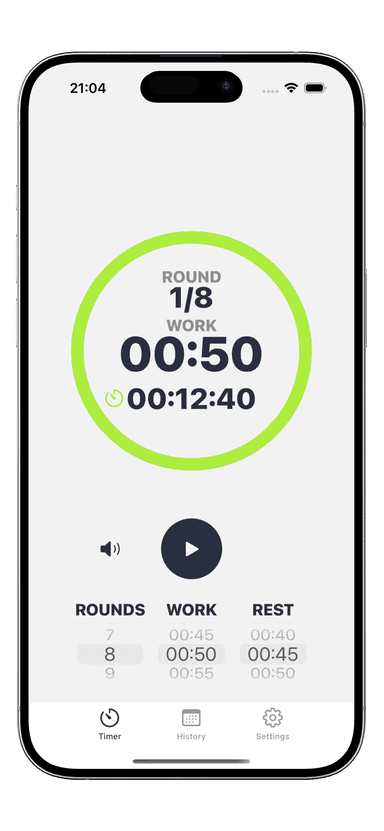
The 20s/10s cycle is difficult to track manually, especially when you're breathing hard by round 4. An interval timer handles this automatically with audio cues.
Timer settings:
- Work: 20 seconds
- Rest: 10 seconds
- Rounds: 8
- Between blocks: 60-second rest (set as a separate interval)
The Interval Timer app has distinct audio tones for work and rest transitions. Set the phone nearby on the floor within earshot and let the beeps guide each interval — no counting, no watching the clock.
For Protocol 3 with three blocks, set up the 8-round Tabata, add a 60-second rest at the end, and repeat for three total blocks. The app handles the full sequence.
Programming Tabata Core Into Your Week
Core training with Tabata can be done daily if the movements are varied and intensity is managed — unlike heavy loaded movements, bodyweight core work recovers relatively quickly.
Practical placement:
- As a 4-minute finisher at the end of any strength or HIIT session
- As a standalone 15-minute session on active recovery days
- Paired with upper-body training sessions when legs need recovery
Core training doesn't need to be isolated. As part of a weekly workout schedule, 2-3 dedicated core Tabata sessions per week plus core engagement during compound movements (squats, deadlifts, burpees) provides comprehensive core development.
If you're combining this with other HIIT formats — plyometric exercises, kettlebell swings, or dumbbell HIIT — core Tabata works well as the session finisher after the primary work is complete.
What to Expect from Tabata Core Training
After 2-3 weeks: Core endurance improves noticeably. Exercises that were difficult to sustain for the full 20 seconds become manageable. Form breakdown occurs later in each set.
After 4-6 weeks: Functional core strength transfers to other training. Planks become easier, running posture improves, lower back fatigue during long sessions decreases.
Progression: Once 8 rounds of any exercise feel manageable throughout, advance by: adding a weight vest, switching to harder exercise variations (V-ups instead of bicycle crunches), or reducing rest to 8 seconds instead of 10 (technically a harder-than-standard Tabata).
The core is a stabilisation system, not just a flexion engine. Tabata's intensity demands that it performs under fatigue — which is exactly when core stability matters most in sport and daily life.
Download Interval Timer to run Tabata abs sessions with precise 20s/10s timing — the audio cues keep you on track through all 8 rounds so you can focus entirely on form and effort.