Strength Training vs Cardio for Weight Loss: Which Is Better?
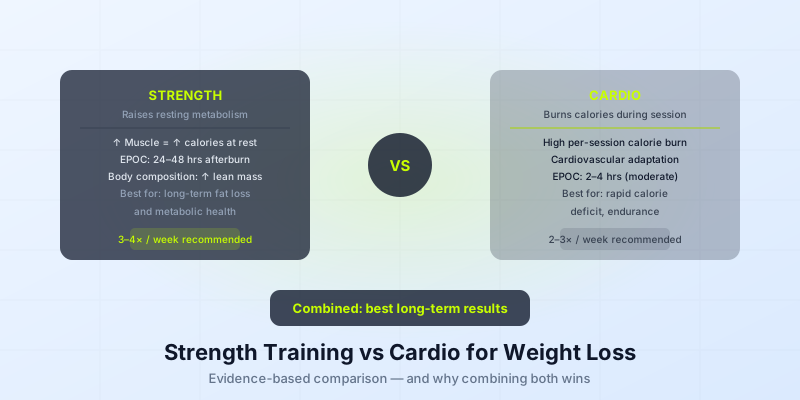
The debate between strength training and cardio for weight loss is one of the most searched fitness questions — and the honest answer is that framing it as either/or misses the point. Both modalities contribute to weight loss through different mechanisms, and the most effective programs use them together.
Here's what the evidence shows about each approach, when one has an advantage over the other, and how to structure your training for actual fat loss results.
How Strength Training Promotes Weight Loss
Strength training — lifting weights, resistance machines, bodyweight progressions — builds and preserves muscle tissue. This matters for weight loss for several reasons.
Elevated resting metabolic rate: Muscle is metabolically active tissue. Each kilogram of muscle burns approximately 13 calories per day at rest, versus about 4 calories for the equivalent mass of fat. Building muscle over months raises your resting metabolic rate, which means you burn more calories around the clock — not just during training.
EPOC (excess post-exercise oxygen consumption): Heavy resistance training creates metabolic disruption that elevates calorie burn for hours after the session ends. High-intensity lifting can produce 24–48 hours of elevated metabolism, sometimes called the "afterburn effect."
Body composition improvement: Strength training can reduce body fat percentage even without significant scale weight change. A person who adds 2kg of muscle while losing 2kg of fat weighs the same but looks and performs differently. Scale weight alone is a poor measure of fat loss progress.
Insulin sensitivity: Regular resistance training improves how your body handles blood glucose, reducing fat storage from carbohydrate intake and improving energy utilization.
How Cardio Promotes Weight Loss
Cardiovascular exercise — running, cycling, rowing, swimming — burns calories during the session. The primary mechanism is direct energy expenditure.
High calorie burn per session: A 45-minute run burns substantially more calories than a 45-minute strength session for most people. If the goal is maximizing calorie deficit in a given training slot, steady-state cardio often wins on pure calorie count.
Accessible for most fitness levels: Walking, cycling, and swimming are lower-impact than heavy lifting and accessible earlier in a weight loss journey for those with limited strength training experience.
Heart health and endurance capacity: Cardio develops the cardiovascular system in ways that directly improve daily energy levels, endurance, and long-term health markers independent of weight loss.
Appetite regulation: Some research suggests moderate-intensity cardio regulates appetite hormones more favorably than high-intensity sessions, though this is individual and depends on session length and intensity.
Head-to-Head: What Research Shows
Studies comparing strength training versus cardio for fat loss consistently show similar results in the short term when calorie expenditure is matched. The key differences emerge over longer timeframes:
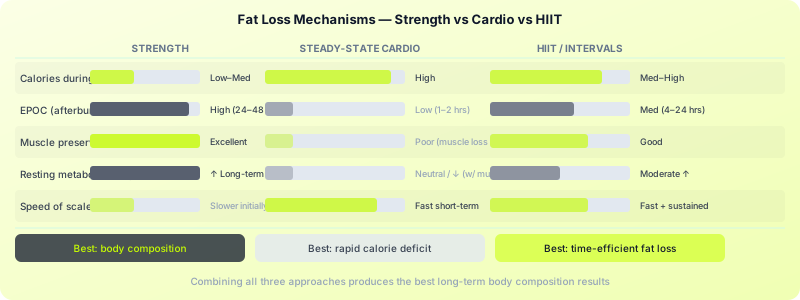
- Pure cardio tends to produce faster initial weight loss but includes muscle loss alongside fat loss, which lowers resting metabolic rate over time
- Pure strength training produces slower initial scale weight change but preserves or builds muscle, protecting metabolic rate
- Combined programs consistently outperform either approach alone in long-term fat loss and body composition studies
The combination advantage is significant: resistance training preserves the metabolic engine while cardio increases the calorie deficit. Over 6–12 months, combined programs produce better body composition outcomes than either in isolation.
When Cardio Has the Advantage
Cardio is the better short-term choice when:
- You need to create a rapid calorie deficit in the near term
- You're in a phase where total training volume needs to be lower (travel, busy periods)
- You enjoy cardio and will actually do it consistently — consistency beats optimization
- You're training for an endurance event where cardiovascular capacity is the primary goal
When Strength Training Has the Advantage
Strength training is the better long-term choice when:
- You want to prevent the metabolic slowdown that comes with sustained calorie restriction
- You're near your target weight and want to improve body composition (lean out) rather than just lose scale weight
- You've done extended cardio-only periods and hit a plateau — adding resistance work often breaks it
- You want functional strength and injury resilience alongside fat loss
The Practical Combined Approach
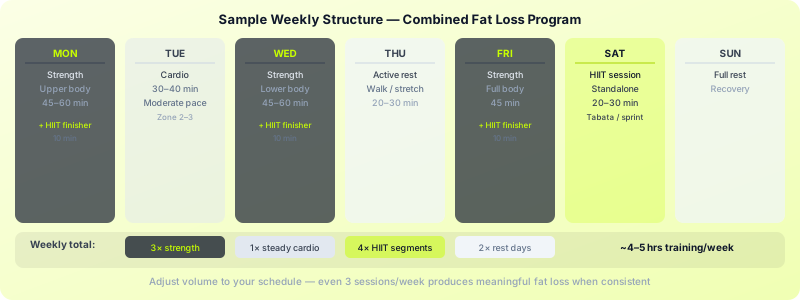
For most people aiming to lose fat and improve body composition, a combined weekly structure works best:
3–4 strength sessions per week: Compound movements — squats, deadlifts, rows, presses — that use multiple muscle groups and produce meaningful metabolic stress. 45–60 minutes per session.
2–3 cardio sessions per week: Can be dedicated sessions or finishers after strength work. HIIT cardio — like HIIT workouts at home — is time-efficient and produces meaningful EPOC alongside the cardiovascular benefits.
One active recovery day: Light walking, cycling, or mobility work. Keeps the calorie burn consistent without adding training stress.
The how to program your own workout schedule post covers structuring these sessions across the week without overtraining.
The Role of Interval Training
Interval training occupies a middle ground between traditional cardio and strength training. High-intensity intervals like Tabata protocols or 30-20-10 sprint intervals produce:
- High per-session calorie burn (similar to cardio)
- Significant EPOC (closer to strength training)
- Cardiovascular adaptation (like cardio)
- Metabolic conditioning that preserves muscle better than steady-state cardio
For people with limited training time, HIIT occupies a useful hybrid position — you get meaningful fat loss stimulus with metabolic benefits in 20–30 minutes.
The Actual Answer
Neither strength training nor cardio is "better" for weight loss in isolation. The winner depends on the timeframe, your current fitness level, and what you'll actually do consistently.
For long-term fat loss and body composition: combined programs win. Strength training 3× per week plus 2–3 cardio sessions produces better results than maxing out either approach alone.
For the cardio component, use an interval timer to make HIIT sessions efficient. Set your work and rest intervals and let the app handle the timing — which means you can put full effort into each work period rather than watching the clock.
Download Interval Timer to structure your cardio intervals precisely — useful for HIIT finishers after strength sessions or standalone interval workouts.